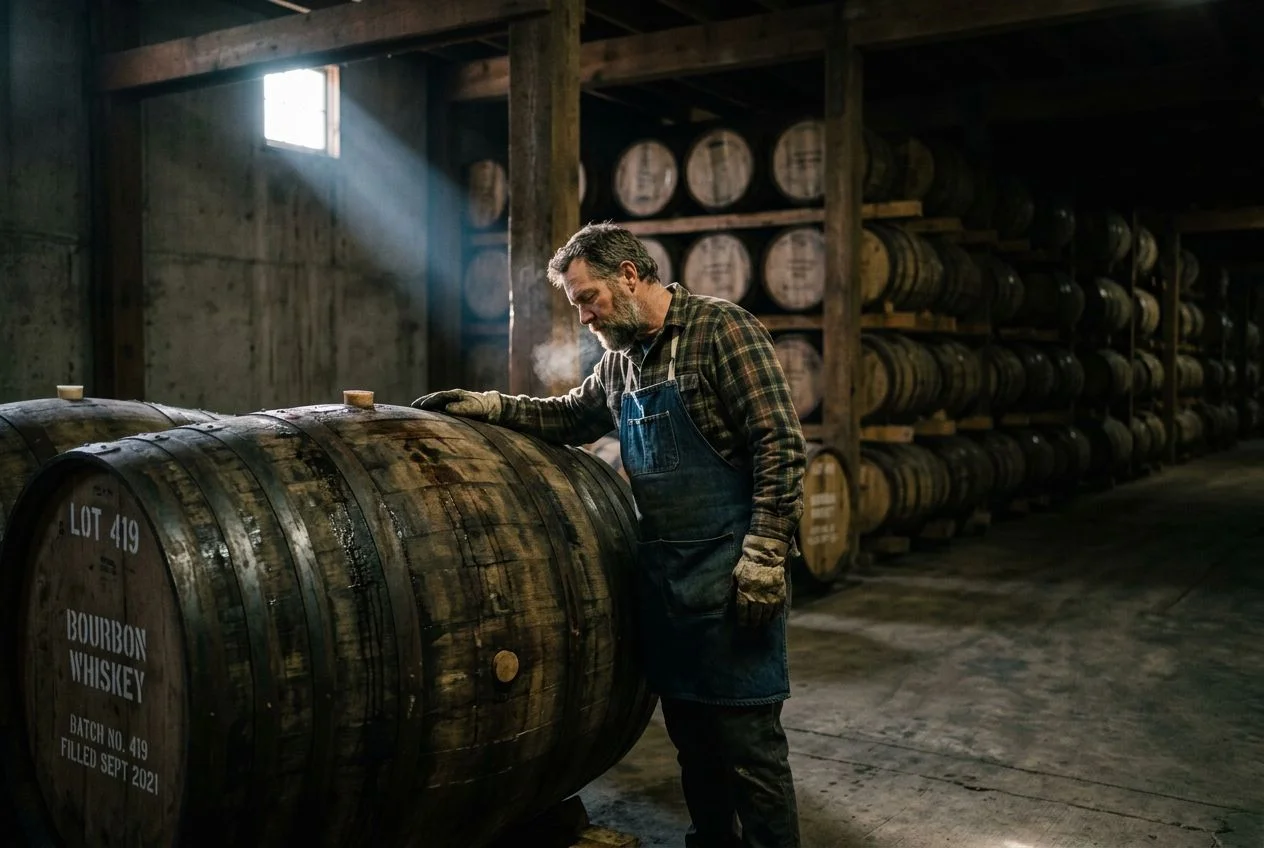

The first time I stepped into a barrel room, it wasn’t for a tasting. It was mid-September, and the morning air outside had that sharp, pre-harvest bite. Inside the warehouse, though, the thermostat held steady at 58 degrees. The smell was something else entirely—oak, vanilla, a ghost of bourbon, and the faint, sour tang of a wild yeast strain doing its slow work.
I stood in a dim corner of a Midwest brewery, watching a brewer named Jake run his gloved hand along a barrel’s stave. He wasn’t looking for leaks. He was listening. That’s the part nobody tells you about barrel aged fall beer. By the time the leaves turn and the pumpkin spice lattes hit their peak, the real work is already done. The barrels have been sitting quiet for months. The chill hasn’t even arrived, but the beer—and the people who babysit it—have been preparing for this season since spring.
The Quiet Months
Table of contents
Ask any brewer about their fall release schedule, and they’ll start talking about a different season entirely. The barrel aged fall beer that shows up on tap lists in October was usually racked into oak back in May or June. That’s not a lazy timeline. It’s a necessity.
Most barrel programs follow a simple rule: the beer needs time to breathe, but not too much. A stout that sits on oak for 18 months can turn into a tannic monster. A barleywine pulled too early tastes like a young beer wearing a fancy coat. The sweet spot for most Midwest breweries sits somewhere between 6 and 12 months. That means the decision to commit a batch to barrels happens while the rest of the world is mowing lawns and firing up grills.
Jake runs the barrel program at a 15-barrel brewery outside Milwaukee. He put it plainly when we talked. “If I’m not filling barrels by the Fourth of July, I’m not releasing anything for fall. The calendar doesn’t care about your marketing plan.”
That’s the unsung part of the job. While the taproom pours hazy IPAs and the patio fills with people in tank tops, the barrel room is already working on November’s lineup. The brewers check specific gravity, pull small samples through a thief tube, and take notes that look like a mad scientist’s journal—pH levels, oxygen exposure, the exact date each barrel was topped off.
Barrel Aged Fall Beer Starts in the Wood
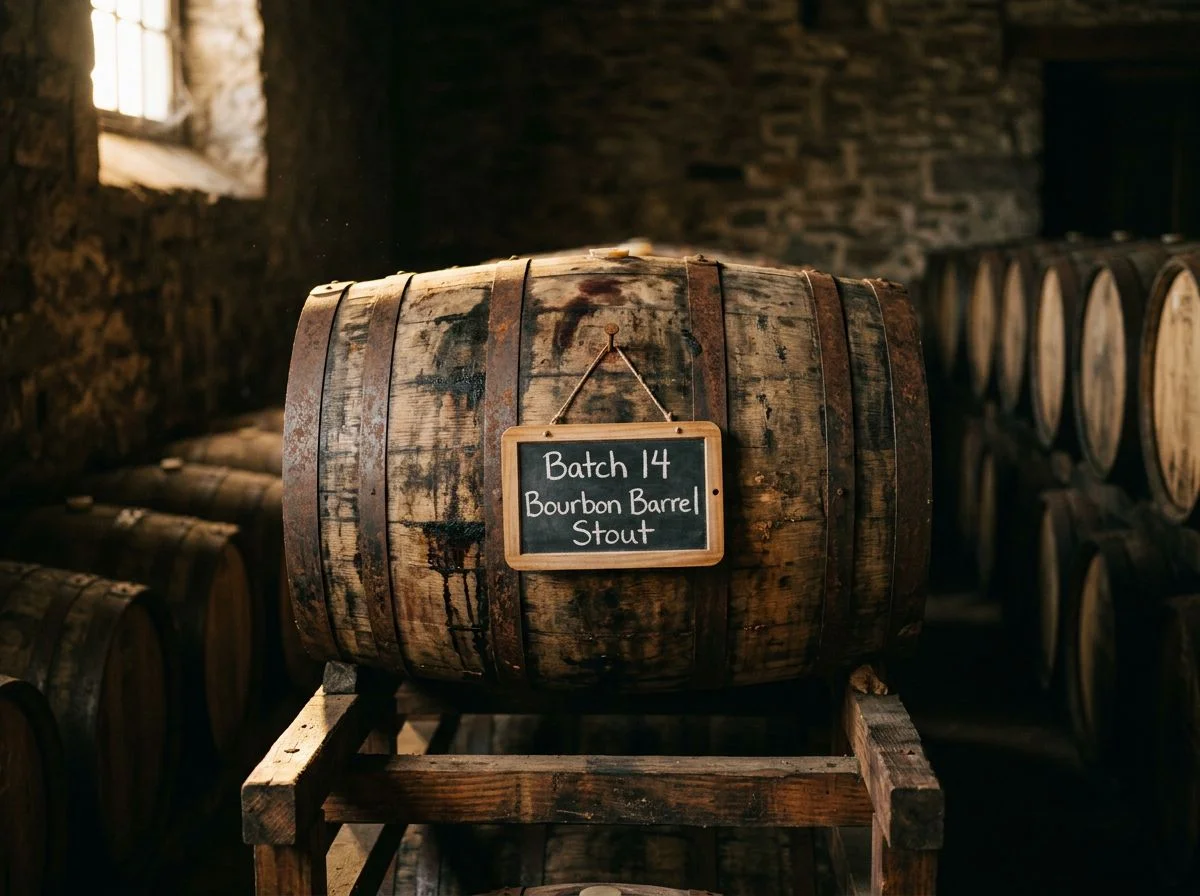
Walk into any serious barrel room and you’ll notice the same thing: the barrels aren’t uniform. Some are freshly dumped bourbon barrels from Kentucky. Others are former wine barrels, their staves stained a deep ruby. A few might be new American oak, charred to a level that makes the wood taste like toasted coconut.
For barrel aged fall beer, the choice of barrel matters more than almost anything else in the process. A bourbon barrel gives you vanilla and caramel notes—a natural fit for a brown ale or a porter. A wine barrel brings acidity and a lighter tannin structure, which works beautifully with a barrel-aged saison or a tart farmhouse ale. You can split the same base beer across three different barrel types and get three completely different beers.
I asked Jake what he looks for when buying barrels. His answer wasn’t about the distillery’s name or the age of the spirit. “I’m looking for the barrel that’s been dumped and refilled once or twice. A fresh barrel is too loud. It screams bourbon at you. The second-use barrels let the beer actually show up.”
That’s a lesson in restraint, and it’s one of the reasons I keep coming back to this corner of the beer world. The best barrel aged fall beer isn’t the one that hits you over the head with oak. It’s the one where you taste the base beer first—the malt, the yeast, the careful fermentation—and the barrel is just the supporting actor.
The Labor Behind Barrel Aged Fall Beer
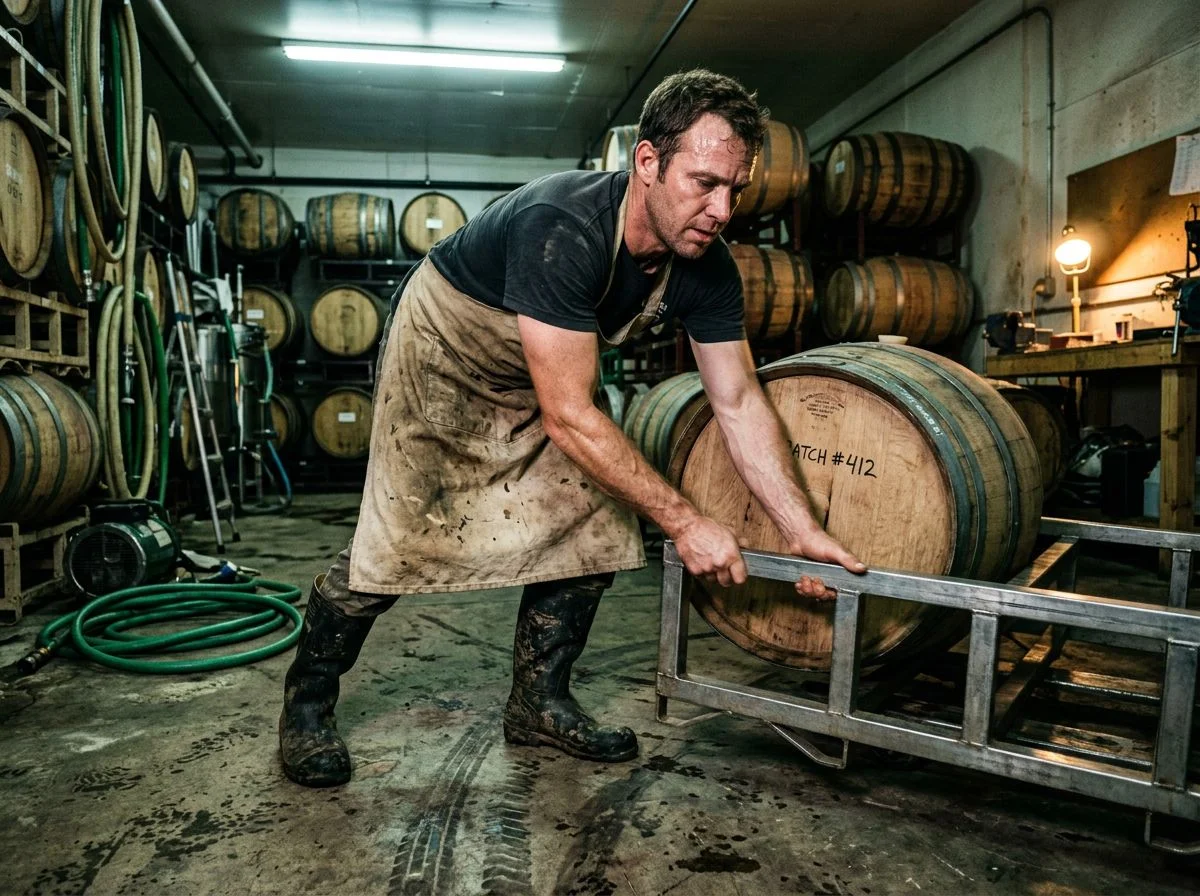
Nobody talks about the physical work. Barrel rooms are heavy, wet, and awkward. A standard barrel weighs around 50 pounds empty and close to 550 pounds full. Moving them requires a forklift, a pallet jack, and a lot of patience. Topping off—adding fresh beer to replace what evaporated through the wood—is a weekly chore. It involves climbing a short ladder, hosing down the bung hole, and pouring from a carboy with one hand while holding a flashlight in the other.
The evaporation loss, known in the trade as the “angel’s share,” can run as high as 10% a year in a dry warehouse. That’s not just poetic. It’s financial. Every gallon that disappears into the air is a gallon that can’t be sold. For a small brewery, that’s a real cost baked into the price of every bottle.
But the labor doesn’t stop at the warehouse door. Some Midwest brewers drive hours to pick up barrels directly from distilleries, just to inspect the wood before they commit. I’ve heard stories of brewers showing up at a Kentucky distillery at 6 a.m. to claim a batch of barrels dumped the night before. The early bird gets the good oak, I guess.
How Do You Know When It’s Ready?
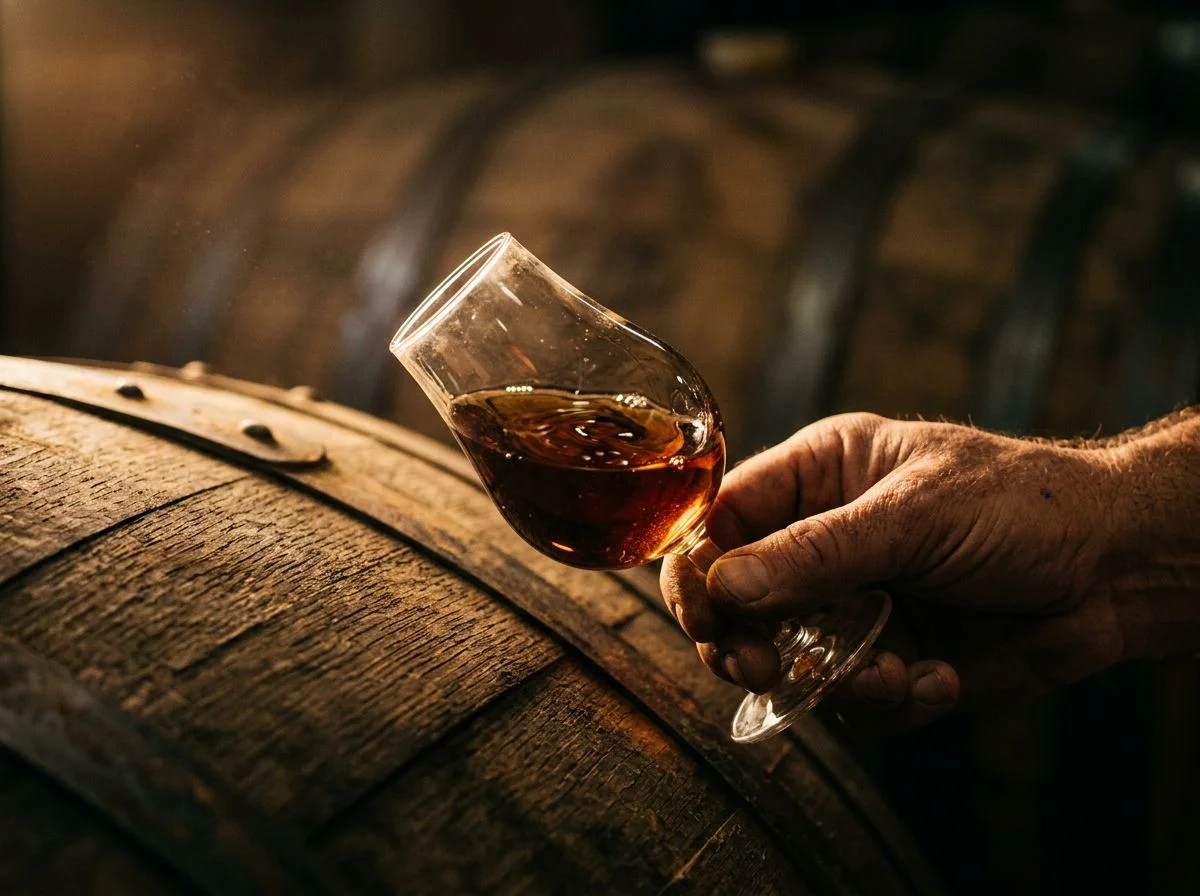
Here’s the part that keeps me coming back to interview brewers about this process: the tasting. Pulling a sample from a barrel is a ritual. You use a small metal tube called a thief, slide it through the bung hole, and coax out just enough beer to fill a small glass. The first sip is always a little tense. The brewer is looking for balance—not too much oak, not too much alcohol heat, the right level of sweetness.
For barrel aged fall beer, the timing of that tasting is everything. Pull it too early, and the beer tastes like a rough draft. Pull it too late, and the barrel has sucked out all the moisture, leaving behind a dry, astringent mess. The window can be as narrow as two weeks. That means the brewer tastes the same barrel every few days, chasing that perfect moment.
Jake told me about a barrel of barleywine he lost last year. “It was beautiful at eight months. I thought I had another month. By the time I came back, it was over-oaked. I dumped the whole thing.” He said it without drama, the way you’d describe a flat tire. But I could tell it stung. That’s the reality of this work—every barrel is a gamble, and sometimes the house wins.
Why Is the Release Window So Short?
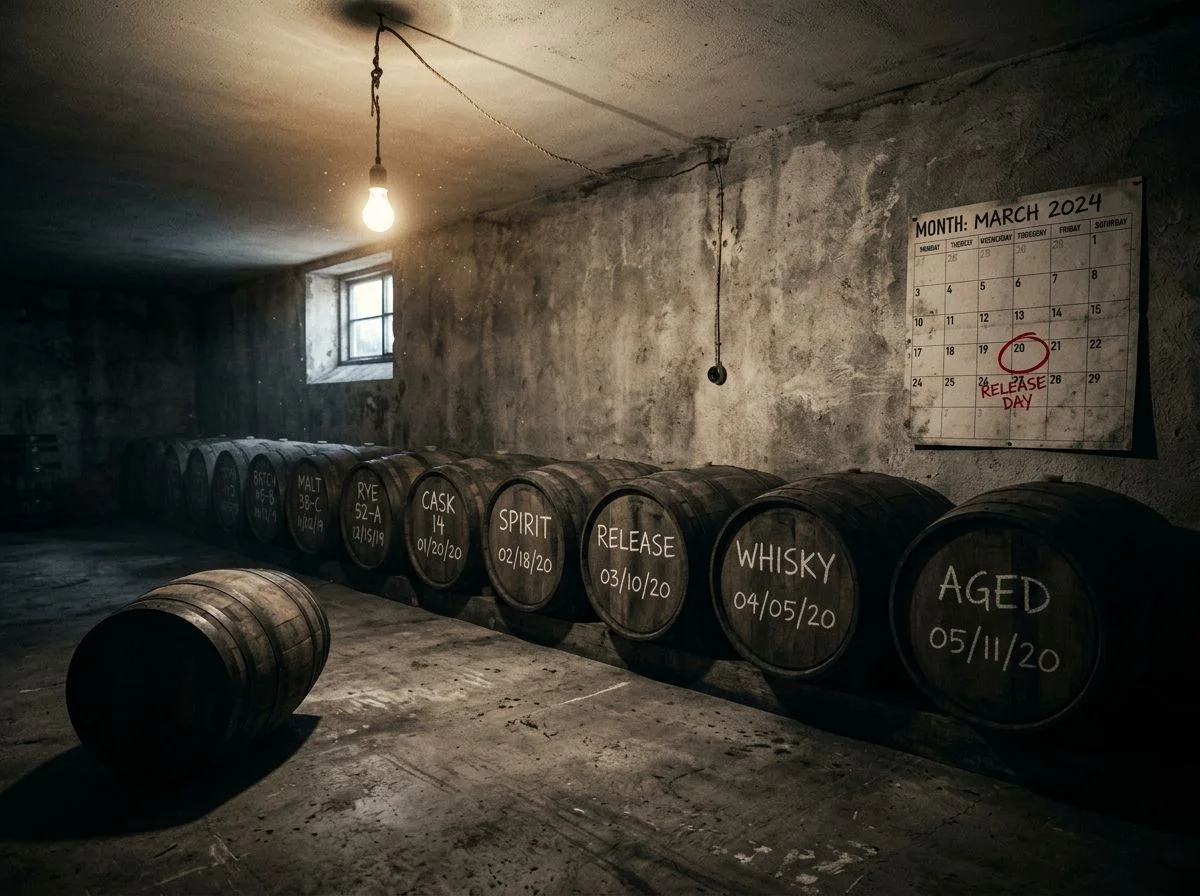
When the barrels are finally emptied, the beer gets blended, sometimes with a small amount of fresh beer to brighten it up. Then it goes into bottles or kegs. The release is usually a low-key event—a Saturday morning, a small crowd, a limit of two bottles per person. The people waiting in line know exactly what they’re getting. They’ve been tracking this beer for months, maybe years.
I’ve watched these releases from the back of the room, and there’s a particular energy to them. It’s not the frenzy of a hyped IPA drop. It’s quieter, more reverent. People hold their bottles like they’re carrying something fragile. And honestly, they are. A barrel aged fall beer is the result of a year of patient labor, a dozen small decisions, and a fair amount of luck.
An Honest Look at the Rough Patches
I should be clear: not every barrel aged fall beer is a masterpiece. I’ve had plenty that tasted like a bourbon bomb with no beer underneath. I’ve had others so tannic they made my mouth feel like I’d chewed on a leather boot. The style is unforgiving, and the failures are public.
That’s part of why I respect the brewers who keep doing it. They’re not chasing a trend. They’re chasing a vision of what a beer can be when you give it time, wood, and a little patience. The good ones know their failures are part of the process. The great ones learn from them.
Respect the Barrel Room and Its Beer
So this fall, when you pour a glass of barrel aged stout or a barrel-aged brown ale, take a second to think about the room it came from. The dim warehouse, the stacked oak, the brewer with a flashlight and a thief tube, checking on a beer that won’t be ready for weeks. That’s the unsung hero of the season—not the beer itself, but the people who spent the summer in a cold, dark room, waiting for the chill to catch up.
The next time you’re at a taproom and you see a barrel-aged release on the board, ask the bartender when it was racked. Chances are, they’ll have a story. And if you’re lucky, they’ll let you taste the difference time makes.