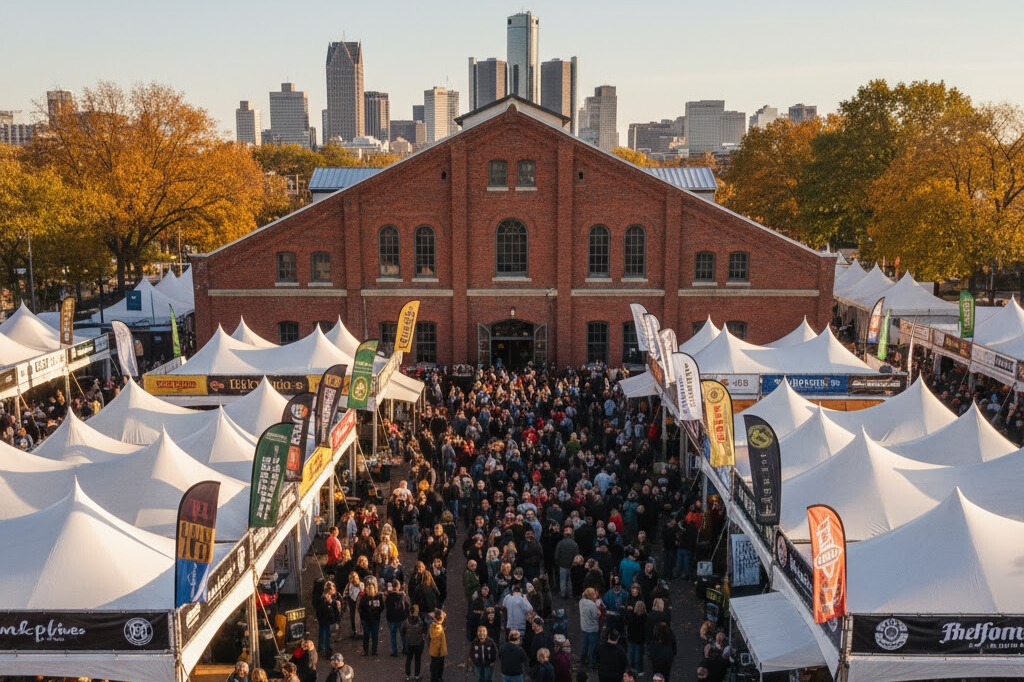
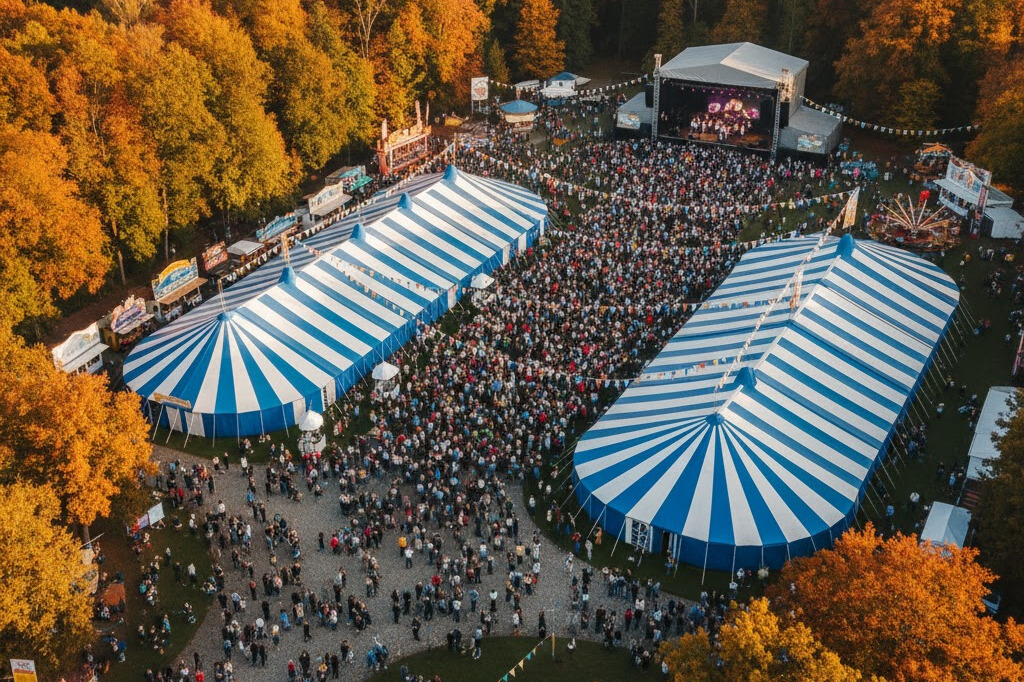
Picture this: autumn air filled with the cheerful blast of oompah bands. The rhythmic clinking of hefty glass steins. The sizzle of bratwurst on hot grills. From Cincinnati’s riverfront to Milwaukee’s lakefront and the Twin Cities’ brewery districts, Oktoberfest 2025 came alive with energy and tradition.
Here’s the surprising part. The craft beer industry took some hard hits this year. Production dropped 5%. Brewery closures outnumbered openings for the first time since 2005. But Oktoberfest? It absolutely crushed it.
Over 1.2 million people packed into major fall beer festivals across seven Midwest states. Breweries released more than 30 distinct Oktoberfest beers. The 2025 season proved something important: people still love authentic German beer culture. They want real community celebrations. And they’re willing to show up in huge numbers.[1]
- Where Oktoberfest Midwest 2025 Happened: Best Fall Beer Festival Events and Brewery Parties
- Best Oktoberfest Lagers Midwest Craft Breweries 2025: Authentic German Beer and Märzen Releases
- Craft Oktoberfest 2025 Trends: Why Local Brewery Oktoberfest Events Matter More Than Ever
- How to Plan Your Oktoberfest 2026 Visit: Reserve Tickets and Find Family Friendly Oktoberfest Midwest Events
- References
Where Oktoberfest Midwest 2025 Happened: Best Fall Beer Festival Events and Brewery Parties
Wondering where people celebrated Oktoberfest midwest 2025? You had options. Tons of them. From massive free festivals that drew hundreds of thousands to intimate brewery taproom events right around the corner.
Traditional German Oktoberfest Midwest Celebrations: Cincinnati and Wisconsin’s Giant Festivals
Let’s start with the big one. Oktoberfest Zinzinnati is America’s largest Oktoberfest celebration. Period. It drew 808,300 people in 2024.[2] The Cincinnati festival transformed six downtown blocks into a Bavarian city. We’re talking 300-foot fest tents that seated over 1,000 guests. Sam Adams sponsored the beer. But the real star? Hudepohl Brewing’s Oktoberfest Märzen. This brewery has been at it since 1885. That’s some serious history in a glass.
Wisconsin claims bragging rights for longevity. La Crosse Oktoberfest USA has been running since 1961. It’s the Midwest’s longest-running celebration. Up to 150,000 people showed up for the four-day event each September. The economic impact? A cool $26 million annually.[3] But La Crosse did something special. They kicked things off with the Tapping of the Golden Keg. Then came the Torchlight Parade. Thousands of handheld torches lit up the downtown streets. It was magical. The kind of thing you remember for years.
Milwaukee made big moves for 2025. The 15th annual Milwaukee Oktoberfest relocated to Henry Maier Festival Park.[4] That’s the famous Summerfest grounds. The move honored Mayor Henry Maier’s original 1960s vision. He was inspired by Munich’s Oktoberfest and wanted something similar for Milwaukee. The expanded venue ran October 3-5. Early bird tickets cost just $6. Wait until the day of? You paid $12. They featured imported German beers: Hofbräu, Hacker-Pschorr, and Paulaner. Plus local craft offerings. The goal was clear. Rival the huge celebrations in Cincinnati and St. Louis that pull in hundreds of thousands.
Minnesota Wisconsin Oktoberfest Breweries 2025: Local Brewery Oktoberfest Parties Lead the Way
Here’s where things got interesting. In Minneapolis and St. Paul, breweries took charge. They didn’t just participate. They owned the celebration.[5]
When the iconic Gasthof zur Gemütlichkeit closed, Fulton Brewing stepped up. They bought the equipment. Brought back the vendors. Created a full German beer garden right at their production facility. They ran celebrations over two weekends in September. Enormous polka tent. Family activities. The works. Pryes Brewing went even bigger. Three weekends of festivities along the Mississippi River. Utepils Brewing and Waldmann Brewery both ran popular ticketed two-weekend events. This multi-weekend model became Minnesota’s new standard. The entire season turned into one long celebration.
Kansas City Bier Co. brought 16,000 people to Crown Center for their KC Oktoberfest on October 3-4. Everything served? Brewed in-house. They use 100% imported German malt and hops. Festbier, Dunkel, Hefeweizen, Helles Lager. All authentic. All theirs. Reserved tables sold out fast. General admission stayed available. That showed people want premium experiences. They’re willing to pay for them.
Chicago’s brewery scene really showed off. Begyle Brewing and Dovetail Brewery ran their 13th annual Oktoberfestiversary on October 11-12. They transformed Ravenswood Corridor into an outdoor street festival. Ten food trucks serving traditional food. Twelve-plus bands across two stages. German puppet theater for the kids. Revolution Brewing went all out with multiple celebrations. September 19 featured a Chicago Riverwalk Bar Crawl. The Bolzen Beer Band played live polka at five venues. Then came their major street festival September 27-28 in Logan Square.
Iowa City kept tradition alive with their 29th annual Northside Oktoberfest on September 20. The BrewFest featured 40-plus regional and national vendors. They poured 140-plus craft brews. Tickets cost $60 for unlimited samples. All 800 spots sold. Here’s the cool part. Over 29 years, this festival raised $750,000-plus for local charities. It’s not just a party. It’s giving back to the community.
Best Oktoberfest Lagers Midwest Craft Breweries 2025: Authentic German Beer and Märzen Releases
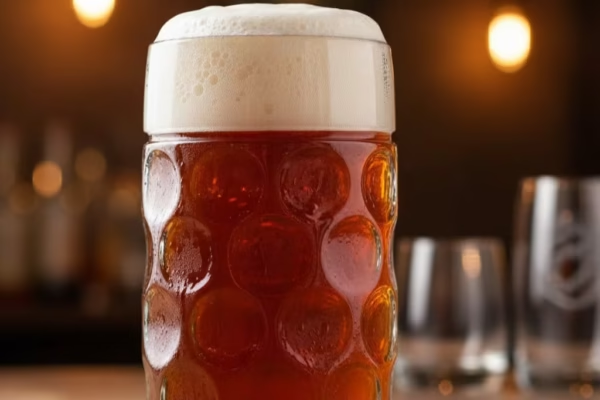
Midwest breweries released over 30 distinct Oktoberfest beers in 2025. Traditional amber Märzen styles dominated by a landslide. Why? American consumers expect Oktoberfest beer to be amber. Rich. Malty. Full of caramel flavor. Munich’s actual Oktoberfest only serves golden Festbier these days. But American breweries know what their customers want.
Top-Rated Authentic Oktoberfest Beer from Midwest Breweries
Third Space Brewing in Milwaukee earned the highest rating. Their Oktoberfest scored 4.3 out of 5. Dark amber color. Toasty malts. Clean finish. Everything you want. They also brewed something wild. Brezelbrau Dunkel Lager. They actually put Bavarian soft pretzels from Milwaukee Pretzel Company into the brewing process. It debuted at their inaugural September 6 celebration.
Revolution Brewing set Chicago’s gold standard. Their Oktoberfest ran 5.7% ABV with 25 IBU. They used 100% German malts: Pilsner, Vienna, Carared, and Munich. The hops? Hallertau Mittelfrüh.[6] It delivered smooth, toasty flavor. You got hearth-baked bread aromas. A sweet-to-bitter finish that balanced perfectly. Untappd shows 45,609 ratings averaging 3.7 out of 5. Chicago beer lovers call it their go-to standard.
Want to know what flew off the taps fastest? According to brewery interviews, Toppling Goliath’s Oktoberfest in Decorah, Iowa, “remained the most sought-after beer from the moment it was tapped.” It stayed number one until the kegs ran dry. Titletown Brewing in Green Bay featured “Bent Tuba.” Their head brewer calls it “a really solid example of that style.” It was their biggest seasonal offering. You could find it on store shelves across the region.
New Glarus Brewing’s Staghorn Octoberfest has cult status. It’s Wisconsin’s signature October beer. The stats are impressive: 48,322 Untappd ratings at 3.8 out of 5. Here’s the kicker. In blind tastings, enthusiasts prefer it over authentic Bavarian imports.[7] It uses Wisconsin-malted barley from Briess. Plus German Munich malt. American Cascade hops meet German Hallertau Mittelfrüh and Czech Saaz. The catch? Only available in Wisconsin. That creates pilgrimage culture. Illinois beer lovers regularly cross state lines just for Staghorn. The brewery participated in New Glarus’s village Oktoberfest festival. They did special tappings of traditional wooden kegs on September 26-27.
Great Lakes Brewing Company’s Oktoberfest gets around. It’s distributed across 14 states. Illinois, Indiana, Michigan, Minnesota, Ohio, and Wisconsin all get it. The beer earned four Great American Beer Festival medals. Beer Connoisseur gave it a 94 rating.[8] At 6.5% ABV and 20 IBU, it’s “über smooth.” They use 2-Row base malt, Munich, and Caramel 45 malts. Mt. Hood hops add that festive noble hop flourish. It’s one of the best Oktoberfest lagers Midwest craft breweries make.
Urban Chestnut Brewing in St. Louis has a winner. Oachkatzlschwoaf. Try saying that three times fast. Most people call it “O-Katz.” Pronounce it “oh-khut-zel-schvoaf” if you’re feeling brave. Bavarian brewmaster Florian Kuplent makes it. This Märzen/Festbier hybrid runs 5.4% ABV with 20 IBU. It won gold medals at the 2017 World Beer Championships and Brussels Beer Challenge.
Lakefront Brewery’s Oktoberfest served as official beer for multiple area events. Greater Racine’s Oktoberfest celebration featured it. It won Milwaukee Business Journal’s 2024 Oktoberfest Beer Bracket Challenge. Brewery reps call it “a very good October Fest.” It’s one of their four main seasonal offerings. At 5.6-5.8% ABV and 20 IBU, it hits the sweet spot.
Oktoberfest Beer Styles: Märzen vs Festbier German Beer Explained
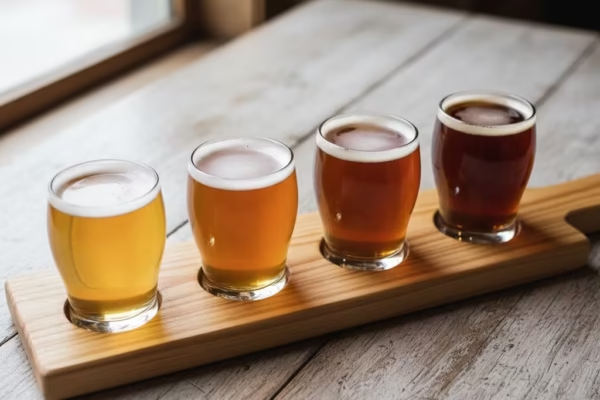
Let’s clear something up. Märzen and Festbier are different beasts.
Märzen is amber to copper colored. Rich toasty malt. Caramel notes. Fuller body. Usually 5.8-6.3% ABV. Brewers made it in March before refrigeration existed. They lagered it through summer for fall drinking.
Festbier is golden colored. Lighter body. More drinkable. Designed for festival consumption by the liter. Munich breweries shifted to this style in the 1970s and 1990s. That’s all they serve at Munich’s Oktoberfest now.
Midwest releases in 2025 showed tight patterns. ABV ranged from 5.4% to 6.5%. Most landed at 5.7-6.0%. IBU levels stayed moderate at 20-25. The focus? Malt character over hop bitterness. Malt bills used Munich malt as the foundation. Vienna, Pilsner, and Caramel malts played support. Hop profiles favored German varieties: Hallertau, Saphir, Perle, Hersbrucker, Tettnanger, Saaz. Plus American Mt. Hood.
Craft Oktoberfest 2025 Trends: Why Local Brewery Oktoberfest Events Matter More Than Ever
The 2025 season happened against rough odds. The Brewers Association reported some tough numbers. Only 9,269 craft breweries were operating in June 2025. That’s down 1% from 9,352 in June 2024. Craft beer production fell 5% year-over-year.[9] The Beer Purchasers’ Index stayed in contraction territory for over three years straight. Translation? Distributors are ordering less craft beer. That creates bottlenecks.
But Oktoberfest thrived. Industry observers call it “hyper-localization.” Breweries focus on their immediate communities instead of chasing broad distribution. Here’s the bright spot. The Brewers Association found that while the industry contracted overall, nearly half of all breweries still reported growth. Particularly the smallest taprooms and brewpubs.
The brewery-hosted festival model makes perfect business sense. When breweries host their own Oktoberfest parties, they capture everything. Every beer. Every pretzel. Every branded stein. Full retail value. No middleman. That’s the highest possible margin in today’s market.
According to interviews, 22 Northmen Brewing in Alexandria, Minnesota, went through more than 50 kegs on Saturday alone. Their Oktoberfest marked “the last major event of their busy season.” They even added “Kids October Fest” on Friday. Root beer stein holding. Games. Family fun.
Minnesota showed everyone how it’s done. Craft beer production increased 10.8% in 2024 while the rest of the country declined.[10] How? They diversified. THC beverages. Non-alcoholic options. Entertainment programming that transformed breweries into event centers.
Wisconsin stuck with tradition. Minimal craft experimentation. Authenticity-first experiences. It works for them. Chicago used its brewery density as an advantage. With 85-plus events in a single September weekend, differentiation became crucial. German puppet theater. Alphorn duos. Specialized food vendors. Each brewery needed something unique.
Missouri demonstrated focused excellence. KC Bier Co.’s vertical integration using 100% imported German ingredients created quality control that rivaled major regional festivals. All proprietary beers. All top-notch.
Programming went way beyond beer service. Live polka bands appeared at virtually every event. Competitive activities became standard. Stein-holding contests sanctioned by the U.S. Steinholding Association. Hammerschlagen nail-hammering games. Dachshund races. Even Munich’s Oktoberfest showed evolution. Their mid-term review noted a 6-10% increase in non-alcoholic beverage consumption. Midwest breweries picked up on this trend. They adapted to changing consumer preferences.
How to Plan Your Oktoberfest 2026 Visit: Reserve Tickets and Find Family Friendly Oktoberfest Midwest Events
Looking ahead to 2026? Planning ahead matters. Early bird pricing saves serious money. Milwaukee Oktoberfest’s early birds paid $6 versus $12 day-of in 2025. That’s 50% savings. Some brewery celebrations sell out weeks ahead. Sign up for brewery newsletters. Follow social media for early access.
Free admission mega-festivals still exist. Cincinnati, La Crosse, Appleton, and Greater Racine won’t charge you to get in. But expect to pay for parking. Premium seating costs extra too.
Peak weekend dates fall on the third and fourth weekends of September. You’ll find the most events then. But also the biggest crowds. Later October celebrations like Chicago’s Oktoberfestiversary offer something different. Lower competition. Cooler weather. Better for outdoor beer gardens.
Want authentic traditional German experiences? Hit Wisconsin festivals with heritage connections. Bavarian Bierhaus has been at it for 60-plus years. New Glarus runs a village-wide celebration. La Crosse has the longest-running festival. For maximum beer selection, target Chicago’s multi-brewery collaborations. Or Iowa City’s BrewFest with 40-plus vendors pouring 140-plus beers.
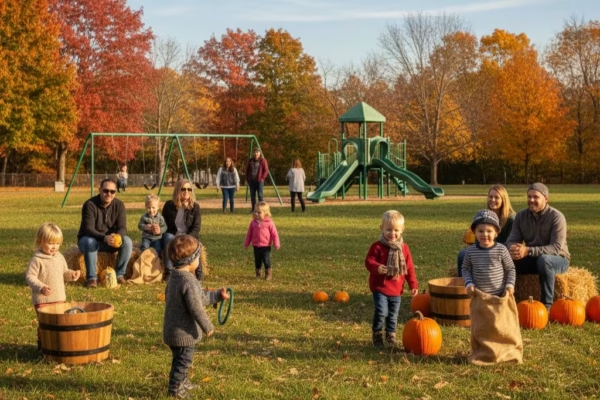
Family-friendly programming exploded in 2025. Milwaukee Oktoberfest featured a huge playground. Free admission for kids 10 and under. Chicago’s Oktoberfestiversary offered German puppet theater and face painting. St. Louis Zootoberfest combined animal exhibits with German beer and food. Many indoor venues offered climate-controlled comfort. Perfect for families with young children.
For breweries planning 2026, the lessons from 2025 are clear. Traditional Märzen styles won big. Experiment at your own risk. Quality execution of classic recipes pays off. Multi-weekend formats work. They spread weather risk. They capture broader audiences. Event merchandise adds revenue with minimal cost.
The brewery-as-event-center model proved resilient. Off-premise beer sales keep declining. Distributors keep cutting craft portfolios. But direct-to-consumer taproom revenue carries higher margins. Oktoberfest programming drives foot traffic. It increases spending per person. Food. Entertainment. Merchandise. It builds loyalty that lasts beyond the season.
Industry analysts see Oktoberfest 2025 as proof. Experiential beer consumption beats commodity distribution. Production volumes fell. But festival attendance stayed strong. That disconnect reveals opportunity.
As one industry consultant said, “Focus will be the word of the year.” Oktoberfest proved it. Focused, community-centered celebrations thrive. Even when broader craft beer segments struggle.
The 2025 Midwest Oktoberfest season showed something vital. Authentic German beer culture still works. Quality matters. Community focus matters. Execute it right, and people show up. They bring their families. They spend money. They come back.
Craft beer is maturing. Overall volumes keep dropping. But devoted enthusiasts drink more per person. Oktoberfest gives breweries a shot. Convert casual drinkers into loyal customers. Create memorable experiences.
The season’s success offers a clear roadmap. Breweries that deliver compelling experiences beyond just beer? They build defensible positions. Distribution channel pressures can’t touch them.
In the autumn air of 2025, clinking steins sent a message. Not just celebration. Resilience. Strategic adaptation. From the heart of America’s craft brewing industry. The sound of a future being forged, one festival at a time.
References
- Unearth The Voyage – https://unearththevoyage.com/oktoberfest-2025-best-breweries-us-celebrations-festivals-beer/
- Oktoberfest Zinzinnati – https://oktoberfestzinzinnati.com/
- Oktoberfest USA – https://www.oktoberfestusa.com/
- Milwaukee Oktoberfest – https://milwaukeeoktoberfest.com/
- Star Tribune: Best Oktoberfests in Minnesota 2025 – https://www.startribune.com/prost-the-top-12-minnesota-oktoberfests-to-hit-in-2025/601470834
- Revolution Brewing Oktoberfest – https://revbrew.com/beer/seasonals/oktoberfest-revolution
- New Glarus Brewing Seasonal – https://newglarusbrewing.com/pages/seasonal
- Great Lakes Brewing Fall Seasonal Lineup – https://www.greatlakesbrewing.com/news/2025-fall-seasonal-lineup/
- Brewers Association 2025 Midyear Report – https://www.brewersassociation.org/association-news/2025-midyear-report/
- Craft Brewing Business: Craft Beer Midyear 2025 Outlook – https://www.craftbrewingbusiness.com/business-marketing/craft-beer-midyear-2025-outlook-brewery-count-drops-production-follows/