Table of contents
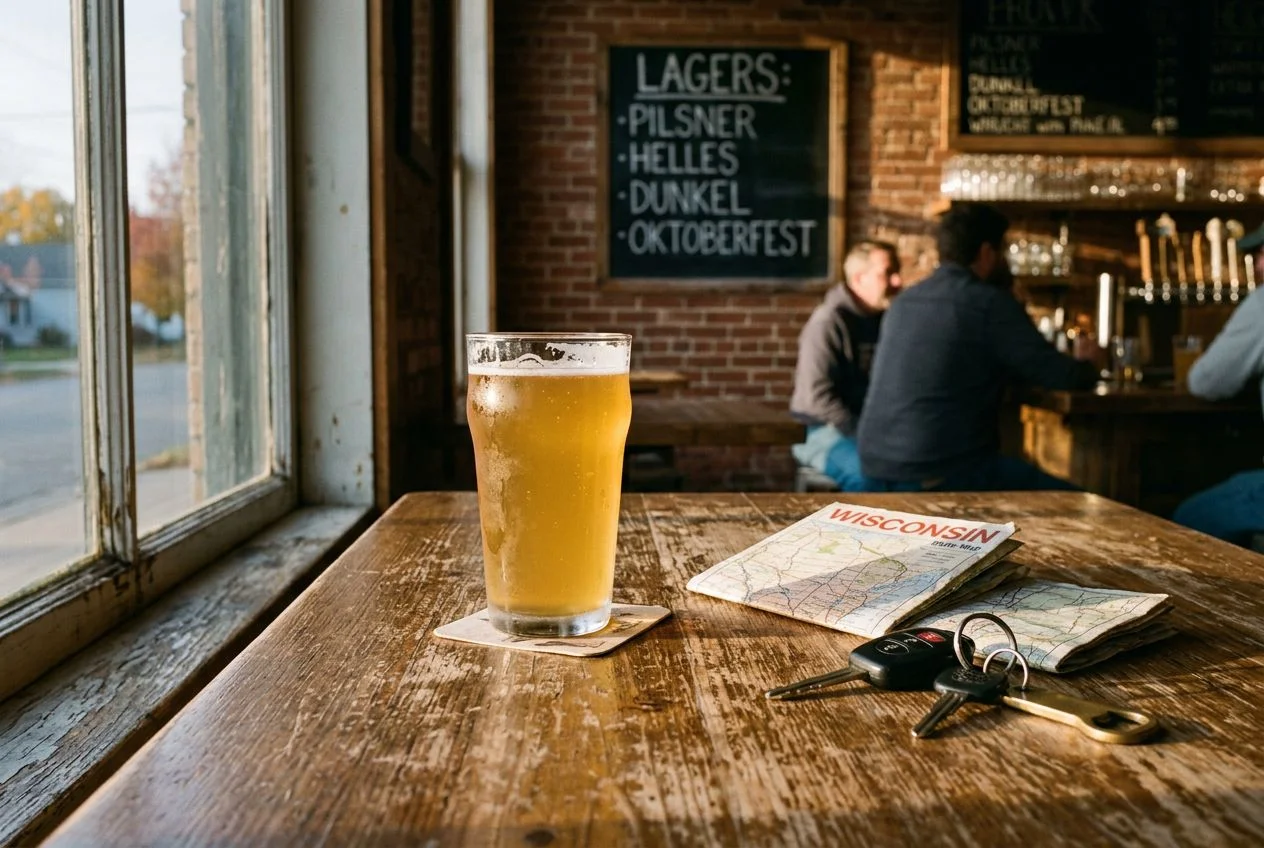
There’s a moment that happens in almost every Wisconsin taproom. It usually comes on a Saturday afternoon, usually at a table near the window. Someone in the group scans the beer list. Often it’s the one who drove up from Chicago. They pause, then ask the bartender the same question: “Do you have anything like Spotted Cow?”
The bartender has heard it a thousand times. The answer is almost always no. But the question itself is the interesting part. It reveals something real about Wisconsin beer culture. This is a state with its own palate, its own reference points, and its own expectations. Those things don’t always translate across the border. Understanding that palate isn’t just trivia for beer nerds. It explains why some breweries thrive here and others stall. It explains why a tap list in Madison looks nothing like one in Denver. And it explains why the rest of the Midwest keeps trying to crack the code.
How New Glarus Shaped Wisconsin Beer Culture
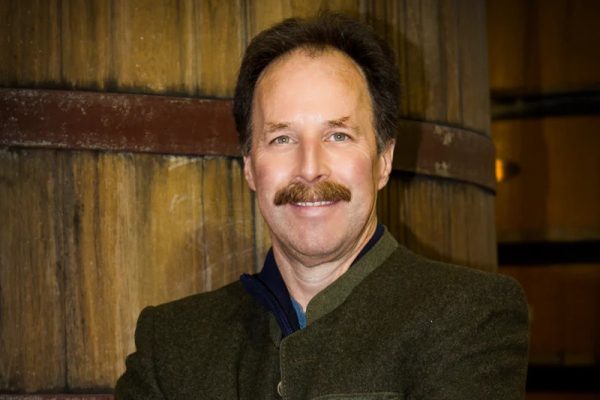
It’s tempting to treat Spotted Cow as the beginning of the story. It isn’t. New Glarus Brewing Company opened in 1993 in the tiny Swiss-heritage town of New Glarus. Founders Dan and Deb Carey spent the early years brewing German-style lagers and wheat beers. Most Wisconsin drinkers had never encountered those styles. The brewery nearly didn’t make it. Early distribution was limited, and the Careys were self-financing much of the operation out of pocket before Spotted Cow found its footing.
What Spotted Cow actually is matters here. It’s a cream ale, around 4.8% ABV. It’s unfiltered, lightly sweet, and deliberately unaggressive. It doesn’t chase hop bitterness or barrel-aged intensity. It’s a beer built to be drunk in quantity — on a pontoon boat, at a Friday fish fry. And because New Glarus sells only in Wisconsin, it became a kind of border marker. The Careys have held to that decision for decades. You can’t buy it in Minnesota or Illinois. That scarcity turned a mild-mannered cream ale into the state’s default beer. Its flavor profile became the state’s default expectation.
The mistake outsiders make is assuming every Wisconsin brewery is chasing Spotted Cow. Most aren’t. What they’re chasing is the drinker Spotted Cow created. That’s someone who wants something clean, sessionable, and approachable. But it’s also someone who has, over thirty years, developed a genuine taste for German lagers, Wisconsin-grown hops, and the occasional oddball experiment.
Why Wisconsin Beer Culture Runs on Lager
Walk into any Wisconsin brewery of a certain size and count the lagers on the board. In many taprooms, they outnumber the IPAs. That’s not an accident of heritage. It’s a response to what actually sells.
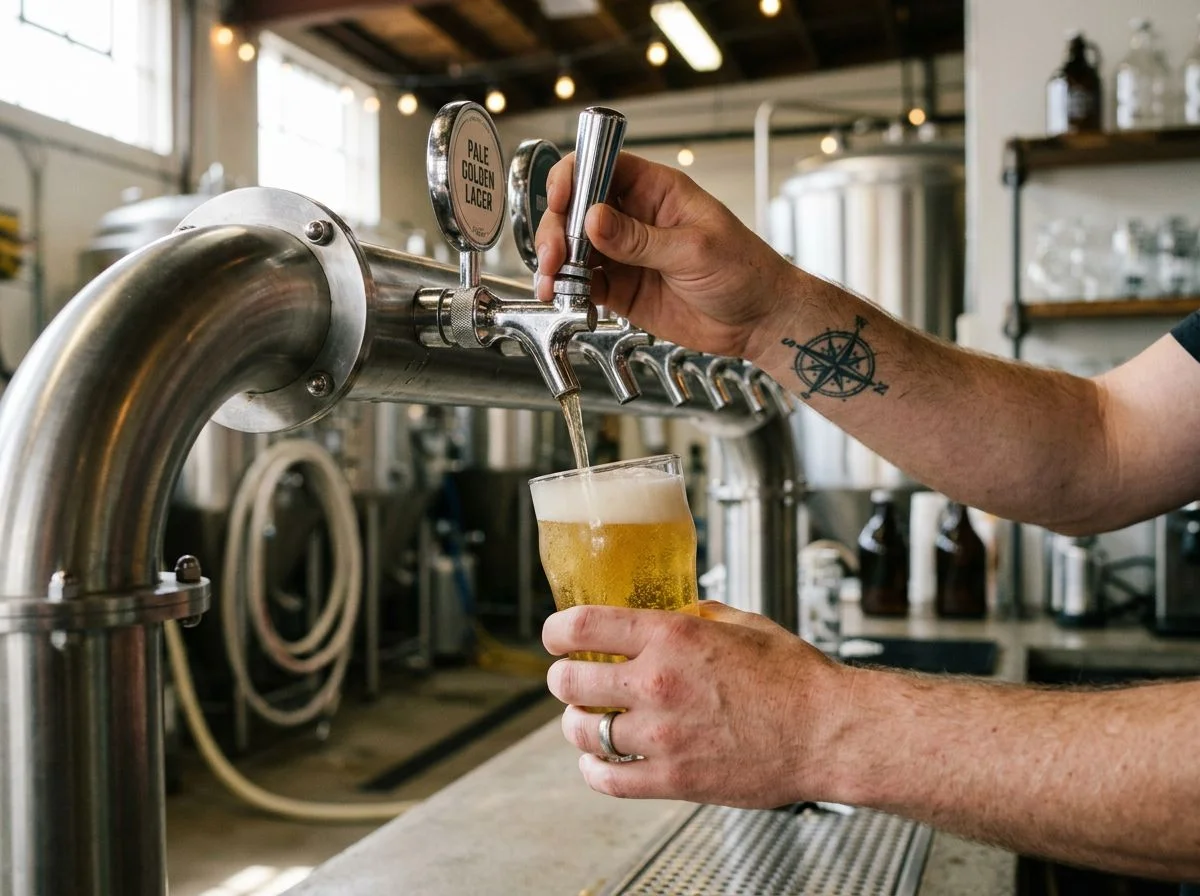
Lager brewing is slower and more expensive than ale brewing. Cold fermentation and weeks of lagering tie up tank space. That space could otherwise turn over every ten days. A brewery that commits to lagers is making a real financial bet. In Wisconsin, that bet tends to pay off. Lakefront Brewery in Milwaukee has been brewing its Riverwest Stein amber lager since 1987. It remains one of the brewery’s flagship sellers. Capital Brewery in Middleton built its entire identity around German-style lagers starting in 1984. Back then, “craft beer” wasn’t yet a phrase most people used.
The reason is partly cultural and partly practical. Wisconsin has a long, deep German and Czech immigrant history. The state’s pre-Prohibition brewing tradition was overwhelmingly lager-focused. Milwaukee alone was home to dozens of breweries before 1920. Most of them produced pale lagers for a working-class customer base. That tradition didn’t disappear. It went underground during Prohibition, then re-emerged in the 1980s and 1990s. The modern craft movement gave it a second life.
For a brewery trying to build a sustainable business in a small Wisconsin town, a clean, well-made lager is often the safest bet on the board. It sells to the guy who’s been drinking the same brand for forty years. It also sells to the twenty-something who just discovered craft beer. That’s a wide net.
The Hop Story Behind Wisconsin Beer Culture
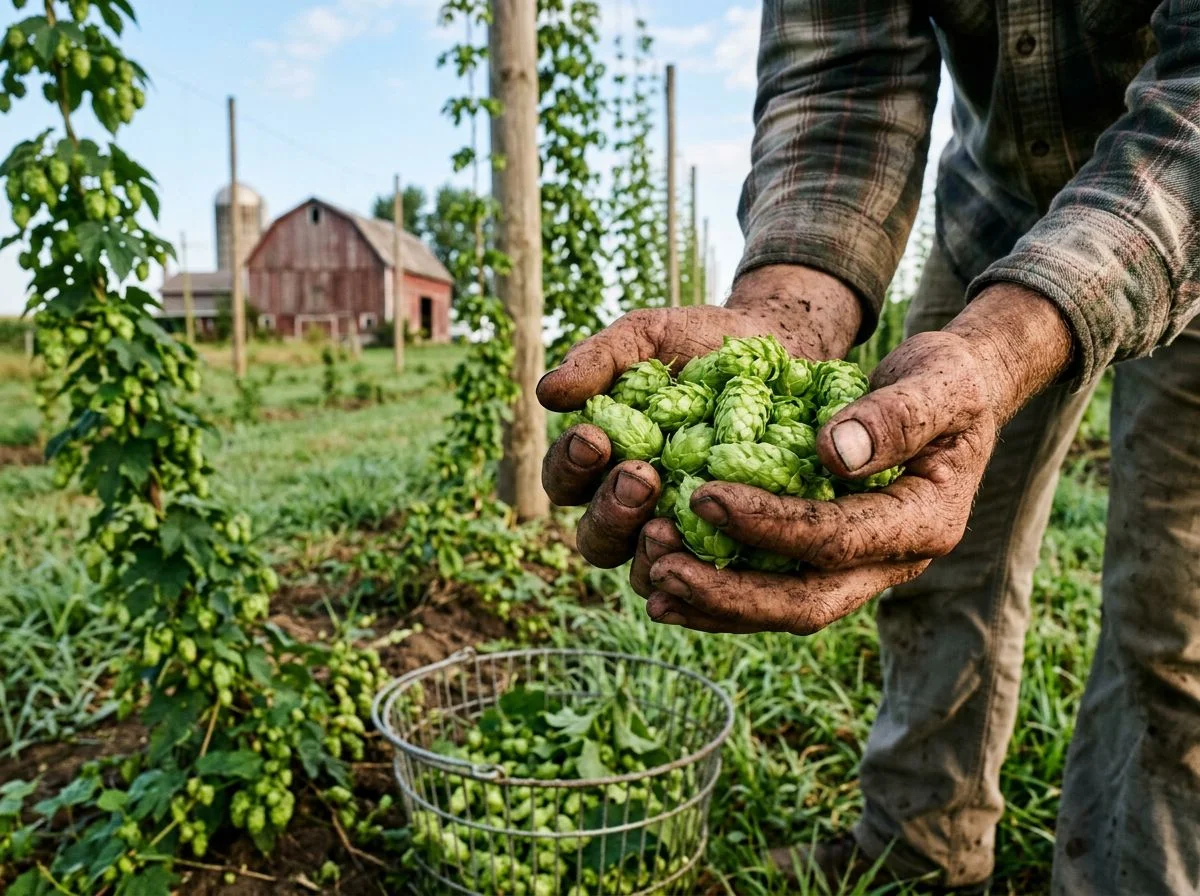
Wisconsin isn’t Oregon or Washington. But it has a genuine hop-growing history that predates the craft boom by more than a century. Sauk County was a major hop-producing region in the 1860s. It supplied breweries across the Midwest before disease and market shifts wiped out most of the industry. In the last fifteen years, that history has been quietly revived.
Gorst Valley Hops, based near La Farge, is one of several Wisconsin growers supplying local breweries. They grow varieties like Cascade, Centennial, and experimental Wisconsin-grown cultivars. The result is a small but growing number of beers that taste like a specific place. Think of a wet-hopped ale from a Driftless Region brewery that uses hops grown within fifty miles of the brewhouse.
This matters because it complicates the lazy assumption that Wisconsin beer is all mild and malty. There are aggressively hopped beers here. There are hazy IPAs, pastry stouts, and sour programs that would hold their own anywhere. The difference is that they exist alongside — not instead of — the lagers and cream ales. Wisconsin drinkers didn’t abandon their traditional palate. They expanded it.
What Do Taproom Numbers Say About Drinkers?
The Brewers Association tracks craft brewery counts by state. Wisconsin consistently ranks in the top ten nationally for breweries per capita. That density creates a specific kind of market pressure. With that many taprooms competing for the same Saturday crowd, breweries can’t survive on novelty alone. They have to serve the regulars.
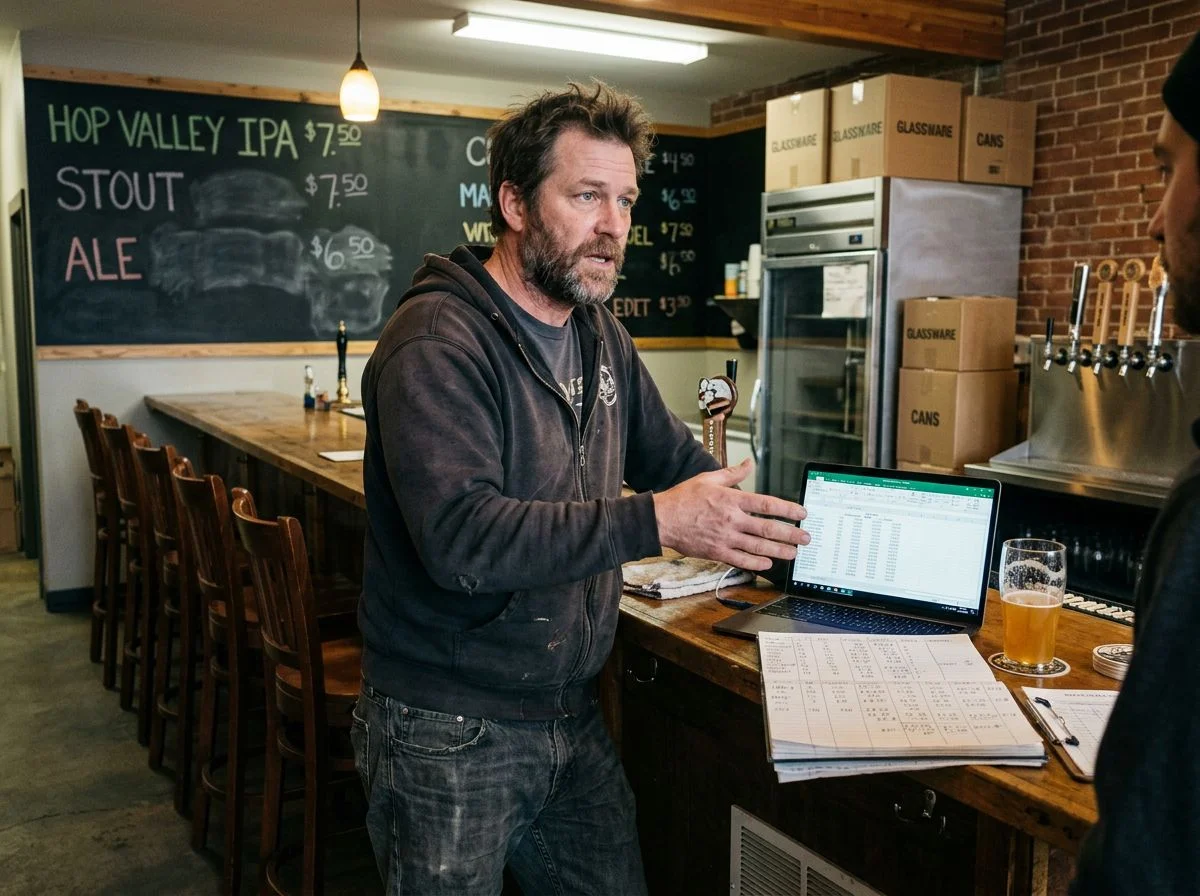
That’s why so many Wisconsin taprooms look similar on the surface. There’s a couple of lagers, a cream ale or blonde, an amber, a hazy IPA, a seasonal. Maybe a barrel-aged something for the folks who want it. The variety is real, but it’s organized around a core. That core reflects what people actually drink week after week.
It also explains why some out-of-state breweries struggle when they expand into Wisconsin. A tap list built for a Denver or Portland audience can feel out of step here. Those lists lean heavy on bitter IPAs and experimental sours. The breweries that succeed tend to adapt. They add a lager or a lighter option to the lineup. They don’t assume the local palate will meet them where they are.
Why Wisconsin Beer Culture Matters Everywhere
Wisconsin beer culture isn’t just a regional curiosity. It’s a working example of something the broader craft industry has been arguing about for years. Should craft beer chase the enthusiast or the everyday drinker? Wisconsin, mostly by accident of history, chose the everyday drinker. It built a thriving, dense, and durable brewery scene in the process.
That’s a lesson worth paying attention to. The state’s breweries didn’t get here by being the most extreme or the most awarded. They got here by making beer that people want to drink on a Tuesday. The Spotted Cow question at the taproom window isn’t a sign that Wisconsin drinkers are stuck in the past. It’s a sign that they know what they like. And it’s a sign that the breweries around them have learned to give it to them without giving up on experimentation.
Next time someone asks for something like Spotted Cow, it’s worth listening to what the bartender recommends. The answer probably isn’t a cream ale. It’s more likely a helles, a kolsch, or a pilsner brewed twenty minutes down the road. And it’s probably better than whatever the person was expecting.