Table of contents
The smell hits before the building does. On a stretch of Highway 14 west of Madison, it rolls across the road. Warm hay, silage, something faintly sweet and sour at once. It settles over a taproom parking lot. Inside, the tanks are stainless and modern. Outside, the view is the same one Wisconsin farmers have looked at for a century and a half: corn, alfalfa, a treeline, and sky.
That proximity isn’t a coincidence, and it isn’t just scenery. Wisconsin’s craft beer scene grew directly out of the state’s agricultural economy. That’s easy to miss if you only read tap lists. The hops, the grain, the fruit, the yeast — even the water — trace back to the same land that made Wisconsin the Dairy State. Understanding that connection is the difference between drinking a beer and tasting where it came from.
The Grain State Needed a Plan for All That Grain
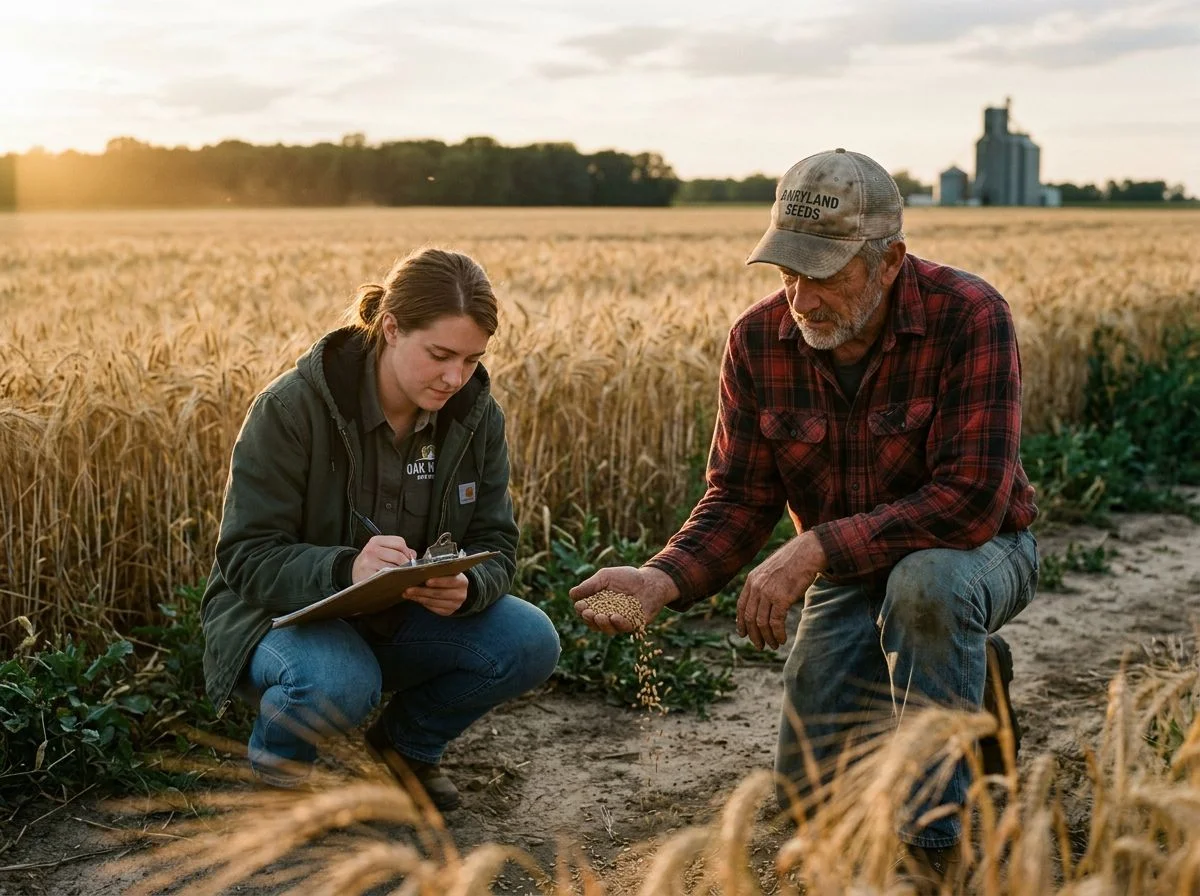
Wisconsin didn’t become a beer state by accident — it became one because it was first a farming state, and farming produces surplus. By the late 1800s, Wisconsin was one of the nation’s leading wheat producers, and wheat that didn’t go to flour had another use. Milwaukee’s early breweries — Pabst, Schlitz, Miller, Blatz — grew up around a port city at the confluence of three rivers, with Lake Michigan on one side and a grain belt on the other. The barley and wheat came in from the surrounding counties, the German and Czech immigrants who brewed it brought lager yeast and a taste for clean, cold-fermented beer, and the lake provided ice.
Prohibition shut most of it down in 1920. When it ended in 1933, the industry consolidated into a handful of giants. For roughly sixty years, Wisconsin beer meant macro lager. The agricultural thread was still there. But it ran through commodity contracts and rail cars, not farm-to-pint taproom chalkboards.
The modern craft era in Wisconsin started later than it did on the coasts. But when it arrived, it arrived with a built-in advantage: the state already knew how to grow things.
What Wisconsin Farm-to-Pint Means in a Glass

Wisconsin farm-to-pint gets used loosely, but in practice it describes a short supply chain — ingredients grown, malted, and brewed within a few hours’ drive. Start with the water. Wisconsin sits on a deep glacial aquifer, and the mineral profile varies enough that brewers in different parts of the state work with genuinely different starting points. Harder water in the southeast, softer water in the north. A brewer can build a water profile from scratch, but the local source shapes what styles make sense to brew.
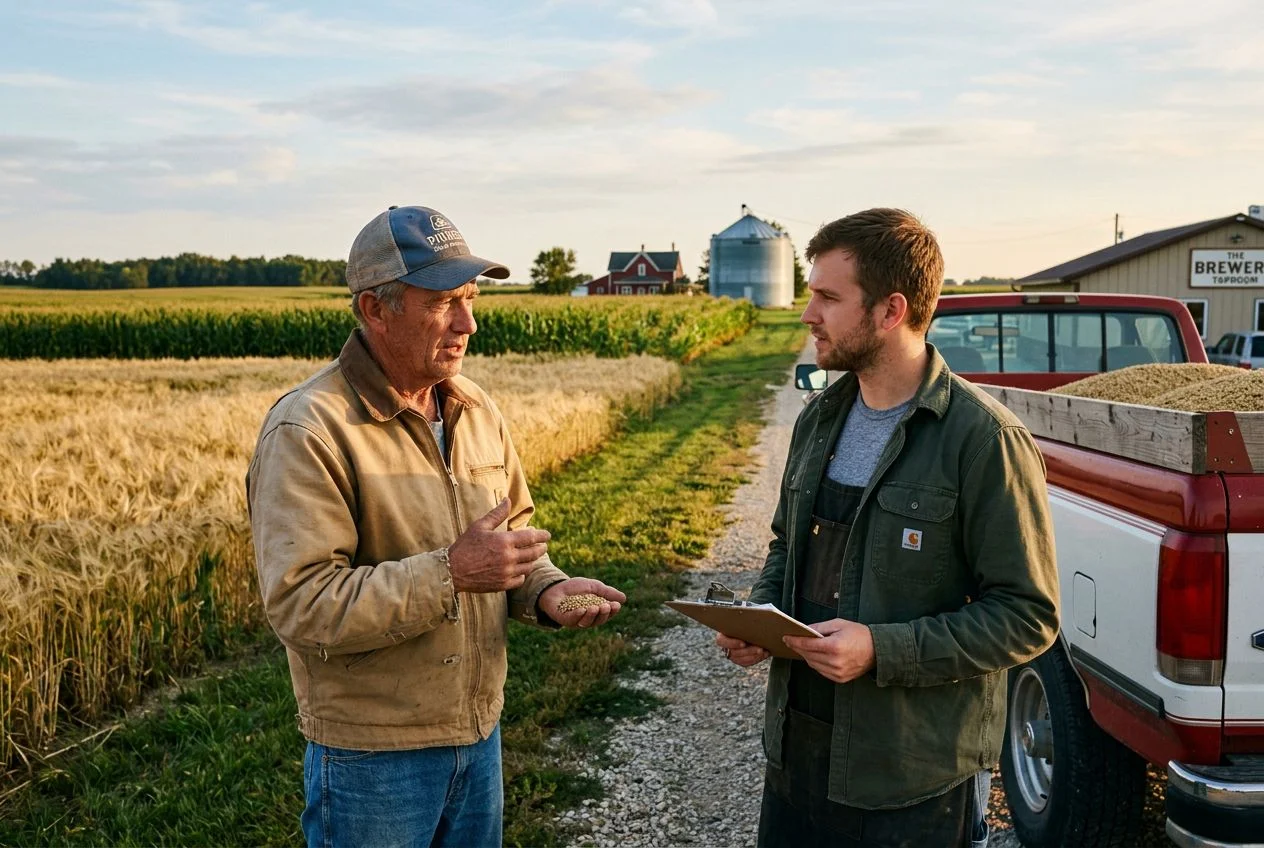
Then the grain. Most craft beer is made with malted barley, and most of that barley is grown in the upper Midwest — North Dakota, Montana, Minnesota, and Wisconsin’s own barley belt in the south-central counties. A smaller but growing share is malted in-state. Wisconsin has seen a handful of craft maltsters open in the last decade, supplying brewers who want a grain bill they can trace to a specific farm.
Hops are the harder sell. Wisconsin’s climate isn’t ideal for the big, high-alpha varieties that dominate West Coast brewing, and the state’s commercial hop acreage is a fraction of what it was before Prohibition-era disease and market shifts wiped it out. But small hopyards have reappeared, most growing aroma varieties for local brewers who want something that tastes like the place. The crop is small and the yields are inconsistent, but the beer that comes out of it is often genuinely different from anything made with a standard hop bill.
Fruit is where Wisconsin farm-to-pint gets the most obvious. Door County cherries, Wisconsin cranberries from the central sands region, apples from the driftless area — all of it ends up in beer. Sometimes well, sometimes less so. A cherry wheat made with fruit from a specific orchard tastes like that orchard; a cherry wheat made with concentrate tastes like candy. The difference is usually visible on the label. It’s almost always worth the extra dollar.
Does the Dairy Connection Really Show Up in Beer
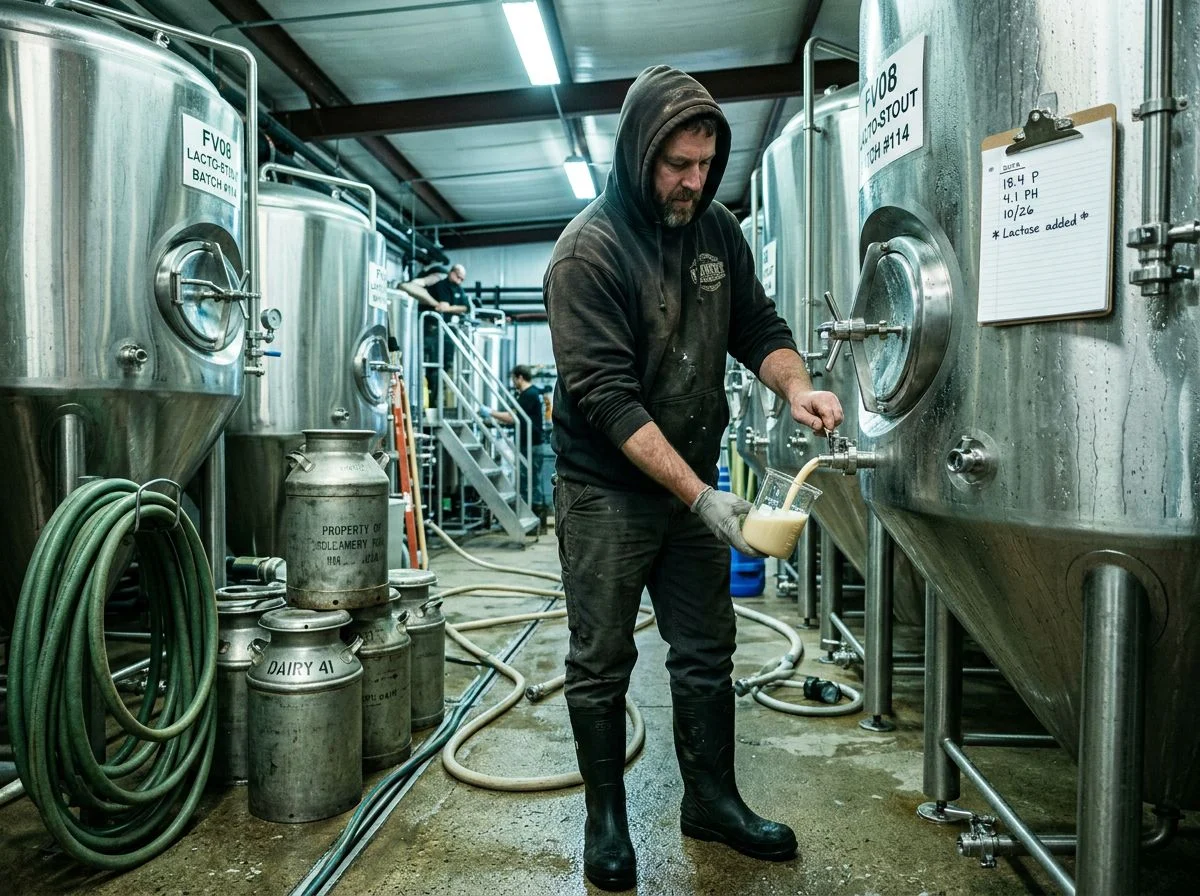
Here’s the part that surprises people: Wisconsin’s dairy heritage shows up in beer in ways that have nothing to do with lactose. Lactose — milk sugar — is a real ingredient in some beers, particularly milk stouts, because it’s unfermentable and stays in the finished beer to add body and a soft sweetness. A handful of Wisconsin breweries use it, and a few source it from in-state dairy processors. But the deeper connection is structural.
Dairy farming in Wisconsin is a business of thin margins, tight schedules, and family labor. So is craft brewing. The two industries share a certain temperament: get up early, do the same thing well every day, don’t get fancy when simple works. A lot of Wisconsin brewery founders came out of farm families or married into them. It shows in how they run their businesses — cautious about debt, focused on consistency, skeptical of hype.
There’s also a practical overlap. Both industries depend on cold storage, sanitation, and a reliable supply of clean water, and a dairy processor and a brewery use similar equipment for similar reasons. When a creamery closes in a small Wisconsin town, it’s not unusual for a brewery to move into the building. The floors are already sloped for drainage. The electrical service is already heavy. The walk-in cooler is already there.
That’s not nostalgia. That’s infrastructure.
Small Towns and the Economics of Staying Local

Wisconsin has more breweries per capita than most states, and a disproportionate share of them are in towns under 5,000 people. That’s unusual — in most states, craft beer clusters in metros, but in Wisconsin you can find a working taproom in a village with one stoplight and a co-op grocery. Some of these breweries are passion projects that never quite scale. Others have become genuine local institutions, the place where the fire department holds its fundraiser, where the high school reunion happens, where a farmer stops in after the co-op closes.
The economics are tight. A small-town brewery typically needs to sell most of its beer on-site or within a short radius, because distribution costs eat the margin. That constraint pushes them toward the same logic as a farm: sell what you make, make what you can sell, and don’t overbuild. It also pushes them toward local ingredients, since a short supply chain is cheaper than a long one when you’re moving small volumes.
Not every one of these breweries makes it. Some open with good intentions and thin capital, and a few years later the tanks are for sale. That’s the honest part of the story — the part that doesn’t make it into tourism brochures. The Wisconsin farm-to-pint model works when the brewery is genuinely rooted in its community and genuinely disciplined about its numbers. It fails when it’s a hobby with a business license.
What Should You Look For Standing at the Bar
If the goal is to taste Wisconsin’s agricultural heritage rather than just read about it, a few things are worth checking. Ask where the grain came from. A brewer who knows will usually tell you — a specific maltster, sometimes a specific farm. If the answer is vague, that’s information too.
Look for seasonal fruit beers in late summer and fall. Door County cherries peak in July, cranberries peak in October, and a brewery making a fresh-fruit beer will usually say so on the menu. The timing will match the harvest.
Pay attention to lagers. Wisconsin’s German and Czech brewing heritage is a lager heritage, and the state’s water and climate suit it. A well-made Wisconsin lager — clean, crisp, no shortcuts — is a direct line back to the 1850s.
And notice the building. If the taproom is in a former creamery, a feed mill, or a barn, that’s not a design choice. That’s the actual history of the place, still standing.
Wisconsin Farm-to-Pint Starts With the Land
Wisconsin’s craft beer scene doesn’t need a marketing campaign to connect it to the state’s farms. The connection is already there, in the barley, the water, the fruit, and the families who run both kinds of business. What it needs is drinkers who notice.
The next time a tap list mentions a local maltster or an orchard down the road, that’s not decoration. That’s a supply chain short enough to drive in an afternoon. That’s a beer that tastes like a specific piece of ground. In a state where the ground has been feeding people for generations, that’s about as Wisconsin as it gets. And that, more than any label or slogan, is what Wisconsin farm-to-pint really means.