Table of contents
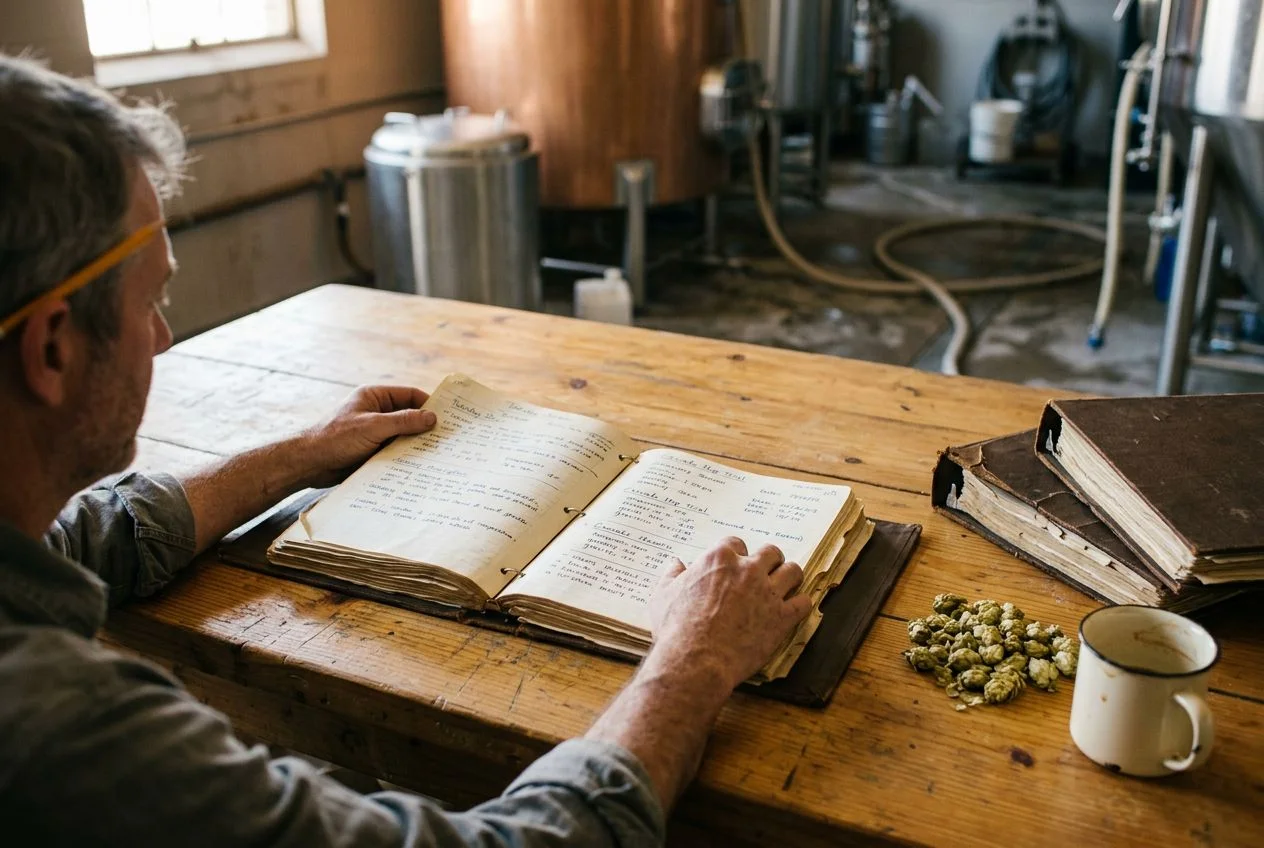
The first thing you notice in the brewhouse at Bell’s Brewery in Comstock, Michigan, isn’t the smell of hops. It’s the binders.
Rows of them, thick as phone books. They’re filled with years of brewing logs, sensory notes, and yield data going back to the 1980s. Larry Bell started packaging homebrew kits out of a Kalamazoo supply shop in 1985. The operation has been taking notes ever since. When it comes time to decide which hops go into the next batch of Two Hearted Ale, nobody reaches for a trend report. Two Hearted is the brewery’s flagship IPA, brewed exclusively with Centennial hops at 7% ABV. Instead, they reach for the archive.
That’s the quiet truth about how brewers choose hops in the Midwest right now. Social media chases the next hazy, hop-saturated release. Meanwhile, the breweries that have lasted make the decision the way a farmer picks seed corn: slowly, with records, and with a deep suspicion of whatever’s fashionable this season.
How the Haze Boom Changed Hop Choices
It’s worth being honest about what the hazy IPA wave did to hop selection. New England-style IPAs took off nationally in the mid-2010s. The industry’s center of gravity shifted toward hops that deliver big tropical and citrus character — Citra, Mosaic, Galaxy, and later the “new-school” varieties like Strata and Nelson Sauvin. Brewers chasing that style started buying hops by the pound at a pace that would have seemed reckless a decade earlier.
The Midwest wasn’t immune. Breweries across Illinois, Minnesota, and Ohio added hazy IPAs to their lineups because customers asked for them. The hops followed. But the region’s established brewers noticed something the hype obscured: haze is a process, not an ingredient. You can make a hazy beer with almost any hop if you handle it right. The hop itself doesn’t create the haze. The yeast, the protein content, the dry-hopping schedule, and the avoidance of filtration do most of that work.
So the smarter question became: which hops actually earn their place in this brewery’s portfolio, regardless of what style is trending? That’s a harder question. It’s also the one that separates a brewery with a hop program from a brewery that just buys whatever the distributor has on hand.
How Brewers Choose Hops Before Harvest
The single biggest factor in how a Midwest brewery picks its hops isn’t flavor. It’s the calendar.
Hops are a perennial crop, harvested once a year. In the Pacific Northwest, that’s late August through September. Breweries don’t buy hops the way you buy a bag of coffee. They sign forward contracts, often a year or more in advance. That means committing to specific varieties and poundage before the crop is even in the ground. A brewery that decides in March it wants to brew a fresh-hop beer in September is already late.
This is where the Midwest’s distance from the hop fields matters. Washington, Oregon, and Idaho grow the overwhelming majority of American hops. Getting them to a brewery in Iowa or Wisconsin adds cost and complexity. Smaller breweries often band together through hop brokers or cooperative purchasing arrangements. That’s how they hit the volume minimums that growers require. The Brewers Association publishes annual hop usage data that shows how much of the crop goes to craft versus large-scale brewers. The numbers make clear that craft’s share is significant — but that share is locked in months before anyone tastes a finished beer.
Take Toppling Goliath in Decorah, Iowa. It’s home of Pseudo Sue, a pale ale built around Citra hops. For that brewery, the hop bill is a multi-year commitment. The brewery has to project demand for its flagship beers years out. Then it secures enough of a specific variety to keep those beers consistent batch after batch. Consistency, not novelty, is the goal. A customer in Cedar Rapids who buys Pseudo Sue every week expects it to taste the same every week. That expectation is settled at the contract table, not the brew kettle.
The Sensory Panel Behind Every Hop Choice
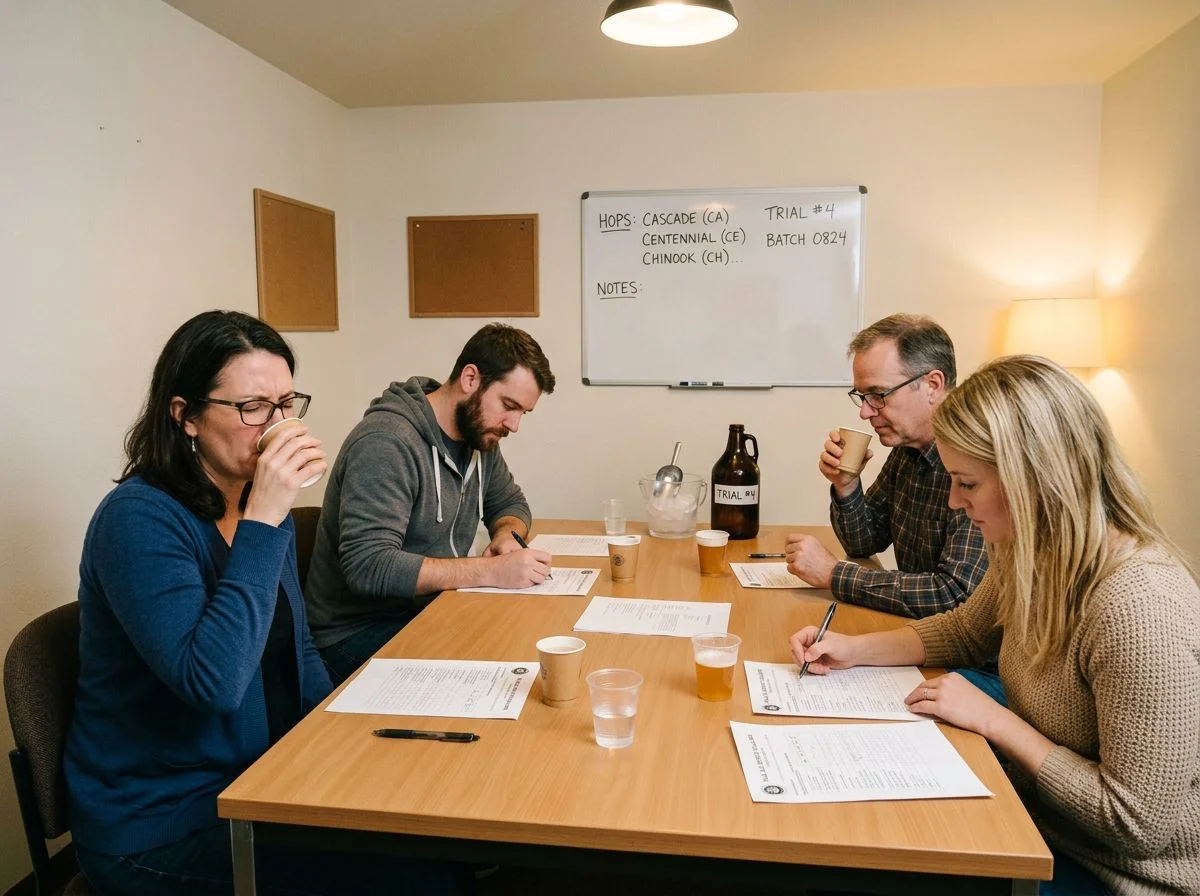
Once the hops arrive, the real work begins. Most established breweries run some version of a sensory evaluation before a new hop lot goes into production. It’s a formal tasting where brewers smell and taste hop samples, often as a simple tea made from the pellets, and score them against a reference standard.
This is the unglamorous heart of how brewers choose hops. It’s not a brewer sniffing a bag and saying “yeah, that’s good.” It’s a structured process. Evaluate the lot’s aroma. Check for off-flavors like onion, garlic, or cheese (yes, really — those are real defects in certain hop varieties). Compare it to last year’s lot. Then decide whether it meets the brewery’s spec.
The stakes are higher than they sound. A hop lot that smells slightly off can ruin an entire batch. By the time you taste it in the finished beer, you’ve spent weeks and thousands of dollars on a beer you can’t sell. So breweries that care build the sensory step into their process, and they document it. That documentation is what lets a brewer compare this year’s Centennial to the 2019 crop. It’s also what helps them decide whether to adjust the recipe or reject the lot outright.
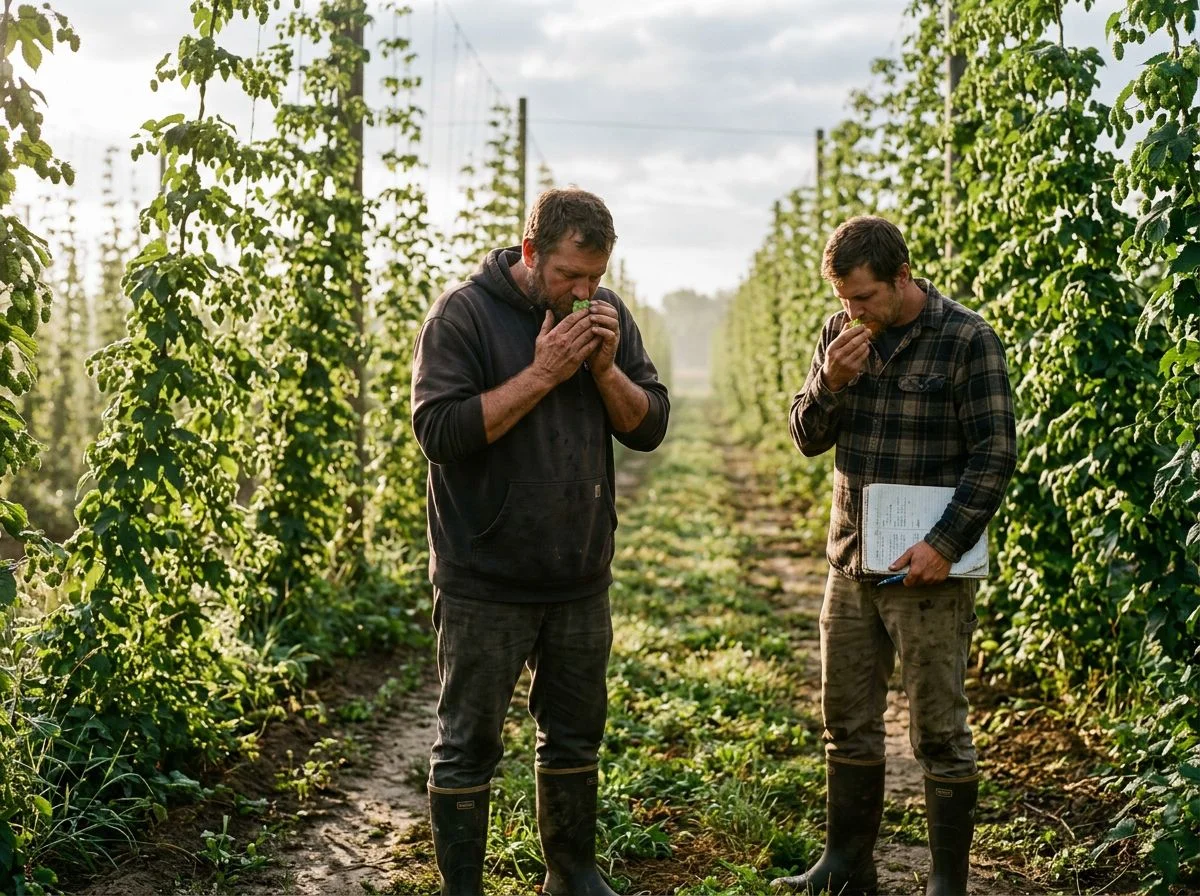
Some Midwest breweries go further and work directly with growers. They visit the hop farms in the Pacific Northwest during harvest to walk the rows and taste the cones before they’re processed. It’s an expensive trip for a small operation. But it’s how you build a relationship with a grower who’ll give you a heads-up when a variety is having a bad year.
How Brewers Choose Hops for Fresh-Hop Beers
There’s one moment each year when the Midwest’s hop calculus gets genuinely exciting: fresh-hop season.
Fresh hops — sometimes called wet hops — are unprocessed cones shipped straight from the harvest, usually within 24 to 48 hours of picking. They’re fragile, they don’t keep, and they have to be brewed almost immediately. That tight window means a Midwest brewery has to coordinate shipping and brewing schedules down to the hour. The beer that results is different every year because the crop is different every year.
Breweries across the region build annual fresh-hop releases around this. It’s the one time the hop decision is genuinely spontaneous. You brew with what the harvest gives you, and you accept that the beer won’t taste like last year’s. For a brewery that spends the rest of the year chasing consistency, that’s a welcome release valve. It’s become a ritual for Midwest beer fans who mark the calendar for fresh-hop releases the way others mark the start of football season.
When a Hop Bet Doesn’t Pay Off
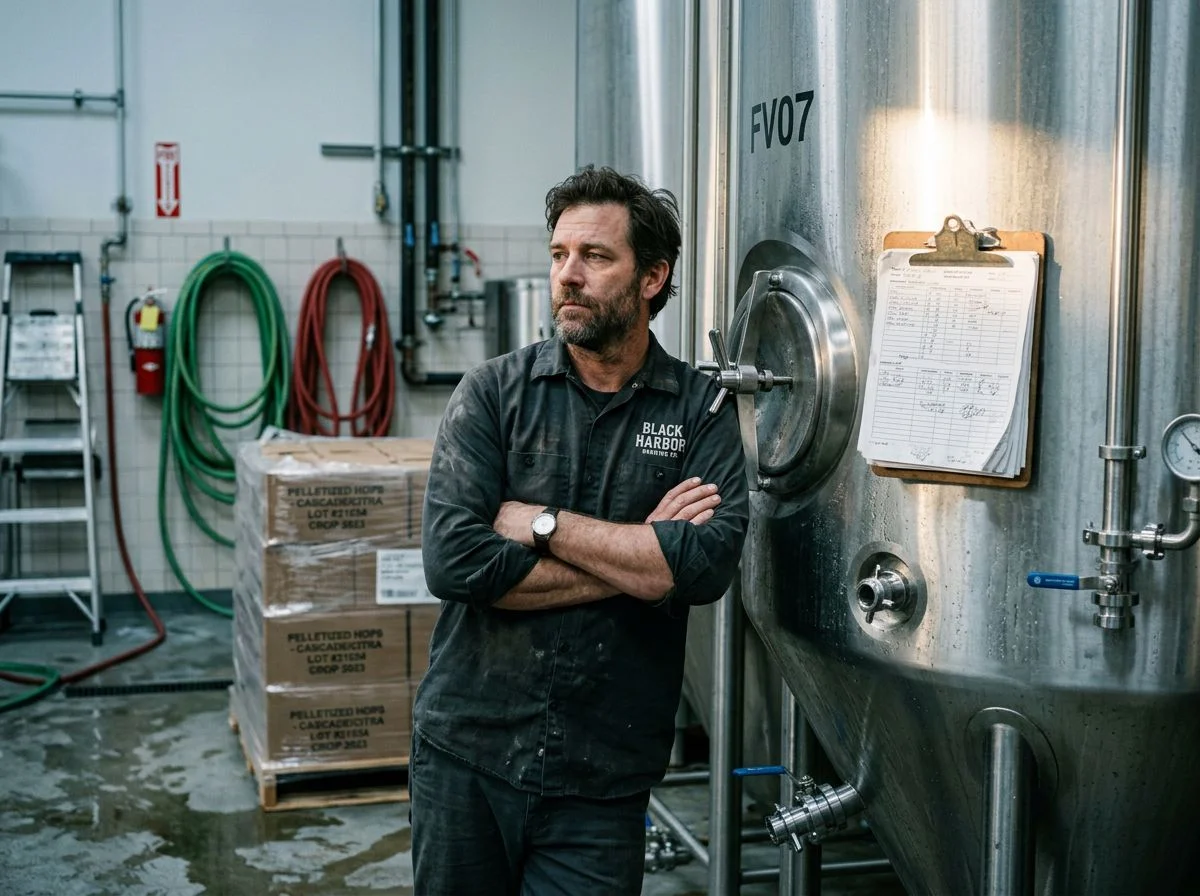
Here’s what the trade publications don’t always say out loud: hop selection involves real risk, and breweries get it wrong.
A brewery that commits to a trendy variety can find itself holding a contract for a hop that’s fallen out of fashion by the time the crop arrives. A sensory panel can approve a lot that turns out to be inconsistent in the kettle. A fresh-hop release can be a dud because the harvest was off. And the cost of a bad hop decision doesn’t disappear. It shows up in the ledger, in unsold beer, or in a flagship that tastes slightly different than it should.
The breweries that navigate this well tend to share a trait. They’re conservative with their core beers and experimental with their seasonal and limited releases. The flagships get the reliable, well-documented hops. The one-offs get the new varieties, the experimental lots, the fresh-hop gamble. That way a bad bet costs a limited batch, not the beer that pays the bills.
It’s a lesson that traces back to the region’s brewing roots. Wisconsin and Minnesota were brewing hubs long before Prohibition. The breweries that survived the twentieth century did so by being disciplined about their inputs. The modern craft movement inherited that instinct, even if it doesn’t always advertise it.
What a Hop Choice Tells You in the Glass
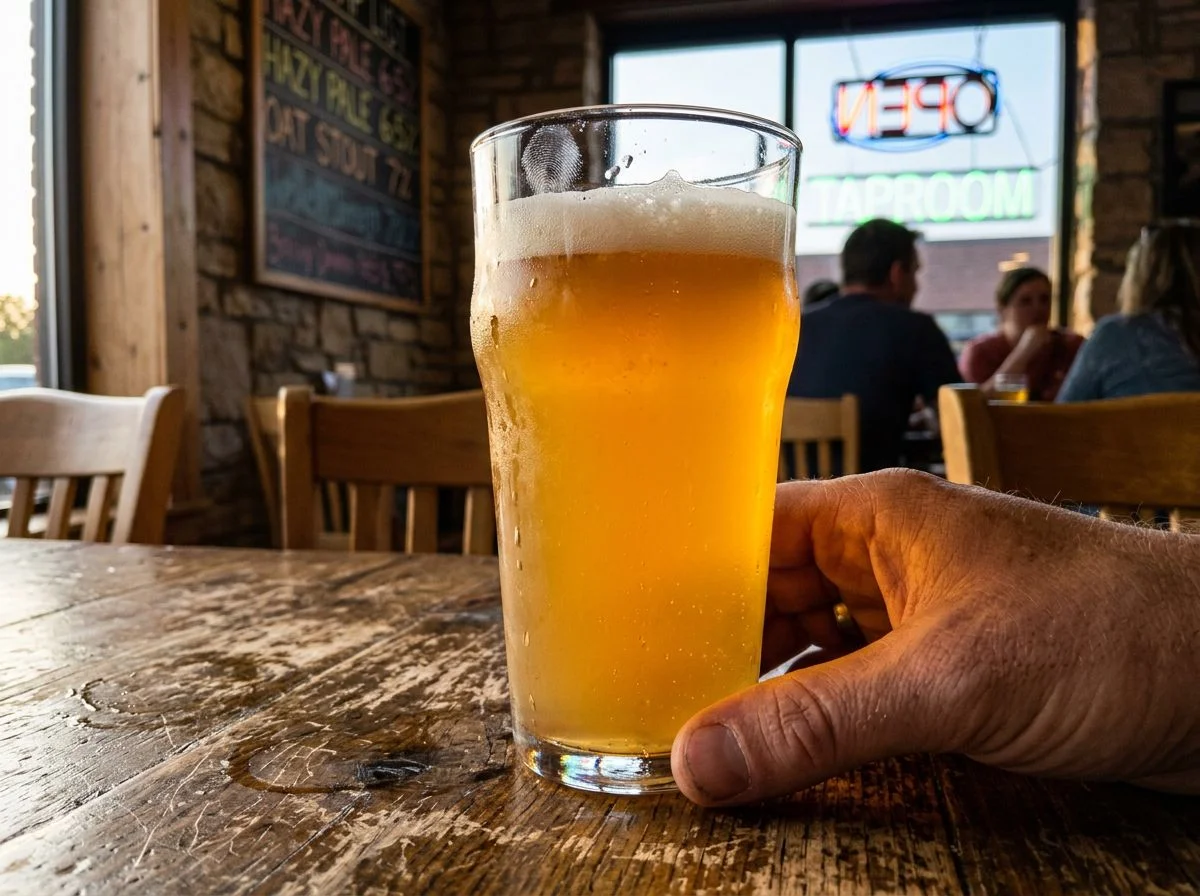
For a beer drinker, the practical takeaway is this: when a Midwest brewery’s flagship IPA tastes the same in February as it did in August, that’s not luck. It’s a hop program — contracts, sensory panels, and a stubborn refusal to chase the trend of the moment.
The next time you’re in a taproom and the brewer mentions a new hop variety in a limited release, ask what it’s replacing and why. The answer will tell you more about how that brewery thinks than any tasting note ever could. And if the flagship hasn’t changed in years, that’s not a lack of imagination. That’s the whole point.