
In the rolling hills of northeast Iowa, nestled just outside the small, picturesque town of Decorah, lies an establishment of an entirely unexpected scale. Driving out from the town centre, past the Norwegian flags and charming storefronts, the landscape opens up into farmland. Then, suddenly, it appears: a massive, modern brewery that seems to rise directly from a cornfield. This is Toppling Goliath Brewing Company, a craft beer titan whose humble origins belie its current international renown.
It’s a surprising discovery for first-time visitors, a sentiment shared by Sam Lewey, the brewery’s marketing director and son of its founder. “That’s the number one thing I think that people get when they come that’s surprising,” Lewey notes. “Even if they’ve been following us or you know maybe see that our beer has a lot of distribution… they’re always just kind of amazed at the scale of it”. But this 100-barrel regional powerhouse, distributing to 36 states and nine countries, didn’t appear overnight. Its story begins not with a grand business plan, but with a simple Christmas gift and a passion that quickly outgrew the family garage.
A Hobby Turned Hoppy Empire
The Toppling Goliath story began in 2009 with a homebrew kit, a Christmas present from Sam’s mother to his father. For his dad, it wasn’t just a passing fancy. “When he jumps into hobbies, he jumps in with full force and a lot of passion,” Lewey explains. This passion project soon took over, moving from the house to the garage as the scale of his homebrewing grew. At the time, craft beer was a rarity in northeast Iowa, forcing enthusiasts like him to drive to neighbouring states like Minnesota and Wisconsin just to find the hoppy beers he loved. He saw an opportunity: if he could get good enough, he could open Decorah’s own microbrewery.
The initial fear for any new brewery is whether the public will embrace its creations. While Lewey’s father was passionate about intensely hoppy beers, he worried they might be too much for the local palate, which was accustomed to light lagers. The turning point came from an unexpected source: a more approachable beer he brewed called Dorothy’s Lager, named in honour of his grandmother. He shared it with his light-beer-drinking siblings, and their feedback was unanimously positive. “That beer in itself, home brewing and getting that feedback, it gave him confidence,” Lewey recalls. “Like if I open this thing and I have a bunch of really hoppy beers on tap that no one’s going to like, like at least I’ll have this one beer that people can have and resonate with”. Six months later, Toppling Goliath opened its doors in a small taproom with a tiny half-barrel system, the smallest commercial setup available.
From Local Gem to National Name
The brewery’s trajectory shifted dramatically when a regular named Mike Sabbo started frequenting the taproom. A talented and passionate young brewer, Sabbo hit it off with the founder, who quickly recognised his drive and skill. Soon, the brewing reins were handed over, allowing Lewey’s father to focus on growing the business. This partnership proved formidable. While flagship hoppy beers like Pseudo Sue gained a loyal following, it was the brewery’s barrel-aged stouts that catapulted them onto the national stage between 2012 and 2015.
These stouts, produced in very small batches, began generating buzz in online beer communities like BeerAdvocate and RateBeer. “I think it was those barrel-aged stouts that kind of put us on the map,” Lewey says. “People were trying to figure out where the heck is this brewery we’ve never heard of in this furthest town in Iowa”. The hype around these limited releases drew craft beer pilgrims to Decorah, who in turn discovered the exceptional quality of their hoppy beers as well. This created a cycle of rapid growth, pushing the brewery to upgrade from a 10-barrel system to a 30-barrel system, and eventually to contract brewing just to keep up with the insatiable demand. Finally, in 2017, they built their current facility, a massive 100-barrel brewery and taproom that officially opened in early 2018, cementing their status as a true destination brewery.
More Than a Brewery: A Community Pillar
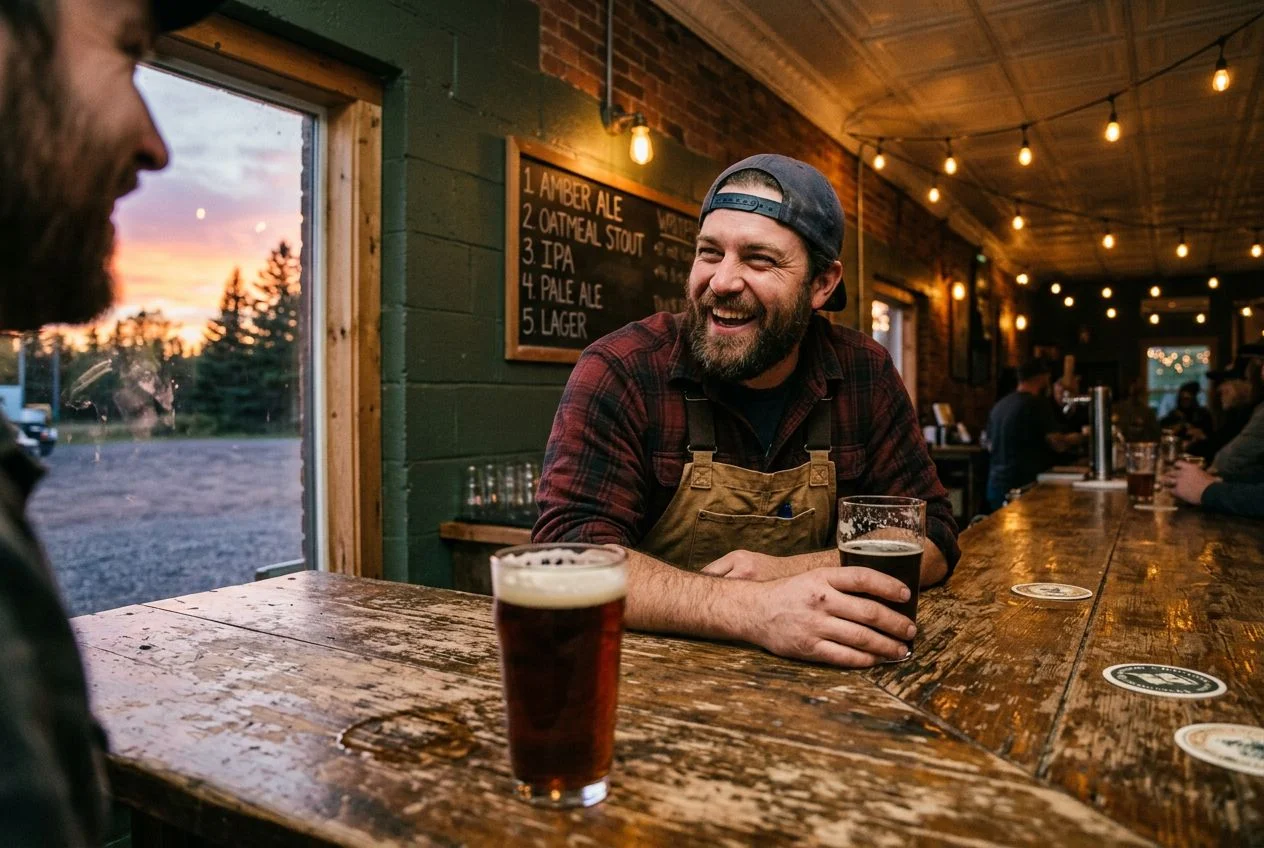
Today, Toppling Goliath is as much a community hub as it is a production facility. The taproom is a welcoming, family-friendly space open seven days a week, complete with a restaurant, games for children, and a giant LEGO T-Rex that has become a photo-op favourite. On any given weekend, the car park is a testament to its “destination” status, with licence plates from across the country often outnumbering those from Iowa.
The brewery is deeply woven into the fabric of Decorah. It actively participates in local traditions like Nordic Fest—a nod to the town’s strong Norwegian roots—and Holiday Lights, a charity event at a local campground. This commitment extends to hosting their own community-focused events. A partnership with the Vesterheim National Norwegian-American Museum resulted in “Koselig,” an annual February event celebrating Norwegian culture with traditional food, craft demonstrations, and performances by local Nordic dancers.
They also leverage their impressive space for good. One recent success was a “doggy bachelor show” and adoption event hosted for the local humane society, which happens to be their next-door neighbour. “That’s one of our best assets we have here is the space,” Lewey says. “We have a lot of space so we can partner with you to help whatever cause you’re wanting”. The event was a huge success, leading to four adoptions—including one by two Toppling Goliath employees—and reinforcing the brewery’s role as a good neighbour.
Exploring the Beer
While the story and community focus are compelling, the beer remains the main attraction. The brewery consistently offers a wide variety of styles, ensuring there is something for every palate.
The Core Lineup
Lewey organises their extensive offerings into four main “buckets”. First are the hoppy beers, the style that started it all. This includes the iconic Pseudo Sue, its double IPA big brother King Sue, and a rotating cast of other IPAs. Second are the world-renowned barrel-aged stouts. Even when the highly sought-after bottled releases aren’t available, the taproom almost always has a complex, rich stout on draft from their “Turmoil” series of adjuncted stouts.
In recent years, they’ve expanded into a Bavarian series, offering crisp, clean styles like a pilsner, a hefeweizen, and their wildly popular Oktoberfest, which Lewey calls “probably the most popular beer in the taproom” when it’s on tap. The final bucket is their fruited sours, led by the Fandango series. Born from an experiment with Dragon Fandango, this line of vibrant, flavourful sours has become a cornerstone of their lineup.
Top Recommendations for Newcomers
For someone new to craft beer, navigating the menu can be daunting. Lewey offers three essential starting points.
- Dorothy’s Lager: He recommends starting with the beer that gave his father the confidence to open the brewery. It’s a clean, crisp, and approachable lager that tells the origin story of Toppling Goliath in a glass.
- Pseudo Sue: No visit is complete without trying their flagship pale ale. “I think one of the reasons why that has become our most popular beer is that it still to this day is very unique in a pale ale,” Lewey says. It blurs the line between a pale ale and an IPA, offering a huge tropical aroma and hop-forward taste that is approachable for newcomers yet appreciated by seasoned hop lovers.
- King Sue or Dragon Fandango: For the third choice, it depends on your preference. If you’re leaning into hops, try King Sue, their most award-winning double IPA and a favourite among brewery staff. Lewey describes it as “the perfect liquid translation of hops”. If you’d prefer something fruity and different, he suggests Dragon Fandango, the kettle sour that launched a whole new direction for the brewery with its vibrant pink hue and balanced tartness.
The Secret in the Barrel Room
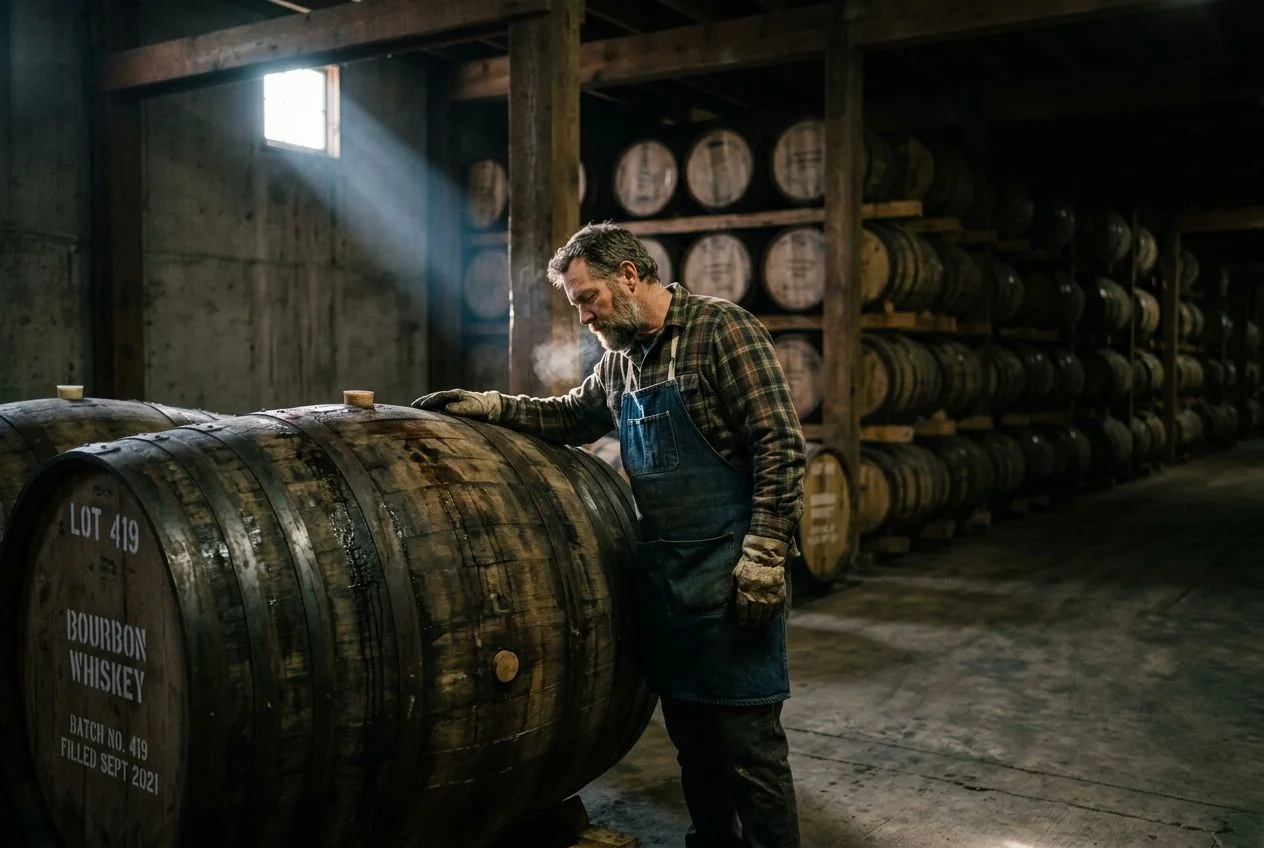
While the taproom and brewhouse are impressive, one of the brewery’s biggest secrets lies hidden from public view. “I think you should know about our barrel-aging program,” Lewey reveals. “That’s something that most people don’t know about or don’t know the scale that what we’re doing”. For those who take a brewery tour, the barrel room is the main event. It’s a dedicated, temperature- and humidity-controlled space filled with hundreds of barrels of aging stouts and barleywines.
The air is thick with the sweet, boozy aroma of beer maturing in wood. These beers are a testament to patience, with most aging for a minimum of a year, and many for two years or more. Some even undergo double or triple barreling, moving between different barrels to layer complexity. This meticulous, long-term process is the soul of their most acclaimed beers, a labour of love and passion that unfolds slowly, far from the bustling taproom.
What’s Next for the Goliath?
Toppling Goliath shows no signs of slowing down. The brewery has a packed calendar of releases and events. Fans can look forward to collaborations with Boulevard Brewing and Drekker Brewing, a brewery famed for its sours. The annual lottery for their most coveted release, Kentucky Brunch Brand Stout, is a major event each December. And deep within the barrel room, new variants of Assassin, barleywines, and other secret projects are quietly aging, waiting for their moment to be released.
For those wanting to keep up, Lewey recommends following their social media pages (including a dedicated taproom page for local events) and, most importantly, signing up for their newsletter at tgbbrews.com. “Oftentimes the people on our newsletter are going to get it first before social media,” he advises, noting it’s where they share sneak peeks, brewery history, and behind-the-scenes content.
From a single homebrew kit to a global craft beer phenomenon, Toppling Goliath’s journey is a testament to passion, quality, and community. It’s a brewery that is inextricably linked to its home, a place Lewey describes as a beautiful destination for outdoor recreation, from kayaking and fishing to hiking and biking. Toppling Goliath isn’t just a stop; it’s an experience—one that they would “love to be a part of your Decorah experience as well”.