How a Classically Trained Chef Is Redefining Chicago’s Craft Beer Scene
In a city renowned for its deep-dish pizza and hot dogs, Chicago’s craft beer scene has quietly evolved into one of the most innovative in the country. At the forefront of this movement stands Moody Tongue Brewing Company, a brewery that defies conventional categorization by treating beer with the same reverence typically reserved for Michelin-starred cuisine. Founded by Jared Rouben in 2014, Moody Tongue represents a radical departure from traditional brewing philosophy—one that views beer not just as a beverage, but as a culinary medium worthy of the same artistry as any dish that graces a fine dining table.
From Kitchen to Kettle: An Unconventional Journey
Rouben’s path to becoming one of Chicago’s most distinctive brewmasters began far from the brewhouse. His culinary education at the Culinary Institute of America in New York laid the foundation for what would become his signature approach to brewing. But it was a simple act of rebellion during his second week at the CIA that set everything in motion.
“The wine club had a minimum GPA and their events were $25,” Rouben recalls. “So for me, you know, this wasn’t Harvard. All GPAs should be welcome, especially for tasting beer. And each event was $1.”
That beer club became more than just an affordable alternative to wine tastings. It became Rouben’s laboratory for exploring the intersection of beer and food. He began inviting breweries from across the Northeast—Sam Adams, Dogfish Head, Brooklyn Brewery—and experimenting with beer not just as a pairing partner, but as an ingredient itself. From braised meats to sorbets, ice creams to breads, beer found its way into every corner of his culinary repertoire.
This early experimentation revealed something profound: beer possessed a range of flavors and aromatics that rivaled any ingredient in a professional kitchen. More importantly, it was accessible. “If everyone threw in five bucks, like you could taste the best beer from all over the world without stamping your passport,” Rouben explains. “I think there’s something really special about that.”
The Birth of Culinary Brewing
The philosophy that would eventually define Moody Tongue crystallized during Rouben’s time cooking at Martini House, a Michelin-starred restaurant in Napa. On his days off, he found himself homebrewing with the same meticulous attention to ingredient quality that characterized the restaurant’s approach to food. One ingredient in particular changed everything: the pluot, a hybrid between a plum and an apricot.
“Those are flavor and aromatics that I couldn’t get by using hops,” Rouben notes. “And so all of a sudden I had a workaround for a flavor and aromatic that I couldn’t get with the ingredients that were available to me.”
This revelation led to what Rouben calls “culinary brewing”—an approach that treats beer through the lens of a chef rather than a traditional brewmaster. The methodology is deceptively simple: source the best ingredient, handle it with care, and know where, why, and how to weave it back into the liquid. But executing this philosophy requires both culinary expertise and brewing mastery, a rare combination that Rouben spent years cultivating.
After his time in New York kitchens, Rouben made the decisive move to Chicago to attend Siebel Institute, the oldest brewing school in the country. The institute’s dual degree program took him to Germany, where he immersed himself in centuries-old brewing traditions. Upon returning to Chicago, he joined Goose Island as brewmaster of their brewpubs, spending three and a half years learning the technical rigor that would complement his culinary creativity.
Building Something Different
When Moody Tongue opened its doors in 2014, Rouben’s vision was clear: create exceptionally balanced beers using premium ingredients sourced from dedicated farmers, then eventually bring beer and food together under one roof. That second goal materialized in 2018 when the brewery moved into a larger space in Chicago’s South Loop Bronzeville neighborhood, incorporating both a bar and a formal dining room.
The result is something relatively rare in the craft beer world—a space where brewers and chefs work in constant dialogue, crafting experiences rather than just products. “It’s a wonderful luxury when you’re creating two different things and you’re able, your brewers and your chefs are able to speak to each other so that your guest is able to have really the highest quality beer, the highest quality food and two creators that are communicating so that the pairing works really well too,” Rouben explains.
This collaborative approach permeates every aspect of Moody Tongue’s operation. The menu evolves with the seasons, showcasing ingredients at their peak while the beer list reflects those same seasonal rhythms. It’s a philosophy that keeps regulars from Chicago’s culinary and beer communities returning, eager to discover what new combinations the team has crafted.
The Core Collection: Balance Above All
If there’s a single word that defines Rouben’s brewing philosophy, it’s balance. “I think the goal is for our guests to have more than one beer,” he says. “And so when you’re making balanced beer, it doesn’t overwhelm your palate. You’re able to have two, three.”
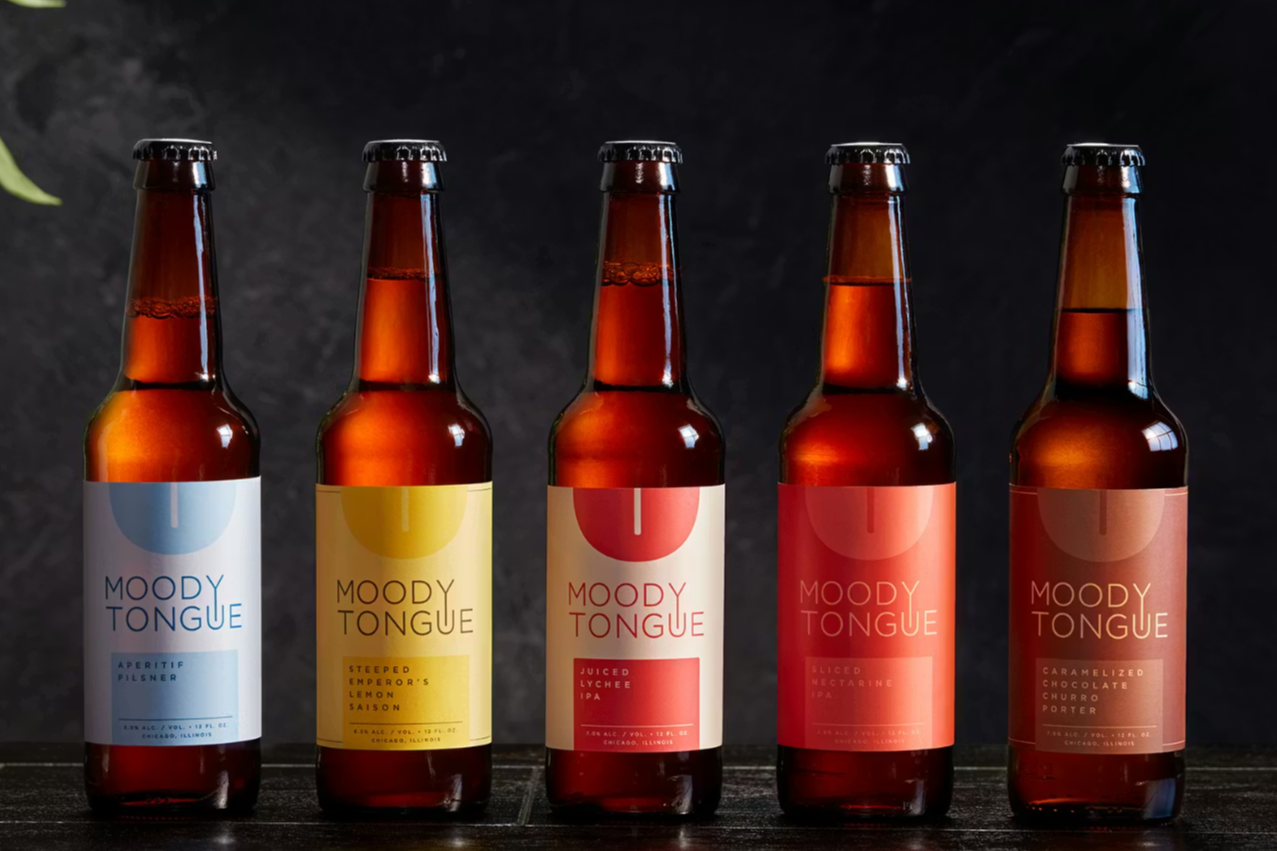
This commitment to balance shapes Moody Tongue’s core lineup, which reads like a carefully curated menu designed to pair with a full spectrum of flavors. The Toasted Rice Lager offers a light, refreshing entry point for newcomers to craft beer. The Aperitif Pilsner pays homage to Rouben’s German training, embodying the precision and clarity of classic German brewing. The Orange Blossom Belgian Blonde, which Rouben identifies as perhaps the most food-friendly style in their portfolio, demonstrates how delicate floral notes can enhance rather than overpower a meal.
The brewery’s IPA offerings showcase the culinary approach even within a style often associated with hop-forward aggression. The Cold Kiwi IPA keeps the ABV lower while delivering vibrant fruit character, while the Juice Lychee IPA, one of Moody Tongue’s stalwarts since the early days, layers tropical fruit aromatics in a way that complements rather than competes with food.
Perhaps most emblematic of Rouben’s culinary background is the Caramelized Chocolate Churro Baltic Porter, which incorporates Oaxacan cacao and Tahitian vanilla. “Dark in color, but light in body,” as Rouben describes it, the beer demonstrates how ingredient quality and careful handling can create complexity without heaviness.
Pushing Boundaries: The Shaved Black Truffle Lager
Among all of Moody Tongue’s creations, one stands out as the purest expression of culinary brewing philosophy: the Shaved Black Truffle Lager. One of the first beers Rouben ever created, it takes an ingredient typically reserved for high-end pasta dishes and reimagines it as a component of liquid craft.
“It’s a wonderful way to showcase really a premium ingredient through beer which historically this is something that’s either like shaved on pasta but now you instead of incorporating into a solid it’s now incorporated into a liquid,” Rouben explains. The beer represents more than just novelty—it’s proof of concept that brewing can be a genuine culinary art form.
When asked for his ultimate recommendations, Rouben doesn’t hesitate to lead with this beer, paired with Moody Tongue’s 12-layer German chocolate cake. Other suggested pairings include the Cherry Oud Bruin with A5 Miyazaki beef, and the Orange Blossom Belgian Blonde with oysters—combinations that underscore the restaurant’s commitment to treating beer with the same pairing sophistication as wine.
Rooted in Community
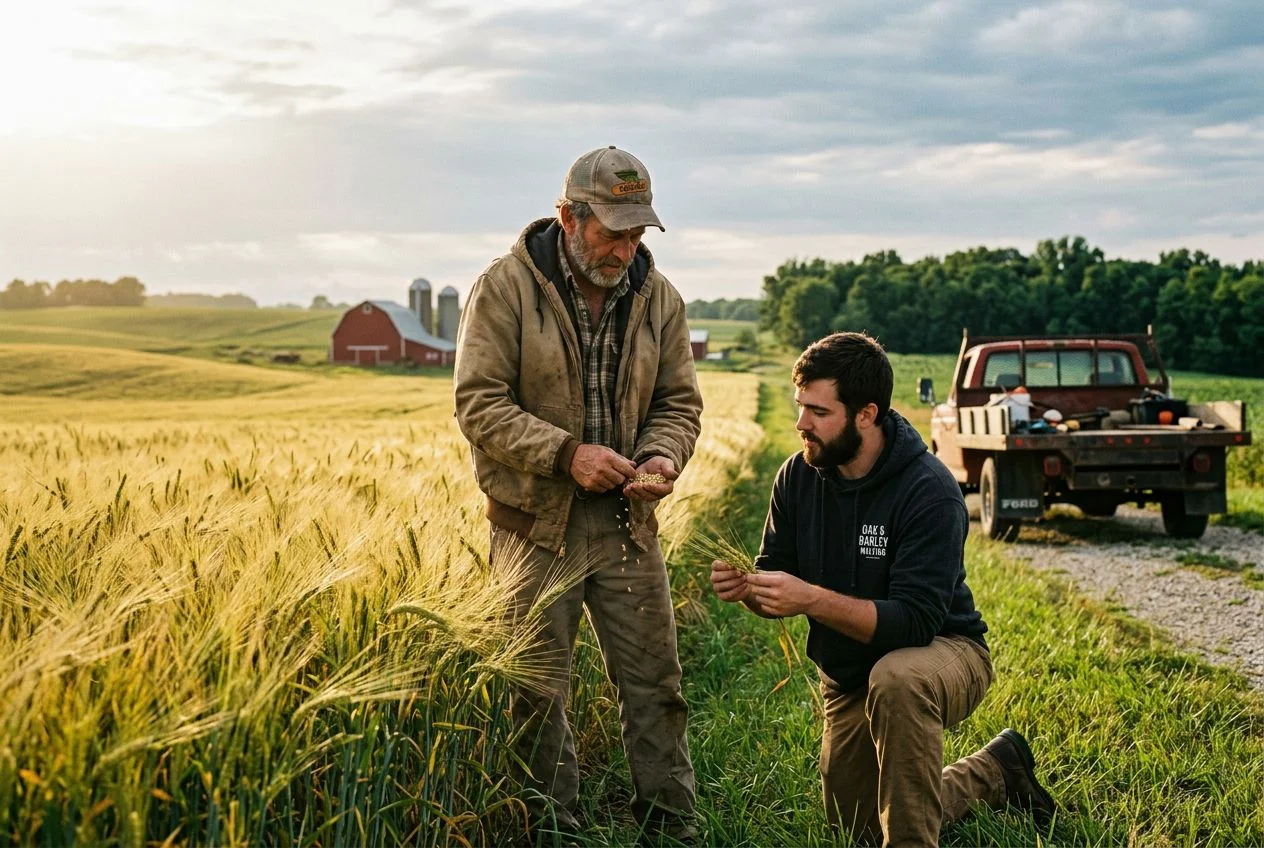
Despite the high-concept approach and premium ingredients, Moody Tongue maintains deep roots in Chicago’s agricultural community. The brewery runs a farmer’s market series throughout the growing season, dedicating single kegs of beer to showcase individual ingredients from specific farms. It’s a practice that honors both the farmers who grow the ingredients and the seasonal rhythms that guide the brewery’s creative process.
This commitment to locality extends to Rouben’s perspective on Chicago’s competitive brewing landscape. When asked what makes Moody Tongue special compared to other area breweries, he’s quick to celebrate the entire scene. “I think all of our Chicago breweries are special,” he says, rattling off recommendations including Revolution, Half Acre, Off Color, and Middle Brow. “I think if you’re brewing in Chicago, I think you really want to be here and you’ve worked really hard just because it’s too competitive.”
Looking Forward
As Moody Tongue approaches its second decade, Rouben shows no interest in chasing trends. “I think we’re pretty good about staying in our lane,” he notes. That lane currently focuses on light, refreshing, and flavorful beers that work seamlessly with food—an approach that feels both timeless and perfectly suited to contemporary tastes.
The brewery’s immediate future includes plans for a classic English ale, more specifically an ESB (Extra Special Bitter), designed for those transitional Chicago days when the weather turns chilly but porters and stouts still feel too heavy. It’s exactly the kind of thoughtful, seasonally appropriate brewing that has defined Moody Tongue from the beginning.
For visitors making their first pilgrimage to the South Loop Bronzeville location, Rouben’s advice is straightforward: make a reservation online (though walk-ins are welcome), prepare to find street parking, and come ready for genuine hospitality. Most importantly, he wants guests to know something that might surprise them: “Our brewers love food as much as they love beer and our chefs love beer as much as they love food.”
That mutual passion, more than any single beer or dish, defines what makes Moody Tongue unique. In a craft beer landscape often dominated by hop arms races and barrel-aging one-upmanship, Rouben has created something different—a space where beer receives the same careful consideration as cuisine, where balance matters more than boldness, and where the line between brewery and restaurant dissolves into something entirely new.
For newcomers, Rouben recommends starting with the Rice Lager before exploring further. But his real advice goes deeper: “When you find something you love, stick with the style.” It’s a philosophy that applies equally to beer appreciation and to Moody Tongue itself—a brewery that found its unique style early and has spent a decade refining it to near perfection.
As Chicago continues to cement its reputation as a world-class food and beer city, Moody Tongue stands as proof that innovation doesn’t always mean reinvention. Sometimes it means taking two time-honored crafts—cooking and brewing—and asking what happens when they truly work as equals. The answer, it turns out, is something worth savoring.