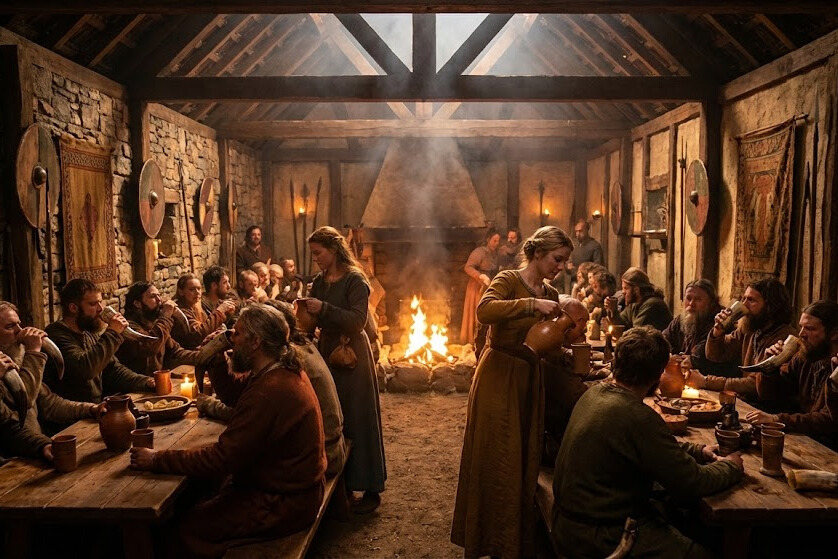
Picture this: You’re sitting in your favorite Midwest taproom on a cold December night. Snow falls outside the window. In your hands, a glass of Christmas beer glows amber under the lights. The first sip brings warmth—honey, cinnamon, and rich malt wrapping around you like a blanket. It’s a moment millions share each winter. But this simple pleasure connects us to something ancient. Viking kings once made holiday brewing mandatory. Break the law for three years straight, and you’d lose everything you owned.
So what is holiday ale beer, exactly? It’s more than just a festive drink. Holiday ale represents over a thousand years of brewing tradition. These beers evolved from pagan winter celebrations into the craft beer holiday traditions we love today. When did holiday beer start? The story begins with Norse Jólöl and stretches all the way to Great Lakes Christmas Ale. Along the way, it shaped cultures and communities. Today’s Midwest holiday craft beer scene keeps this tradition alive. Brewers create spiced winter ale and festive beer that honor the past while pushing boundaries.
- How Holiday Beer Started: Ancient Winter Ale Traditions
- European Christmas Beer Heritage and Traditional Recipes
- Seasonal Beer in America: From Colonial Ale to Prohibition
- Craft Beer Holiday Traditions: The Modern Holiday Ale Renaissance
- Holiday Beer Styles Explained: Modern Ingredients and Brewing
- Conclusion: The Enduring Legacy of Holiday Ale
- References
How Holiday Beer Started: Ancient Winter Ale Traditions
How holiday beer started goes way back. Humans have brewed beer for about 6,000 years. The Sumerians even had a goddess of brewing named Ninkasi.1 But brewing special seasonal beer for winter? That tradition grew strong in Northern Europe. The reason makes sense when you think about it. Those early brewers faced harsh winters. Food was scarce. They needed smart solutions.
Winter celebrations with alcohol show up everywhere in ancient cultures. The Celts marked the winter solstice with a festival called Alban Arthan—”Light of Winter.” They’d feast and drink mead and ale made from their harvest grain. Germanic tribes did the same. Roman writers from the first century BCE noted that these northern people brewed barley beer. Why? Their cold climate couldn’t grow wine grapes.
The logic behind winter brewing was both practical and social. Higher alcohol acts as a natural preservative. That’s science at work. Holiday brewing also used up grain before it spoiled. Smart farmers brewed stronger winter brew in autumn using fresh harvest barley. These “October beers” could sit for months. They provided food and warmth when winter hit hard. Traditional holiday beer ingredients were simple: barley, wheat, and local herbs. This was before hops took over. Historic winter ale recipes relied on what grew nearby.
When Did Holiday Beer Start? Viking Kings Made Christmas Brewing the Law

Here’s where the story gets interesting. The oldest written record of Christmas beer comes from Viking-age Scandinavia. Around 900 CE, a poem called Hrafnsmál mentions Juleøl—Yule ale. The poem describes festive beer as the heart of the celebration.2 Vikings celebrated Jól from mid-November through early January. The festival centered on the winter solstice, December 21st. This marks when did holiday beer start in written history.
King Haakon I changed everything. He ruled Norway from about 934 to 961 CE as the first Christian Viking king. Haakon shifted Yule to line up with Christmas. Then he made a bold move: every household must brew Christmas beer. This wasn’t a suggestion. It was law. The mandate got written into the Gulating Law Code.3 This document, kept in Copenhagen’s Royal Library today, is one of Scandinavia’s oldest legal texts.
The law was specific. Every farmer had to produce about 6.5 gallons of ale. Can’t brew? You’d pay three marks of silver. That was serious money. But here’s the kicker: fail to brew for three years running, and you’d lose everything. Your property, your land—gone. The king and church would take it all. You might even face exile from Norway. The brewed Christmas beer needed blessing “Christmas night in thanks to Christ and St. Mary.” This law stayed in effect until 1267. That’s over three centuries of legally required holiday brewing.
European Christmas Beer Heritage and Traditional Recipes
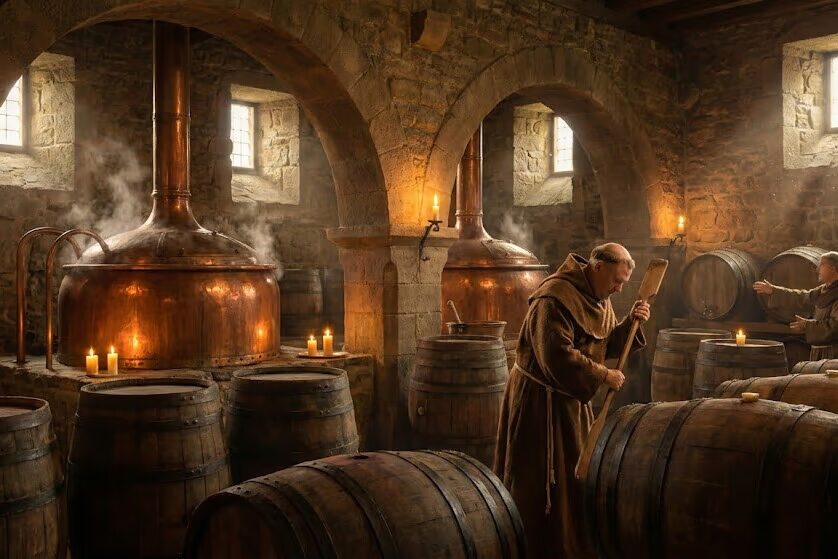
Monasteries shaped European brewing starting in the 5th century CE. They laid the groundwork for spiced ale brewing history and holiday ale production. At their peak, over 500 monasteries across Europe ran breweries.4 The Rule of St. Benedict from around 530 CE said monks should “live by the work of their own hands.” Brewing beer fit that rule perfectly. It became a key way monasteries supported themselves.
The Plan of St. Gall from 820 CE shows just how serious they were. This oldest brewery plan reveals three separate brewhouses. One for monks. One for fancy guests. One for peasants and travelers. Different quality for different people. The best ales came out for major celebrations, especially Christmas. Monks called their finest production Prima Melior—”first best.”
Here’s a fun fact: monks could drink strong beer during fasting. The Latin saying went “Liquida non frangunt ieunum”—”liquids don’t break the fast.” They brewed strong beer as “liquid bread” during Lent and Advent. This practical need led to Doppelbock. Munich’s Paulaner monks created this style in the 17th century. They called their strong fasting beer Salvator—”Savior” in Latin. Pretty clever, right?
English Wassail and Winter Warmer Beer History

England developed its own winter drinking tradition: wassail. The word comes from Old Norse “ves heill” or Old English “wes hál.” Both mean “be in good health.” The earliest mention shows up in the poem Beowulf from the 7th century.5 This tradition deeply influenced winter warmer beer history and traditional Christmas beer recipes.
Geoffrey of Monmouth wrote about wassail around 1135-1140 CE. His History of the Kings of Britain tells how it became a drinking ritual. One person says “waes hael,” and the next responds “drinc hail.” Early wassail was pretty interesting. People warmed up mead and dropped in roasted crab apples. When the apples burst, the pulp looked like wool floating on top. They called this lambswool. Shakespeare even mentioned it in A Midsummer Night’s Dream: “Sometimes lurk I in the gossip’s bowl, In very likeness of a roasted crab.”
We have real records showing how much medieval households brewed for Christmas. Elizabeth de Burgh, Lady of Clare, kept detailed accounts in 1333-34. Her estate peaked at over 3,500 gallons in December—the year’s highest production. Compare that to February’s meager 810 gallons.6 The numbers prove it: Christmas drove massive brewing efforts.
Traditional Christmas Beer Recipes: German Bock and Belgian Kerstbier
German brewing took a different path. The Reinheitsgebot of 1516 restricted beer to just water, malt, and hops. No spices allowed. This created a unique approach to winter beer. Bock beer became Germany’s main winter style. It started in 14th-century Einbeck, Lower Saxony. The name “Bock” came from how Bavarians said “Einbeck”—it sounded like “ein Bock,” meaning “a billy goat.” That’s why you see goats on German bock labels.7
Belgian monasteries went their own way with Christmas beer. Places like Leffe, founded in 1240, and Affligem made special winter ales. Belgian Kerstbier (Christmas beer) runs stronger in alcohol. It’s darker and maltier. The Belgian yeast gives complex fruity flavors. This style differs from both spiced German and English traditions.
Seasonal Beer in America: From Colonial Ale to Prohibition
Colonial Americans brought European winter brewing to the New World. But they had to get creative. Traditional spices weren’t easy to find. So brewers used what they could get: molasses, pumpkin, even spruce tips. Winter gatherings featured a drink called flip or hot ale flip. To make it, you’d heat a metal poker until it glowed red, then plunge it into the ale. This created a hot, smoky, caramelized drink perfect for cold nights.
Immigrants from Germany and England kept their holiday beer traditions alive. German communities brewed their bocks. English settlers kept up the wassail custom. Then Prohibition hit. It crushed American brewing diversity. When breweries reopened in 1933, most focused on pale lagers. They wanted to compete with big brands. The old winter ales and seasonal specialties? Mostly forgotten.
By the 1960s and early 1970s, holiday beers had nearly vanished. Industrial lagers ruled the market. Seasonal, spiced ales seemed old-fashioned and irrelevant. American holiday brewing hit rock bottom—right before a major comeback.
Craft Beer Holiday Traditions: The Modern Holiday Ale Renaissance

Everything changed in 1975. San Francisco’s Anchor Brewing released “Our Special Ale.” This was the first modern American Christmas beer. Anchor brews it differently every year. The spice blend stays secret. Each vintage gets unique artwork on the label. Beer lovers collect and age them. Anchor set the template for craft beer holiday traditions: strong, spiced, and limited-edition.
The 1980s and 1990s craft beer movement brought back seasonal ale brewing traditions nationwide. But the Midwest became the real hotspot for holiday ale. German brewing heritage? Check. Brutal winters? Check. Pioneering craft brewers? Check. All the pieces were in place for festive craft beer traditions to explode. Want to know the difference between holiday ale vs winter warmer? This era created the diversity that makes both styles special today.
Best Holiday Craft Beers from Midwest Pioneers
Best Christmas Beers to Try: Great Lakes Christmas Ale
Great Lakes Brewing Company launched their Christmas Ale in Cleveland in 1988. It quickly became one of the best Christmas beers to try anywhere.8 This seasonal beer packs honey, ginger, and cinnamon. It tastes like holiday spice cake in a glass. Every November, the release triggers celebrations across Ohio. Fans mark their calendars for “Christmas Ale season.” The brewery uses traditional holiday beer ingredients: fresh ginger and honey in every batch. This festive beer captures the holidays perfectly.
Bell’s Brewery in Kalamazoo, Michigan added to Midwest holiday craft beer traditions with their Christmas Ale. It’s malty and warming—a true winter brew that shows the region’s commitment to quality. Other best holiday craft beers include Three Floyds’ Alpha Klaus from Indiana. It’s a Christmas porter. Breweries across Wisconsin, Iowa, and Illinois all make their own versions too.
Midwest Holiday Craft Beer: Iowa’s Brewing Heritage
Iowa’s contribution to craft beer holiday traditions stands out. Millstream Brewing Company in Amana opened in 1985 as Iowa’s first microbrewery. The location matters. The historic Amana Colonies were founded by German pietists in the 1800s. They brought deep brewing traditions. Millstream honors that heritage while making modern seasonal beer. Toppling Goliath Brewing in Decorah also gained fame for holiday releases. Iowa’s craft beer scene keeps growing.
Holiday Beer Styles Explained: Modern Ingredients and Brewing

The Beer Judge Certification Program puts holiday ale under “Winter Seasonal Beer” (Category 30C). Understanding holiday beer styles explained helps you appreciate the variety. The guidelines say these beers are “stronger, darker, spicier, and more full-bodied than autumn seasonals.” They usually run 6-9% alcohol.9 The holiday ale vs winter warmer distinction? Often it’s about spices and malt profile.
Traditional Holiday Beer Ingredients and Homemade Holiday Ale Recipe Basics
Traditional holiday beer ingredients for spiced ale haven’t changed much: cinnamon, nutmeg, ginger, and cloves. These same spices flavor holiday cookies and mulled wine. They create that instant seasonal feeling. But each spice does something practical too. Cinnamon kills bacteria and smells sweet. Ginger adds warmth and helps digestion. Nutmeg brings complex sweetness. Cloves give those distinctive notes that remind you of pomanders. Want to try a homemade holiday ale recipe? Understanding these traditional holiday beer ingredients is your starting point.10
Modern brewers don’t stop at traditional spiced ale. They add orange peel, vanilla, chocolate, and coffee. Some get wild with pine needles or peppermint. Many age winter ale in bourbon or rum barrels. This adds oak, vanilla, and spirit character. Others use honey, maple syrup, or brown sugar for extra sweetness. These innovations create a whole festive craft beer guide from old-school to experimental.
Holiday Ale vs Winter Warmer: Base Styles and Holiday Beer Pairing Ideas
Base styles for holiday beer vary widely. This helps explain holiday beer styles explained in detail. Winter warmers focus on malt: caramel and toffee notes. Spiced ales put spices front and center with malt support. Strong ales and barleywines bring alcohol warmth—perfect for cold weather. Christmas porters and stouts add roasted malt: think chocolate and coffee with those holiday spices. Each style opens up unique holiday beer pairing ideas with seasonal foods.
The tradition of vertical tastings has become popular with age-worthy holiday ales. Collectors save bottles from different years. Then they taste them side by side. You can see how recipes change. You can taste how beers develop with age. It adds a whole new layer to enjoying these seasonal beers.
Conclusion: The Enduring Legacy of Holiday Ale

The history of holiday ale runs from Viking laws to Midwest craft breweries. It’s an unbroken thread through centuries. What started as pure survival—saving grain, staying fed through winter—became something more. Cultural ritual. Legal requirement. Monastic tradition. Now? A beloved seasonal beer specialty.
Today’s best holiday craft beers from Midwest breweries honor all that history. Every November brings Great Lakes Christmas Ale back to Cleveland taps. Holiday releases appear across Iowa, Michigan, and Wisconsin. When you drink these beers, you’re taking part in craft beer holiday traditions older than Christmas itself. The spices in your glass link back to medieval wassail bowls. To monastery brewing halls. To Viking feast tables. It’s a liquid legacy spanning a thousand years of beer history.
Whether you love traditional spiced winter ale or modern barrel-aged versions, holiday beer delivers something special. It’s history in a glass. It’s craft at its finest. It’s a toast to light returning in the darkest season. So when you raise your festive beer this winter, remember: you’re not just drinking. You’re joining one of humanity’s oldest seasonal ale brewing traditions. Cheers to that.
References
- University of Reading, Culham Research Group. “AdventBotany 2018 – Day 13: Three Cheers for Christmas Beers.” https://blogs.reading.ac.uk/crg/adventbotany-2018-day-13-three-cheers-for-christmas-beers/
- VinePair. “The Viking History of Christmas Ale.” https://vinepair.com/articles/christmas-ale-viking-history/
- Norwegian American. “Yule Ale: A Tradition Older Than Christmas.” https://www.norwegianamerican.com/yule-ale-a-tradition-older-than-christmas/
- Oregon State University Library. “Medieval Monastery Brewing.” https://ir.library.oregonstate.edu/downloads/mc87pw70p?locale=en
- British Food History. “Wassail and Lamb’s Wool.” https://britishfoodhistory.com/2014/01/07/wassail/
- Carnegie Mellon University. “Medieval English Ale.” https://www.cs.cmu.edu/~pwp/tofi/medieval_english_ale.html
- Beer Connoisseur. “Doppelbock: Flavorful and Malty Authentic German Brew.” https://beerconnoisseur.com/articles/doppelbock-flavorful-and-malty-authentic-german-brew
- Great Lakes Brewing Company. “Christmas Ale Mythbusters.” https://www.greatlakesbrewing.com/news/christmas-ale-mythbusters/
- Beer Judge Certification Program. “2015 Style Guidelines: Category 30C – Winter Seasonal Beer.” https://www.bjcp.org/style/2015/30/30C/winter-seasonal-beer/
- American Homebrewers Association. “Spices to Mull Over This Holiday.” https://homebrewersassociation.org/how-to-brew/spices-to-mull-over-this-holiday/