On a snowy December day in Minneapolis, Ryan Bandy sits down to talk about his 12-year journey with Indeed Brewing, a journey that mirrors the explosive growth and evolution of craft beer in the Twin Cities. What started as a job putting packs on top of cans has become something far more significant—a story about staying relevant in an industry that demands constant reinvention, even as it celebrates tradition.
“Green, you grow. Ripe, you rot,” Bandy says, quoting a punk band he can’t quite remember. It’s become his mantra for running Indeed, now in its 13th year. “As soon as you think you’ve got it figured out, you’re ripe, you start to rot. So you got to make sure to continue putting yourself in a learning scenario.”
The Long Road to Leadership
When Bandy started at Indeed in 2013, it was the 15th brewery in Minnesota. Today, there are nearly 200. He began where many brewery stories start—on the packaging line, working for cash and dealing with short fills. But there was something different about Indeed that kept him around. It wasn’t just a job; it was a place that embodied a particular kind of energy.
“We’ve always been down to try new stuff and we’ve always been down to fix the problems,” Bandy explains. “When we see a thing that’s not working, how do you fix it? Or when we have an idea, how do you make it happen? That’s just a really energetic thing to be a part of.”
That energy carried him through various roles—tap room work, bartending, managing, and eventually five or six years in sales before taking over as Chief Business Officer in late 2023. Now he’s tasked with something both simple and impossibly complex: figuring out how to run a brewery in the modern world, where being 13 years old makes you a dinosaur in an industry that prizes the new and the now.
A Classic Space for Modern Experiments
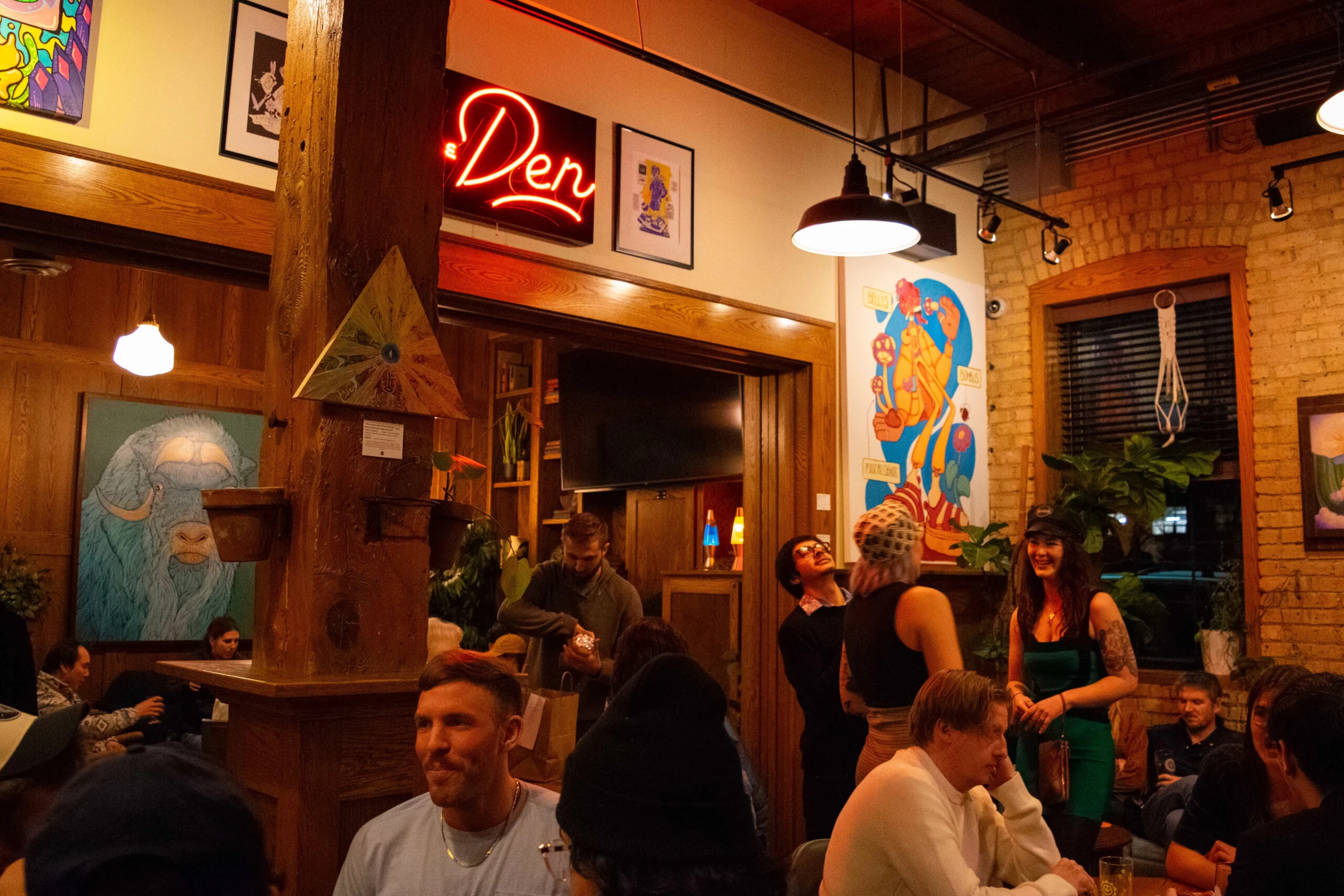
Ask Bandy to describe Indeed in one sentence, and you get a snapshot of the brewery’s entire philosophy. “It’s kind of like a constantly evolving classic take,” he says, describing the tap rooms. “It’s wood-paneled. There’s a wood bar. It’s old school. We pour them in awesome glasses with awesome pours, but we kind of do weird shit all the time and fuck stuff up a lot, too.”
It’s a balance that sounds precarious but works. The Minneapolis flagship location maintains that classic brewery aesthetic—the kind of place where the fundamentals matter intensely. Perfect pours in the perfect glassware. A perfectly clean bar. Lights set just right. Music at exactly the right volume. These aren’t small details; they’re the foundation of what Bandy believes people are really paying for when they visit a tap room.
“You can have the best beer in the world, and I do think we have as good a beer as possible and very good beer, but the experience is really what people are paying for,” Bandy says. “You can get really good beer at a liquor store. You can get really good beer at a bar. Give me a High Life in a bottle—it’s fucking delicious no matter where I’m drinking it. So if I’m going to spend money at a tap room, it’s because of the experience.”
Two Cities, One Vision
In 2019, Indeed expanded beyond Minnesota, opening a tap room in Milwaukee’s Walker’s Point neighborhood. It wasn’t a random choice. Minneapolis and Milwaukee share something—a midwestern sensibility, a beer culture, a connection that made the expansion feel natural rather than forced. The Milwaukee location features a smaller 10-barrel pilot system that allows for extensive research and development, feeding innovation back to the main operation.
“We felt really kindred spirits with Milwaukee,” Bandy explains. “Minnesota and Wisconsin are super connected in a lot of ways, so it was a natural kind of evolution for us.”
The Milwaukee tap room has developed its own identity while maintaining Indeed’s core values. It’s become a true third space in its neighborhood—a place where regulars show up several times a week, drawn by an experience that feels elevated without being pretentious. In Minneapolis, the regulars operate on a different schedule, showing up monthly or yearly, but the draw is the same: an experience that feels fundamentally right in ways that are hard to articulate but easy to feel.
Brewing for Community
Indeed has never been content to just serve beer. The brewery has woven itself into the fabric of both cities through events and programs that bring people together. In Minneapolis, the Whirly Gig spring festival during the neighborhood’s Art-A-Whirl event draws 30,000 to 40,000 people over three days in May. It’s free music, food, games, art, and beer—a massive celebration that transforms the brewery into a community hub.
Milwaukee has The Lowdown every fall, a similar street party that closes down the neighborhood and turns it into a celebration. But perhaps the most meaningful community program is Indeed We Can, which runs every Tuesday in Milwaukee and Wednesday in Minneapolis. The brewery donates the proceeds from beer and merchandise sales to nonprofits chosen by Indeed employees. It’s a simple concept that reflects a deeper philosophy: the community that matters most is the one closest to home.
“Those nonprofits, they’re chosen by all the employees here, so they’re usually pretty local,” Bandy says. “They’re places that matter to the people that work at Indeed, which has always been our goal. Ultimately, that is our community—the people that work for us and the people that come to our tap rooms.”
The Unexpected Star: Pistachio and Other Adventures
In an industry where IPAs reign supreme, Indeed’s bestselling beer is something nobody saw coming: pistachio cream ale. It’s a testament to the brewery’s willingness to experiment, to try things that might seem weird on paper but work brilliantly in the glass. The beer has become the one many people know Indeed for, even as the brewery maintains a robust core lineup.
That lineup includes Day Tripper, the West Coast Pale Ale that was Indeed’s first beer—low ABV, bitter, and still going strong. There’s Flavor Wave IPA, a slightly hazy, juicy hop bomb that leans on Sultana, Mosaic, and Citra hops for a tropical, fruity punch. And then there’s Mexican Honey, an eight percent imperial lager made with orange blossom honey from Mexico that’s won medals at the Great American Beer Festival, World Beer Cup, and European Beer Star.
“Mexican Honey has been around for almost 10 years,” Bandy notes. “If you just think about how many people have drank it over the years, that’s probably one of our most popular. It’s a very special beer. The honey component is super interesting.”
The brewery also offers Mexican Honey Light, a five percent Vienna-style lager that captures some of the original’s magic at a more sessionable strength. Seasonal offerings include Bright Side, a lemon and sea salt beer for summer, and Moon Dance stout for winter.
But it’s the experimental beers that really showcase Indeed’s creative spirit. LSD—a Belgian-style ale with lavender, sunflower honey, and dates—has become a yearly tradition despite its unusual profile. Cherry Dust, a barrel-aged red ale with Door County cherries, represents the more challenging side of brewing, requiring careful management and patience. Then there was Hot Fox, a smoked pepper porter that Bandy admits “wasn’t that good, but we tried it.”
“As a brewery, it’s like, what are we doing if we’re not fucking around a little bit?” Bandy says. “How can you differentiate? You kind of have to.”
The German Connection
Behind many of Indeed’s beers is an ingredient relationship that speaks to both the brewery’s ambition and its attention to quality. Much of Indeed’s malt comes from Bamberg, Germany, from Weyermann Malting, one of the oldest and most respected maltsters in the world. It’s not the kind of supplier that just sells to any American brewery—it’s the kind of relationship that had to be built slowly, starting with a chance meeting at a trade show in Munich years ago.
“They don’t just sell to many breweries in America,” Bandy explains. “We met them many years ago at a trade show in Munich and slowly built a relationship. The American malt is good, but the maltster is really what takes it to the next level, and they obviously have hundreds more years of experience. Being able to have some of the best malt in the world for a brewery our size is pretty cool.”
That commitment to quality ingredients extends to how Indeed approaches beer education with its customers. When someone new to craft beer walks into the tap room, Bandy’s approach is conversational rather than prescriptive. He asks what they normally drink—wine, whiskey, cocktails—and uses that information to guide them toward beers that match their existing preferences. Someone who drinks rosé might appreciate the acidity in a sour beer. A whiskey drinker might gravitate toward something darker and maltier.
The Minneapolis Advantage
The Twin Cities craft beer scene has a peculiar quality that Bandy attributes to geography and regulation. Minnesota didn’t legally allow tap rooms until 2012, and you still can’t buy beer in grocery stores. These restrictions created what Bandy calls an insularity—not necessarily in a negative way, but in a way that forced the local scene to develop its own identity.
“We’re kind of on an island up here in a lot of ways,” Bandy says. “We’re far away from people. We’re in the middle of nowhere. But because it’s been a relatively new industry for tap rooms—let’s say 15 years old—it’s all relatively new and fresh, which creates a really cool, collaborative, very interesting scene.”
That insularity has its downsides. Sometimes Bandy wishes the local scene would look beyond its neighbors for inspiration. But it also means breweries aren’t constantly comparing themselves to Chicago or other major markets. They’re doing it for themselves, creating something unique to the place they call home.
Adapting to Change
The craft beer industry is facing headwinds that would have seemed unthinkable a decade ago. People are drinking less, and when they do drink, they’re drinking less often. It’s a trend that’s forcing breweries across the country to rethink everything from their business models to their product offerings.
Indeed’s response has been multifaceted. More programming and events give people reasons to visit the tap rooms beyond just drinking beer. A diverse product lineup that includes non-alcoholic beers, THC seltzers, and sours ensures there’s something for everyone, regardless of their drinking preferences or sobriety. The brewery was one of the first in Minnesota to jump into THC beverages in 2022, and it’s become a significant part of the business.
“People love getting high,” Bandy says with characteristic bluntness. “It’s a great alternative and definitely part of that diversity of drink thing.”
The brewery is also preparing to release a light lager in 16-ounce cans early next year, joining a trend that’s been building in craft beer for several years. But Bandy is thoughtful about how Indeed approaches it. Too many breweries, he argues, just make an adjunct lager and call it a day. It might be fine, but it’s not differentiated, and it’s not particularly delicious.
“Craft beer—we’re supposed to be making shit that tastes really good,” Bandy says. “The light lager, how we’re going to take it is we’re definitely caring about the beer. It’s going to be the best-tasting one up here. And then we’re really thinking about the brand—how are we talking about it, how are we packaging it, how are we communicating it. If you’re going to do the light lager thing, you really got to make sure that it fits and that you have a really strong direction.”
Perfecting the Details
Winter at Indeed is R&D season, when the brew schedule has enough breathing room for experimentation. If you visit either tap room right now, you’ll find two or three beers on tap that are first or second batches of something new. Maybe it won’t keep the same name when it’s released commercially. Maybe it won’t be released at all. But it’s part of the process, part of that commitment to constantly evolving.
One beer that’s been in development for seven years is Northeast Pils, a German-inspired pilsner that’s slowly become Indeed’s American take on the style. It’s the kind of beer that represents the brewery’s philosophy in miniature: respect the tradition, but make it your own. Keep tweaking until it’s not just good but exceptional.
“If you like beer and you like pilsners, I think it’s an extremely good one,” Bandy says.
A Message for the Future Visitor
As the craft beer market contracts and consolidates, Bandy has a simple message for people who might be thinking about visiting a brewery: just do it. The assumption that breweries are always packed, that they don’t need your business, hasn’t been true for years.
“Support your local brewery,” Bandy urges. “Support the place that makes things. People think that breweries are just busy as hell all the time, and that might have been true 10 years ago, but it’s not. If you’re thinking about it, just go do it. Grab a round of beers. It means a lot.”
For Indeed, that support isn’t just about survival—it’s about continuing to create spaces where experience matters, where weird experiments can become beloved staples, where the fundamentals of hospitality are executed with precision, and where a wood-paneled bar can serve both as a reminder of tradition and a launchpad for innovation.
From that packaging line job 12 years ago to running the business today, Bandy’s journey with Indeed has been about learning to balance seemingly contradictory forces: classic and modern, tradition and experimentation, popular and weird. It’s a balance that requires constant attention, constant evolution. Because in craft beer, as in life, green you grow, and ripe you rot.
The key is to never stop growing.