
Dyersville, Iowa is a town that knows something about unlikely transformations. It was here, in the middle of the American heartland, that a cornfield became one of baseball’s most iconic movie sets. It should come as no surprise, then, that this same small city is also home to one of the most distinctive craft breweries in the Midwest — one born not from a blank canvas but from 115 years of working history layered into every brick and beam of its building.
Textile Brewing Company opened its doors in July 2019, but its story stretches back well over a century. And like the town it calls home, Textile has a habit of turning the improbable into something worth celebrating.
A Building That Would Not Be Forgotten
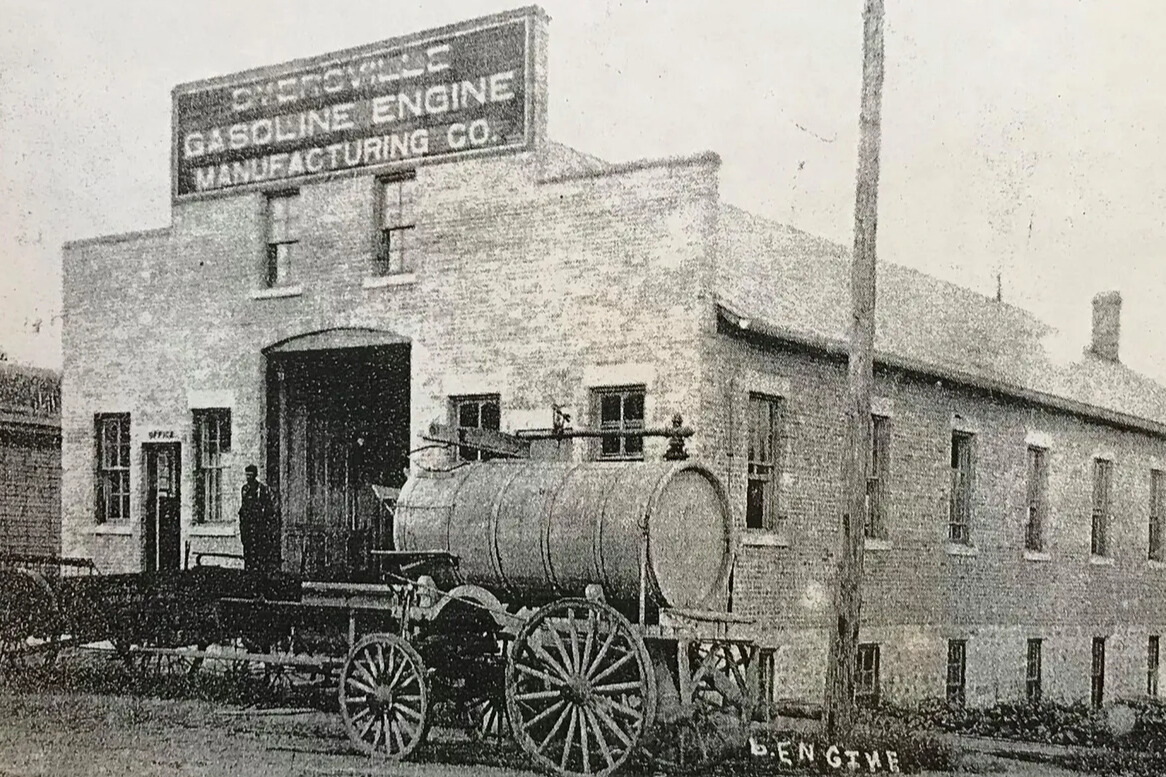
The structure that now houses Textile Brewing was originally erected around 1906 or 1908 as a gasoline engine factory — a venture that, like many industrial ambitions of the era, did not survive long enough to leave a lasting mark. The building itself, however, did. In 1911, the HB Glover Company, a sewing manufacturer, moved in and transformed the space into something far more enduring. For the better part of seven decades, that address hummed with the rhythmic industry of textile work, and the building absorbed it all: the worn wood of the floors, the heavy iron of the original fixtures, the sheer scale of a space built for serious labor.
The Glover Company operated there until the 1980s, after which another family purchased the property and kept the sewing tradition alive until 2017. By 2018, the building had finally gone silent — but not for long. New owners recognized what they had on their hands: not just real estate, but an irreplaceable piece of Dyersville’s industrial soul. With support from the state of Iowa and the Dyersville Economic Development Group, a fast-moving renovation began. Less than a year later, Textile Brewing Company opened, and the building found its next chapter.
“A century old sewing factory turned brewery in the heart of downtown Dyersville. That tells you both worlds, and tells you how vintage it really is.”
That line — Ashley Althoff’s go-to description for the brewery’s social media bios — captures something essential about the place. The original sewing machine tables now serve as communal dining surfaces, some seating as many as 24 people. The light fixtures and lamps throughout were crafted by local artists using repurposed materials. The worn warmth of the interior is not manufactured nostalgia; it is the genuine accumulation of a century of use. As Ashley puts it, walking into Textile is less like entering a typical craft brewery and more like stepping into a living museum.
Two Bartenders, One Extraordinary Day
The origin story of Textile Brewing would be incomplete without the human element — specifically, the trajectories of the two people now most responsible for its day-to-day identity. Ashley Althoff, the taproom and marketing manager, and Joel Null, the head brewer, both arrived at Textile on the very same day, seven years ago. They had never met. One was starting as a bartender; the other, in Ashley’s words, was also cleaning.
Neither imagined the paths that would unfold. For Joel, the road from bartender to brewmaster wound through the disruption of the COVID-19 pandemic, a stint as assistant brewer, and the departure of the brewery’s original head brewer, who returned to his home state of Georgia to pursue his own venture.
“They offered me a full-time position. I just took a leap of faith and jumped into it — and it was the best decision I ever made in my life.”
Ashley’s trajectory was similarly organic. The owners recognized in both of them a passion and business instinct that transcended their entry-level roles, and over time nurtured them into the leadership positions they now hold. “The owners kind of saw our passion,” Joel explained, “how much we cared about our roles even as beer tenders, and it grew from there.” It is the kind of origin story that feels almost too fitting for a brewery built inside a building that once rewarded hard, honest labor.
Community First, Pints Second
A Space for Everyone
From the beginning, the owners of Textile established a clear philosophy: this would be a place for everybody. The brewery is open every single day at 11:00 a.m. — a policy that actually took root during the pandemic, when they pivoted to offering takeout food and beer for lunch. When customers responded enthusiastically, the doors simply stayed open. Today, Textile is one of the most consistent community gathering points in Dyersville, closing only on Christmas, Easter, and Thanksgiving.
The family-friendly ethos is visible everywhere. Children are not just tolerated — they are genuinely catered to, with games, arts and crafts supplies, a sprawling beer garden equipped with cornhole and giant Jenga, and those massive sewing tables that keep large families and groups connected rather than scattered. Every summer, little league baseball tournaments flood Dyersville with visiting families, and Textile has become a natural home base. “Some of the same families come back year after year,” Ashley notes, “because they know it’s just a good place, a good open space.”
The Founders and the Regulars
When Textile first opened, the owners launched a Founders membership program to help build operating capital: a one-time $1,000 lifetime membership, transferable to a person of the member’s choosing upon their death. The program raised $100,000 before the brewery had poured its first pint. More importantly, it created a core community of invested regulars who have remained part of the brewery’s story ever since. “A lot of those people are still here,” Ashley says. “They’re the main locals. They’re still part of the story.”
The Craft Behind the Craft
A Core Lineup Built for Everyone
Joel Null approaches brewing with a philosophy he articulates simply but with evident conviction: he likes beer that tastes like beer. His core lineup reflects that. At any given time, Textile keeps an Irish red ale, an oatmeal stout, a hazy pale ale, a light American lager, a Vienna lager, a light ale called the Trailblazer, and the Blue Suede — a blueberry kettle sour that Joel describes as tasting like a “liquefied blueberry cobbler” — all available on tap.
The most popular beer in the lineup, Joel says, is the Vienna lager: a copper-colored, 5.4% ABV beer with enough body and flavor to feel distinctly craft, yet light and crisp enough for a hot Iowa summer. “It’s got enough flavor and enough mouthfeel that you know it’s a craft beer,” he explains, “but it still remains that light crispness that even in the middle of summer, it’s something you want to be drinking.”
For newcomers to craft beer, Joel steers them toward the Trailblazer light ale — a beer with more character than a standard domestic lager, but approachable enough to not overwhelm. It has become one of Textile’s best sellers for exactly that reason.
Seasonal Releases and a Corn-Fed Adventure
Textile’s five-barrel brewing system is, in Joel’s view, an asset rather than a limitation. It is precisely the right size for experimentation — each batch yields roughly nine kegs, enough to make a specialty release meaningful and exciting without the financial pressure of overcommitting to an untested recipe on a large scale.
The seasonal calendar at Textile is built around local rhythms. Every spring, a rhubarb sour appears — made with a pound of rhubarb per gallon, squeezed fresh and inoculated into the beer for a flavor Joel describes as “true rhubarb.” Come April 1st, the Summer Sonata, a Maibock lager that has been conditioning for three months, wakes up and clocks in around 8% ABV — deceptively smooth for a warm-weather pour. And in the fall, Joel partners with a local pumpkin patch, Hall Heritage Farms in Monticello, to create the Java Lantern: a cold brew coffee and pumpkin spice beer brewed with an array of squash varieties donated by the farm.
The most memorable experimental batch, though, may be the sweet corn ale. After a conversation with a local farmer named Evan Brem, who had a surplus of sweet corn at peak season, Joel decided to brew with it — processing somewhere between 20 and 30 dozen ears himself. “I’m glad there are no cameras downstairs,” he laughed, recalling the moment he realized he had no plan for removing dozens of cooked ears from his brew kettle. The beer was, by all accounts, a triumph. You could taste the sweet corn unmistakably, and it sold out quickly that summer.
Events That Build Belonging
Beyond the daily rhythm of the taproom, Textile punctuates the year with events that have become Dyersville traditions. The Oktoberfest celebration, now in its eighth year, runs across a three-day weekend every fall and draws visitors from across the region. The event has been part of Textile’s identity since its very first year open.
The Wort Rally, now entering its third year, is perhaps the most uniquely meaningful event on the calendar. Joel — himself a longtime home brewer — provides participants with a five-gallon starter wort, pasteurized and ready to take in any direction. Home brewers have seven weeks to do whatever they want with it: lagers, IPAs, sours, Belgians, brown ales. They bring the finished beer back to the brewery for a public tasting in the beer garden, free and open to everyone. Joel then selects one recipe to scale up on the brewery’s system, giving the winning home brewer a dedicated release day and the chance to meet the customers drinking their beer on draft.
“It reminds me of my roots — that passion of why you get into brewing in the first place. Making something new, conversing with other like-minded individuals, and just enjoying what you do.”
The Wort Rally has already produced two fan-favorite beers: a wee heavy the first year, and a brown ale the second. Participants who have had their recipes featured at the brewery have become some of Textile’s most loyal customers. It is, in miniature, the whole spirit of the place: people investing themselves in something, being seen, and belonging.
The Road Ahead
Ask Ashley and Joel where they see Textile in five years, and their answers are telling. Ashley speaks about stewardship — continuing to honor the historic building with intention, keeping the brewery a genuine anchor for the community, and sourcing more local ingredients into the food program. There is already a promising partnership in development with Farmtech, a local company whose greenhouse grows fresh basil, greens, and tomatoes year-round nearby.
Joel talks about competition entries and the ongoing refinement of recipes. He has been submitting beers to judging competitions not for the ego of winning but for the discipline of outside feedback. “My palate is very well off,” he says with characteristic self-awareness, “but a lot of times I’ll taste something and no one else will taste it — and then we send it to the competition, and the judges pick up on it.” The ambition is patient but real: to eventually place Textile on the national craft beer map.
Both of them agree on something simpler and more foundational than awards or expansion: what makes Textile worth coming back to is the atmosphere. It is warm where industrial spaces are usually cold. It is human where breweries can sometimes feel like showrooms. The sewing tables are long and inviting. The beer is made by someone who grew up loving beer. The story of the building is written into every surface you touch.
— — —
Textile Brewing Company is located in downtown Dyersville, Iowa, and is open every day at 11:00 a.m. Visitors can sign up for the weekly Textile Brews News newsletter at textilebrews.com, and follow the brewery on Facebook and Instagram for updates on new releases and upcoming events.

