For anyone who has ever traveled through Wisconsin, the name New Glarus Brewing Company is legendary. Its most famous creation, Spotted Cow, has become more than just a beer; it’s a cultural icon, a symbol of state pride that inspires road trips and frantic calls to friends crossing the border. At the heart of this phenomenon is Dan Carey, the brewery’s co-founder and head brewmaster. Alongside his wife Deb, Dan started New Glarus in 1993, building it from a humble, family-first operation into a craft beer powerhouse that defiantly plays by its own rules. In a conversation with Henry, Dan Carey pulled back the curtain on the brewery’s unlikely origin, the accidental genius of its famous distribution strategy, and his vision for navigating the turbulent future of American craft beer.
A Career Built on Family, Not a Corporate Ladder
Long before he was a celebrated brewmaster, Dan Carey was just a kid from San Francisco who fell in love with the magic of breweries. “Even when I was a little kid I just loved the… cleanliness, the tile floors and copper kettles and the smell of… brew houses and… the taste of beer,” he recalls. That childhood fascination blossomed into a career, eventually landing him a supervisor position at an Anheuser-Busch brewery in Fort Collins, Colorado. While it was a prestigious role, the corporate path came with a significant catch.
At the time, Anheuser-Busch operated 13 breweries across the country, and upward mobility meant a willingness to relocate frequently. “In order to be successful at Anheuser-Busch at that point… you’d have to be willing to move around the country,” Carey explains. With job offers in major cities like Newark, Los Angeles, and St. Louis, the family faced a crossroads. His wife, Deb, was deeply opposed to raising their two young daughters in a large metropolis. The constant uprooting required by the corporate ladder was simply incompatible with the life they wanted for their family.
It was Deb who proposed a radical alternative. Carey remembers her saying, “Look, I don’t think this career path is going to work for us in a family situation. So, how about we move back to my home state, which was Wisconsin, and… I’ll build a small brewery, and… we’ll just give it a shot”. The idea was less about conquering the beer world and more about creating a sustainable life. “She built the brewery for me, really as a way to raise our family in a small town,” Carey says. This foundational decision—to prioritize family and community over corporate ambition—would become the guiding principle for everything that followed.
The Accidental Genius of “Only in Wisconsin”
Today, New Glarus’s “Only in Wisconsin” distribution model is famous, a masterclass in creating scarcity and fostering local pride. But it wasn’t born from a clever marketing meeting; it was a strategy forged in the crucible of brutal, demoralizing sales calls. In the early days, with a tiny operation that produced just 199 barrels in its first year, Deb was the entire sales and marketing department. A primary target was the massive Chicago market, a grueling three-and-a-half-hour drive from New Glarus.
The experience was anything but pleasant. As a small, unknown brewer, Deb faced a hostile environment. “The bar owners can be brutal,” Carey says, explaining that the Chicago market was accustomed to “gimmies,” where distributors would offer free kegs to secure a tap handle. “When we’re a small brewery with no money, that’s not possible,” he states flatly. “Why would we go to all the trouble of brewing beer and giving it away? It was it was really demoralizing.”. The constant pressure to give away their hard-earned product, coupled with the exhausting travel and the challenges of being a young mother selling in city taverns, took its toll.
At the same time, the brewery was growing so quickly that they were constantly struggling with production capacity. Adding tanks and machinery is an expensive, agonizing process for a small business. Faced with these dual pressures, Deb made another pivotal decision. “She came to me and said, ‘You know, I think this selling beer in Chicago really stinks. I don’t want to do it anymore. So let’s just pull back and only sell in Wisconsin,'” Carey recalls. The move, which also included pulling out of markets in New York and Oregon, was unheard of at the time and was met with immediate backlash. “Brewers calling us saying… ‘Chicago is the second biggest beer market in the world. You’re crazy. You’re slitting your own wrists here,'” he says. Wholesalers in Illinois even threatened to sue. But what seemed like a risky business decision turned out to be a stroke of genius, tapping directly into the fierce loyalty of their home state. “Wisconsin is very, we always say it’s parochial in its buying habits,” Carey notes. “It’s proud to be Wisconsin.”.
Brewing with Purpose: The Stories Behind the Beer
While New Glarus has produced hundreds of different beers over the years, each one is made with the same passion and creativity. The brewery’s philosophy isn’t about chasing trends but about crafting unique, drinkable beers with a distinct point of view—a principle perfectly embodied in the stories behind its most beloved creations.
The Birth of an Icon: Spotted Cow
Spotted Cow is a beer that has taken on a life of its own, but its origin is rooted in a specific historical inspiration. The idea came to Carey during a visit to Old World Wisconsin, an outdoor living history museum that features historic homesteads from the state’s frontier days. While visiting a German homestead from the 1850s, he saw a crockpot of fermenting, homemade beer, just as a farmer would have made it nearly 150 years earlier.
This sparked a question in his mind: “I wonder what… farmers would have been brewing in the 1850s?”. He reasoned that a primitive, homemade beer from that era would have been a top-fermented ale, likely brewed without the benefit of ice. At the same time, the lighter, golden pilsner style was just beginning to take the world by storm, influencing brewers everywhere. Putting these pieces together, Carey set out to create what he calls a “Wisconsin farmhouse ale”—an attempt to imagine what a farmer of that time might have brewed. Spotted Cow wasn’t designed to be a flagship; it was just one of many attempts to create something authentic and rooted in place, a beer that fit the unique sensibilities of Wisconsin.
A Nod to the West Coast: The Creation of Moonman
While Carey is a master of traditional lager brewing, he also has a deep appreciation for other styles. His number two selling beer, Moonman, is a dry-hopped pale ale directly inspired by one of the most famous IPAs in the world: Russian River Brewing Company’s Pliny the Elder. Carey admires the elegance of Pliny but found its high alcohol content made it a “big beer,” not one meant for casual, repeated enjoyment.
His goal with Moonman was to capture a similar aromatic, hop-forward character in a more “sessionable” package. “The idea was to make a sessionable beer in that style,” he explains. This approach highlights a key aspect of his brewing philosophy: he is inspired by other great beers, but he is not interested in simply copying them. It’s about taking a concept and reinterpreting it through the New Glarus lens to create something new and distinct.
The Brewer’s Canvas: The Thumbprint Series
For the beer lover who is always asking, “What’s new?” New Glarus offers the Thumbprint series. These beers are designed to be “a little bit bigger and bolder,” providing a platform for experimentation and creative freedom. This series allows Carey to explore a wide range of styles, from fruit beers to intense lagers, keeping the brewery’s lineup fresh and engaging.
Even when brewing traditional European styles, Carey is adamant about adding his own unique stamp. He has no desire to be a “cover band,” perfectly replicating a beer that already exists. “If I’m making a beer that tastes… exactly like this European… logger beer, why would I do that? Because it already exists,” he argues. “It does a disservice to me and to that brewery.”. Instead, every New Glarus beer, whether it’s a classic lager or an experimental Thumbprint release, is designed to have an “idiosyncratic twist,” a unique flavor profile that makes it undeniably their own.
Navigating a Crowded Market: The Future of Craft Beer
Having been in the industry for decades, Dan Carey has a clear-eyed view of the challenges facing craft brewers today. He describes a market that has become incredibly fragmented and competitive. For packaging breweries like his, which sell primarily through wholesalers, there are two major “pinch points” that make it difficult to reach customers. First, wholesaler portfolios are now flooded with hundreds of brands, from local craft beers to international imports and even THC-infused beverages, making it a battle to get a “share of mind”. Second, retailers are overwhelmed with choices, making shelf space a precious commodity.
The consumer landscape is also shifting dramatically. “Younger people are simply drinking less beer than… they used to,” Carey notes, adding that for this generation, craft beer isn’t novel—it’s been around their whole lives. He pushes back against what he calls “neo prohibitionist attitudes” that promote total abstinence as the only path to health. He points to the “J-shaped curve,” a medical concept showing that moderate drinkers often have better health outcomes than both abstainers and heavy drinkers.
For Carey, the value of beer extends beyond the beverage itself; it’s a social lubricant that plays a vital role in a healthy lifestyle. “It’s a social drink,” he says, lamenting that since the pandemic, people are not socializing in person as they used to. He firmly believes that humans are tribal and need to be together. Enjoying a beer in a relaxed atmosphere is part of a “pleasurable lifestyle,” a way to combat stress, which he identifies as a leading cause of cardiovascular disease. “To be a total abstainer to me just seems uptight,” he concludes, “And being uptight is not good for one’s health.”.
The Next Chapter for New Glarus
Despite its established success, New Glarus is not standing still. The brewery is in the midst of a massive, two-year expansion project that will culminate in a huge new visitor center, set to open in the spring of 2027. This new space will feature a small research brewery built around a 150-year-old brew kettle, allowing for even more experimentation.
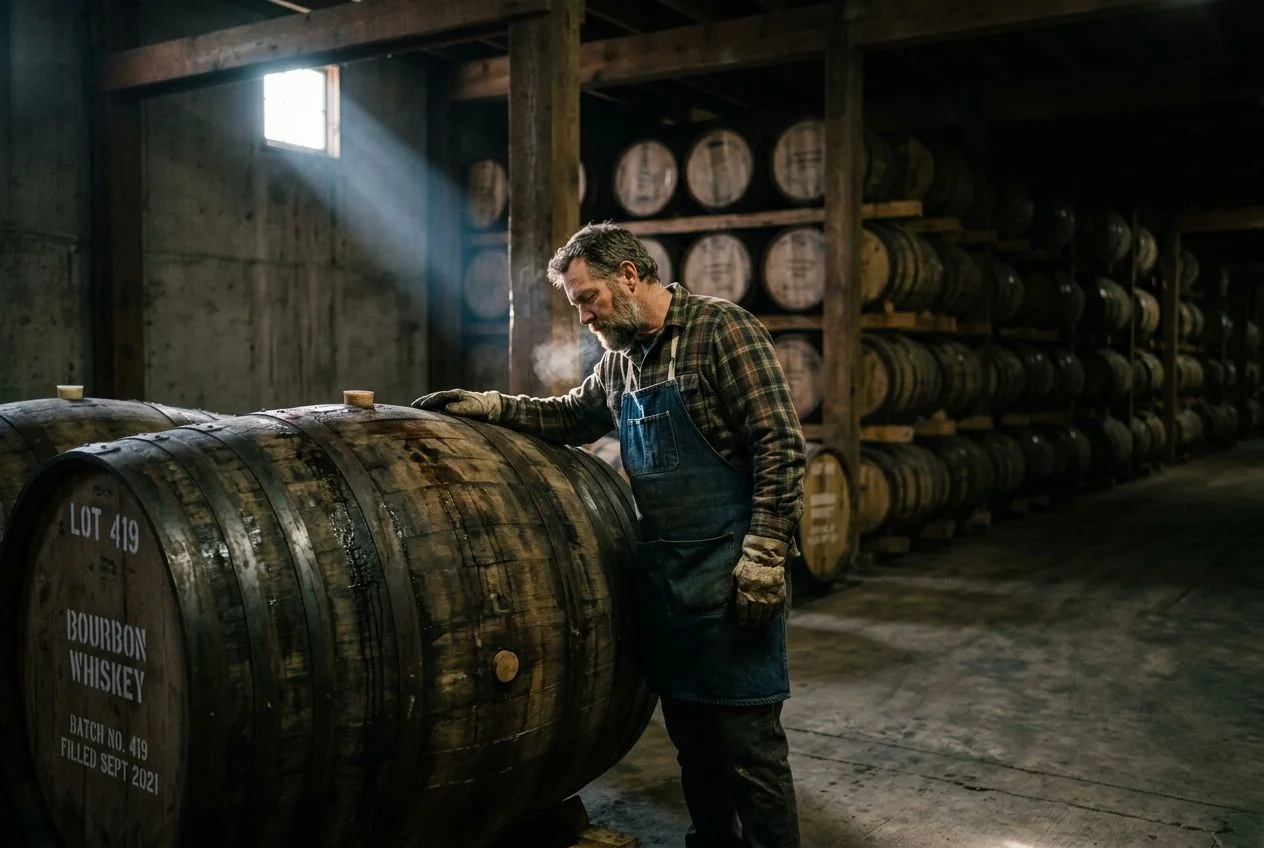
Perhaps most exciting for fans is the expansion of their distilling operation. The brewery’s still will be moved to the new facility, and Carey revealed that they are preparing to release a whiskey that has been aging for six to eight years. “We’ve got some really nice whiskey that we’ll release,” he says, signaling a bold new chapter for the company. From its family-focused roots to its fiercely independent spirit, New Glarus has always carved its own path. As it looks to the future, it’s clear the brewery plans to keep doing things its own way—only in Wisconsin.