Cidery hours, tap lists, and distribution change seasonally — confirm details before you visit.
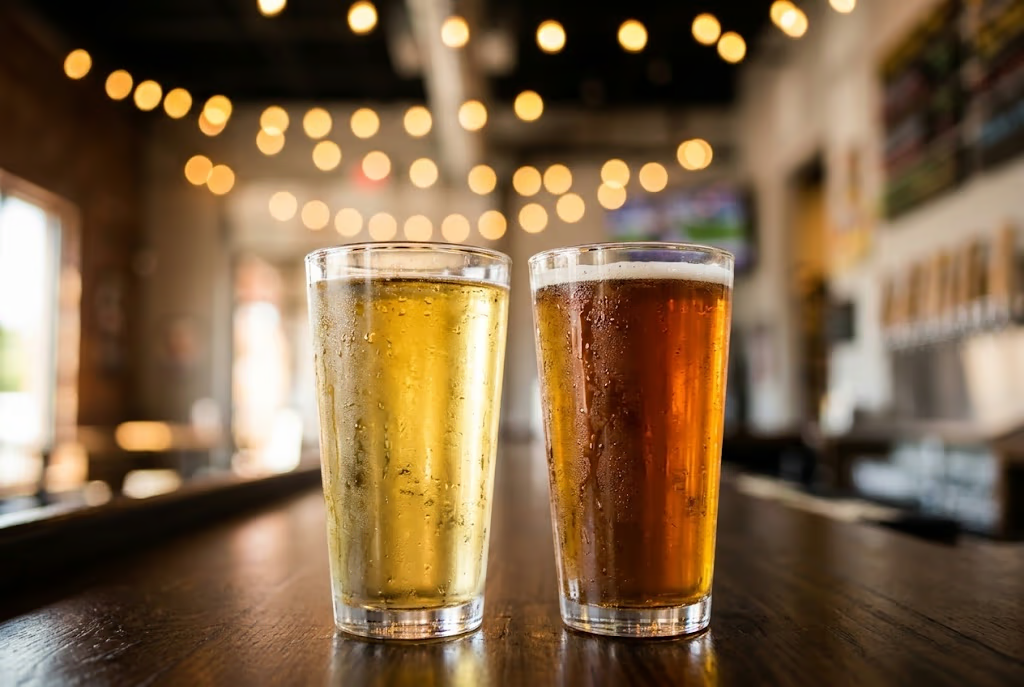
Walk into any Midwest taproom lately, and you’ll likely find a hard cider tap sitting right next to the IPA. It’s easy to assume the two are close cousins. Some people even think “cider beer” is a thing. It isn’t. So what is the difference between cider and beer, exactly? The craft cider vs craft beer differences start at the most basic level. It comes down to what each drink is made from, how the law treats it, and how it actually tastes. Think of this as your Midwest craft beer and cider guide. Call it a craft beer enthusiasts guide to hard cider, written for anyone who reads this craft beer blog for Midwest drinkers but hasn’t tried a proper Midwest cider yet.
- How Is Craft Cider Made Compared to Beer?
- Craft Beer vs. Hard Cider ABV Comparison
- Flavor Profile Differences: Cider vs. Beer
- Gluten-Free Hard Cider vs. Craft Beer
- Best Midwest Craft Cideries to Visit
- Craft Beer Taproom vs. Cidery Experience
- How to Pair Food with Craft Cider
- Why Now Is the Moment to Try Craft Cider and Craft Beer
- Craft Cider vs. Craft Beer FAQ
- Craft Cider and Craft Beer: Ready to Try Both?
How Is Craft Cider Made Compared to Beer?
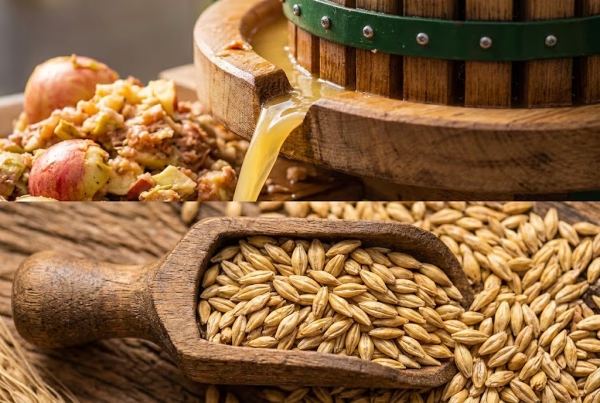
The biggest difference starts with the raw ingredient. Craft beer is brewed from malted grain, usually barley. Craft cider is fermented straight from pressed apple juice. That gap shows up the moment you compare hard cider ingredients vs beer ingredients side by side.
Brewing beer takes a few extra steps. Brewers mash malted grain in hot water to turn its starch into fermentable sugar. Then they boil the liquid — called wort — with hops for bitterness and aroma. They cool it down and pitch in yeast. What’s often loosely called cider brewing is really just fermentation. Cidermakers press apples into juice, which becomes must once yeast goes in. That yeast ferments the fruit’s own sugar directly. No mashing. No boiling. No hops required.
That gap is legal, too. The Alcohol and Tobacco Tax and Trade Bureau (TTB) doesn’t count cider as beer at all. It’s counted as a wine made from apples, while beer falls under separate rules for malt beverages and craft breweries. That’s part of why a cider maker calls their place a cidery, not a brewery. It’s also the root of cider’s biggest health perk, which we’ll get to shortly. Curious how ingredients shape beer styles the same way? Our craft beer style guide breaks that down.
Craft Beer vs. Hard Cider ABV Comparison
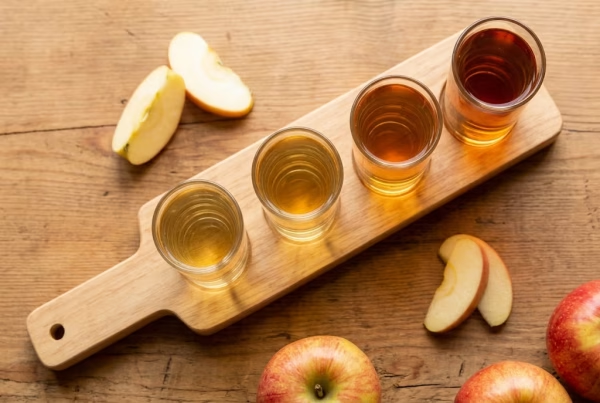
Here’s a myth worth retiring: is cider stronger than beer, ABV-wise? Usually not. Most craft ciders land between about 4.5% and 7% ABV. That’s nearly the same range where most craft beer sits.
You’ll also notice a lot of ciders bottled at exactly 6.9% ABV. That’s no accident. Federal tax law treats 7% ABV as a cutoff. Ciders below it get a lower tax rate and skip a federal label-approval step called a COLA, short for Certificate of Label Approval. Cross that line, and a cider faces a steeper tax bracket and stricter label rules. Staying just under 7% keeps a cider in the easier bracket. That’s why the number shows up so often on shelves.
The real extremes sit at the edges. Ice ciders are made by freezing apple juice before it ferments, which concentrates the sugar. They typically land around 9–13% ABV, closer to a dessert wine than a session pour. On the beer side, imperial stouts and double IPAs can push past 10% too. On average, cider and beer are strength twins. Each one just has a stronger fringe worth sipping carefully.
Flavor Profile Differences: Cider vs. Beer
Flavor is where cider and beer really part ways. Beer’s character comes from three sources: malt, hops, and yeast. Malt gives you bready, caramel, or roasted notes. Hops bring bitterness and aroma, anywhere from citrus to pine. Yeast shapes the rest, turning out everything from a clean lager to a fruity, funky sour. That mix is what gives you the hundreds of beer styles on a taproom chalkboard.
Cider works on a different axis: sweetness, acidity, and tannin. Acidity comes from malic acid. It’s the same tart, mouth-watering quality you get biting into a green apple. Tannin is that drying, slightly puckering feeling you get from a strong cup of tea. In cider, it comes from the apple skins, and it gives the drink structure. Sweetness is just how much natural sugar is left once fermentation stops. Think of it as a dry vs sweet craft cider guide in miniature.
Cidermakers and judging groups, including the American Cider Association, lean on four shared terms for where a cider lands. Those are dry, semi-dry, semi-sweet, and sweet. Ciders made from eating apples like Gala or Granny Smith tend to be brighter and lower in tannin. Heritage cider apples — sometimes called bittersweets, bred for fermenting rather than eating — produce a more tannic, wine-like glass. Across both types, cider styles run a wide range, much like the spread from a crisp pilsner to a roasty stout on the beer side.
If you’re building your own craft cider tasting notes for beginners, your beer taste is a good map. IPA fans often lean toward tannic, structured heritage ciders. If a crisp pilsner is more your speed, look for a dry, bright modern-apple cider instead. Our guide to Midwest IPA styles is handy if you want to compare bitterness to tannin side by side.
Gluten-Free Hard Cider vs. Craft Beer
Cider is made only from apples, water, and yeast, so it’s naturally gluten-free. No barley, wheat, or rye involved. That’s a big deal for celiac drinkers. It’s still worth checking for a certified gluten-free label, though, since shared equipment or barrel-aging can bring in trace gluten.
Beer is a different story. Some breweries make “gluten-reduced” beer by treating barley beer with enzymes that break down gluten proteins. That’s a real product, but it isn’t the same as gluten-free. As Schär explains, gluten-reduced beer can still contain fragments that affect people with celiac disease. Our guide to gluten-free options goes deeper on which styles are safest.
On calories, cider and beer are closer than you’d think. Both average roughly 200 calories per 12 ounces. Cider tends to carry more sugar from fruit. Beer carries more complex carbs from grain. Neither one wins outright on health. It’s a trade-off, not a verdict.
Best Midwest Craft Cideries to Visit
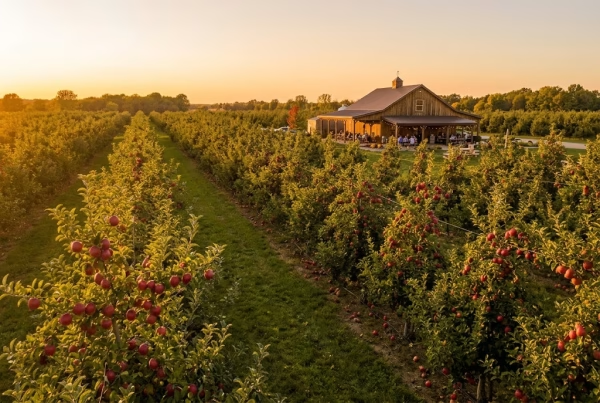
Ready to pour a flight? Maybe you’ve searched “midwest hard cider breweries near me.” Maybe you just want a shortlist of the best craft cideries in the Midwest. Either way, these six taprooms are a strong starting point. They’re some of the top rated Midwest craft breweries and cideries around, spanning six states. Just know that hours, tap lists, and distribution shift with the seasons, so confirm before you plan a visit.
- Michigan — Vander Mill, Grand Rapids. Michigan is the region’s cider heavyweight, and Vander Mill anchors it with a full food menu and a deep cider list. We always start a flight with the Vandy, a crisp, easy-drinking flagship, then work up to the spiced Totally Roasted.
- Minnesota — Wild State Cider, Duluth. This state has an apple-breeding legacy: Honeycrisp got its start here. Wild State honors that legacy, fermenting from 100% fresh-pressed juice rather than concentrate. Try a dry, orchard-forward pour if you lean toward wine-like cider.
- Wisconsin — Island Orchard Cider, Door County. A traditional-method maker using Normandy-style cider apples grown in the county’s limestone soil. Reach for the oak-aged bottling if you like a barrel-influenced beer.
- Indiana — Ash & Elm Cider Co., Indianapolis. Never-from-concentrate cider, made from roughly 60 apple varieties. Plus, there’s a genuine beer-to-cider bridge: their dry-hopped releases are an easy on-ramp for IPA drinkers. Start with Sunset, their tart-cherry flagship.
- Illinois — Right Bee Cider, Chicago. One of the city’s first urban cideries. It’s fermented bone-dry with champagne yeast and often finished with honey from rooftop hives.
- Ohio — Mad Moon Hard Cider, Columbus. Fresh-pressed, unfiltered, and entirely gluten-free — a reliable pick when you’re pouring for a celiac guest.
September and October bring the seasonal craft cider flavors Midwest drinkers wait all year for. Spiced, barrel-aged, and fresh-pressed releases start showing up on taplists across the region. A fall visit looks pretty different from a summer one. Planning a longer trip? Pair this list with our Midwest brewery roundup. Several of these towns are home to notable craft breweries worth a stop, too.
Craft Beer Taproom vs. Cidery Experience
A craft beer taproom is usually built for groups. Think bar service, a rotating flight list, and a social, get-a-pitcher energy. A cidery tasting room often leans more toward a winery model. Flights are seated, grouped by apple variety or dryness level, sometimes set right on an orchard. In the Midwest, the lines blur constantly. Cideries like Vander Mill and Ash & Elm run full food menus. Plenty of breweries pour a guest cider alongside their own beer, too. If you’re easing into cider for the first time, a food-forward, hybrid taproom is the gentlest place to start.
How to Pair Food with Craft Cider
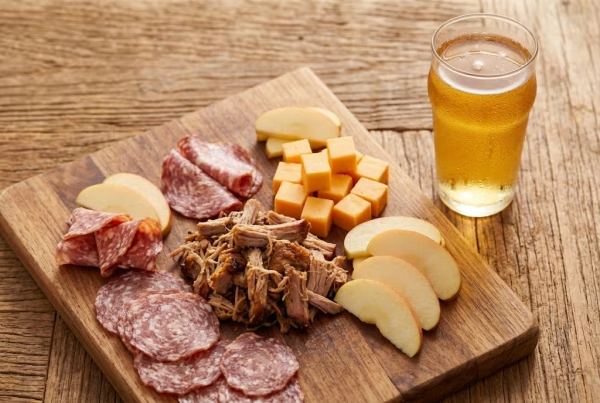
Cider’s acidity and fizz give it the same superpower as a crisp lager: it cuts through rich, fatty food. Industry pros lean on a simple framework. Cut: a dry cider’s acid slices through pulled pork or fried chicken. Complement: a semi-sweet cider matches roasted squash or aged cheddar. Contrast: a sweeter, fruit-forward cider balances spicy Thai or Cajun food. It’s the same logic beer drinkers already use pairing an IPA with heat or a stout with dessert. This version’s just built on acidity and tannin instead of bitterness.
Why Now Is the Moment to Try Craft Cider and Craft Beer
Craft beer’s growth has cooled. National volume was down roughly 4% in both 2024 and 2025, per the Brewers Association. Estimates like this vary by source, though, so it’s best to read them as directional, not exact. Cider, meanwhile, has quietly returned to growth. The East North Central region — Illinois, Indiana, Michigan, Ohio, and Wisconsin — was the only U.S. region to post a production gain in 2025. So there’s rarely been a better time for a beer-loyal Midwest drinker to pour a cider flight.
Craft Cider vs. Craft Beer FAQ
Is cider stronger than beer ABV-wise?
Usually not. Both typically run 4.5–7% ABV. Ice ciders and imperial beers are the exceptions, both climbing past 9–10%.
Is hard cider gluten-free?
Yes, naturally. It’s made from apples, not grain. Just check for a certified gluten-free label if you have celiac disease.
What craft cider should an IPA fan try first?
Look for a dry-hopped or tannic heritage cider. Both give you the structure IPA drinkers already love, just built from apples instead of hops.
What’s the difference between cider styles and beer styles?
Cider styles split mostly by apple type and dryness: modern, heritage, and ice cider. Beer styles split by grain, hops, and yeast: lager, IPA, stout, sour, and beyond. Both offer plenty of range to explore.
Craft Cider and Craft Beer: Ready to Try Both?
Cider and beer will probably keep sharing a taproom chalkboard, and that’s a good thing. They reward different moods without asking you to give up the other. Pour a flight at one of the cideries above, or browse our Midwest craft beer guide for your next taproom stop.