
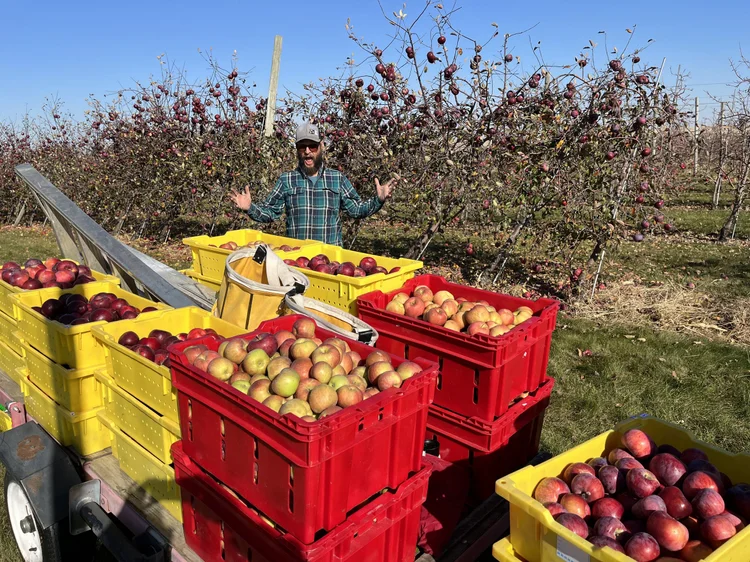
On seven acres outside Waverly, Iowa, chickens scratch near rows of apple trees, mushrooms grow in the shade, and inside a building that didn’t exist a decade ago, fresh-pressed apple juice quietly ferments into some of the most talked-about hard cider in the state. This is Paha Cider, and its origin story doesn’t start with a business plan. It starts with a home brewer who couldn’t stop tinkering, and a wife who got tired of waiting for her beer.
In a recent conversation on the Midwest Microbrew podcast, host Henry sat down with Mark Westbrock, co-founder and head cidermaker at Paha, to trace the path from hobby to full-fledged cidery — a story about patience, soil, and stumbling into a craft that fit better than the one Westbrock originally set out to master.
From Homebrewer to Cidermaker
A Hobby That Got Out of Hand
Westbrock’s beer-making career began in 2006, in a New Mexico kitchen, with malt extract and a stovetop. It didn’t stay small for long. “That hobby rapidly got out of control,” he told Henry, describing how he graduated to all-grain batches cooked on a propane burner and eventually converted an entire room of his house into a working brewery, complete with a plumbed-in stainless sink, an all-electric ten-gallon system, temperature-controlled fermentation fridges, and a kegerator. He entered competitions and ran with an active homebrew club, treating the whole thing as a serious, joyful obsession.
Then the Westbrocks moved to Iowa, and the plan was simple: rebuild the brewery in the basement. But basements need ventilation for the steam that boiling wort produces, and that project stalled behind a bigger one — a small diversified farm the family had started on seven acres, raising pastured chickens and turkeys and growing mushrooms on the side. The farm devoured Westbrock’s time, and the home brewery sat unfinished.
A Farm, a Distraction, and a Well-Timed Gift
His wife noticed. “My wife was bugging me — hey, where’s my beer? Why aren’t you making me beer anymore?” he recalled. Rather than nag him back to the basement, she bought him a small apple press. It was a shrewd move: cider needs no boiling, which meant no venting problem and far less equipment, and Iowa had far more apples on hand than dry New Mexico ever did. Westbrock started pressing fruit in the garage and fermenting it in the basement, and the operation grew almost on its own — fifteen gallons the first year, thirty the next, sixty after that.
From Farmers’ Market Rejects to a Commercial Cidery
Somewhere in that stretch, the family planted its own orchard, starting with about a hundred trees in 2020 and expanding to nearly 375 today. The original idea was modest: grow enough apples to feed the home cider habit, then sell the surplus at the farmers market alongside eggs and mushrooms. Reality intervened. Growing fruit organically in the humid upper Midwest is a far tougher assignment than growing it in an arid climate, with much heavier disease and pest pressure. The apples tasted wonderful but lacked the cosmetic perfection farmers market shoppers expect.
Faced with a few hundred trees of gorgeous-tasting, imperfect-looking fruit, the Westbrocks landed on an obvious pivot. “We’ve got all these trees — maybe we should have a go at turning the cider hobby into a commercial enterprise,” is how Mark remembers the thinking. They built a production building on the farm, and in the fall of 2023, Paha Cider sold its first bottles and cans. It’s a pivot with company elsewhere in Iowa agriculture — Fireside Winery’s dandelion wine followed a similar path from row-crop farm to bottled surplus — though for the Westbrocks, cider was the fruit-forward answer that fit.
A Philosophy Rooted in Real Ingredients
Fresh-Pressed, Never Concentrate
Asked to sum up Paha in one sentence, Westbrock didn’t hesitate: “Modern and traditional ciders made with real fruit and nothing artificial.” Some large commercial producers, he explained, start with apple juice concentrate and water rather than fresh fruit. Paha starts every batch with fresh-pressed apples and avoids refined sugar and artificial sweeteners entirely; whatever sweetness ends up in the glass comes from fruit or honey. His guiding rule, he said, is that he doesn’t want to make a cider he wouldn’t want to drink himself — though not every cider is his personal favorite, since the lineup is built to cover a wide range of palates.
Local When Possible, Regional When Not
Paha’s orchard doesn’t grow nearly enough fruit to supply full production, so Westbrock presses his own “brown apples” while also buying juice from other growers. One standout local source is Long Lane Orchard in Solon, Iowa, a twenty-acre operation planted entirely with dedicated cider apple varieties; it doesn’t make its own cider, just sells juice to cidermakers, and Paha’s Long Lane Cider comes from the orchard’s late-season harvest. Beyond that, the bulk of Paha’s apple juice comes from Michigan. “If we can’t keep it local, we try to keep it regional,” Westbrock said — a philosophy that extends to locally produced honey, locally grown rhubarb, roasted local pumpkin and squash for the fall seasonal, and aronia berries. The one persistent exception is pear juice: despite plenty of pear trees across the Midwest, Westbrock has never found a fresh-pressed source closer than the West Coast, a gap he called genuinely frustrating given how central pear cider is to the business.
The Secret Life of a Cider Apple
Part of what makes Paha’s traditional ciders distinctive is the fruit itself. Cider apples aren’t the same as grocery-store eating apples. Varieties known as bittersweets and bittersharps carry heavy tannins — the same compounds that create the drying, gripping sensation of a big red wine. Bite into one raw, Westbrock said, and most people would find it unpleasant. Press it into juice and ferment it, and those tannins turn into complexity rather than harshness. That fruit, not the kind bred for snacking, gives Paha’s traditional ciders their depth.
Inside the Core Lineup
Paha’s everyday lineup runs from bone-dry to genuinely sweet. The driest, Brute, is technically a hopped cider made from nothing but apples and hops, though the team avoids advertising it that way. “We feel like that might scare some people away that might actually like this cider,” Westbrock explained. Lightly dry-hopped, Brute picks up botanical and citrusy notes without tasting anything like an IPA — dry, crisp, and built for refreshment.
Next is the pear cider, made from apples, pears, and a touch of vanilla. Sitting right between semi-dry and semi-sweet, it has quietly become Paha’s best-selling cider year-round. The sweet cherry cider, made from apples and Montmorency tart cherries, rounds out the sweeter end; it was born from early customer feedback asking for something sweeter, debuted as a summer seasonal, and earned a permanent spot in the core lineup.
The fourth core offering breaks the mold entirely. Technically a cyser rather than a cider, it’s apple juice fermented with local raw honey, marketed as Imperial since most drinkers don’t recognize the term “cyser.” At 9.5 percent ABV, it’s noticeably stronger than the roughly 5.5 to 6 percent of the other core ciders. After fermenting dry, it ages on oak and gets a light back-sweetening with apple juice, landing in semi-dry territory even though the honey character can trick the palate into perceiving more sweetness than is really there.
Chasing the Seasons
Paha’s seasonal releases rotate on a rhythm tied to the calendar and to customer demand. The honey rhubarb cider, one of the sweetest in the portfolio, proved so popular last year that Paha moved its release up to April this year. As that supply runs low, a late-summer release takes its place: blueberry aronia, a tart, deep-purple cider made from apples, blueberries, and aronia berries. Originally part of the core lineup before being phased out, enough customers asked about it that Paha is bringing it back, with kegs arriving in early August and cans following later in the month. Waiting after that is the fall favorite, pumpkin spice, made with real roasted pumpkin and squash alongside classic pie spices — a breakout hit in its debut year that Westbrock expects to repeat.
The Pommeau: Paha’s Crown Jewel
Asked which three ciders a first-time visitor should try, Westbrock reached for the pear cider as the safe crowd-pleaser and one of Paha’s rotating traditional ciders, made from single-origin cider apples, for its tannic complexity. His third pick was something entirely different: the Pommeau.
A Pommeau is a French-style fortified cider. Paha’s version starts with its own fermented hard cider at roughly 6.5 percent ABV, which goes to a professional distiller and comes back as apple spirits at around 160 proof. Because the spirit hasn’t touched a barrel yet, it can’t legally be called brandy — it’s technically an eau de vie. Paha blends that high-proof spirit back with fresh, tannic juice from local cider apples, bringing the finished blend to roughly 20 percent ABV, then rests it in oak barrels for about a year. The result, labeled as an apple dessert wine, is something Westbrock compares to port: sweet, smooth, and strong, meant for small pours after dinner rather than a pint glass. “It’s a fun one,” he said of the labor-intensive process.
Busting the Biggest Myth About Cider
Ask Westbrock about the most common misunderstanding customers bring to the table, and he doesn’t hesitate: the assumption that cider is always sweet. Years of mass-market ciders on grocery store shelves have shaped that expectation, and it’s noticeably sweeter than anything Paha makes. That misconception has become one of his favorite moments on the job — hearing someone say they don’t like cider, pouring them a dry option, and watching their reaction change. “I really enjoy having people tell me they don’t like cider and then pouring them one of our dry ciders and having them have a big smile,” he said.
A Growing Community in the Heartland
Iowa’s cider scene is still small compared to beer, but it’s expanding. Unlike Minnesota, which has enough producers for its own dedicated cider guild, Iowa’s cidermakers operate within the broader Iowa Brewers Guild, alongside a much larger population of beer brewers. Westbrock sees cidermaking as closer in technique to winemaking, even though the marketing and audience for cider line up more naturally with craft beer. The state’s handful of cideries range from larger operations distributing widely to small producers pouring only in their own tasting rooms, and by Westbrock’s account, it’s a genuinely supportive community. Readers curious to explore more of that scene can browse our full directory of Iowa breweries and cideries.
Plan Your Visit
For anyone unsure where to start, Westbrock has a simple diagnostic question: dry or sweet? Dry drinkers should reach for the Brute, sweet-tooths for the cherry or whatever seasonal is pouring, and anyone buying for an unknown palate should stick with the pear.
Paha doesn’t run a traditional tasting room, but the farm hosts open house events roughly once a month through the summer at its production facility, with cider and local beer on tap, a food truck, picnic tables under the trees, and occasional live music. The farm sits directly on the rail trail connecting Waverly to nearby Readlyn, so plenty of visitors simply pedal in; the next open house lands on August 9. The best way to keep up with new releases is through Paha’s Instagram and Facebook pages or its email newsletter, both accessible through pahacider.com.
Westbrock’s closing message to skeptics was simple: even if you think cider isn’t for you, give Paha’s a try. As he put it, come “spend a Sunday afternoon out here drinking cider and enjoying nature” — which, three years and 375 apple trees into this venture, sounds like advice he’s happy to follow himself.
Related reading on Midwest Microbrew:

