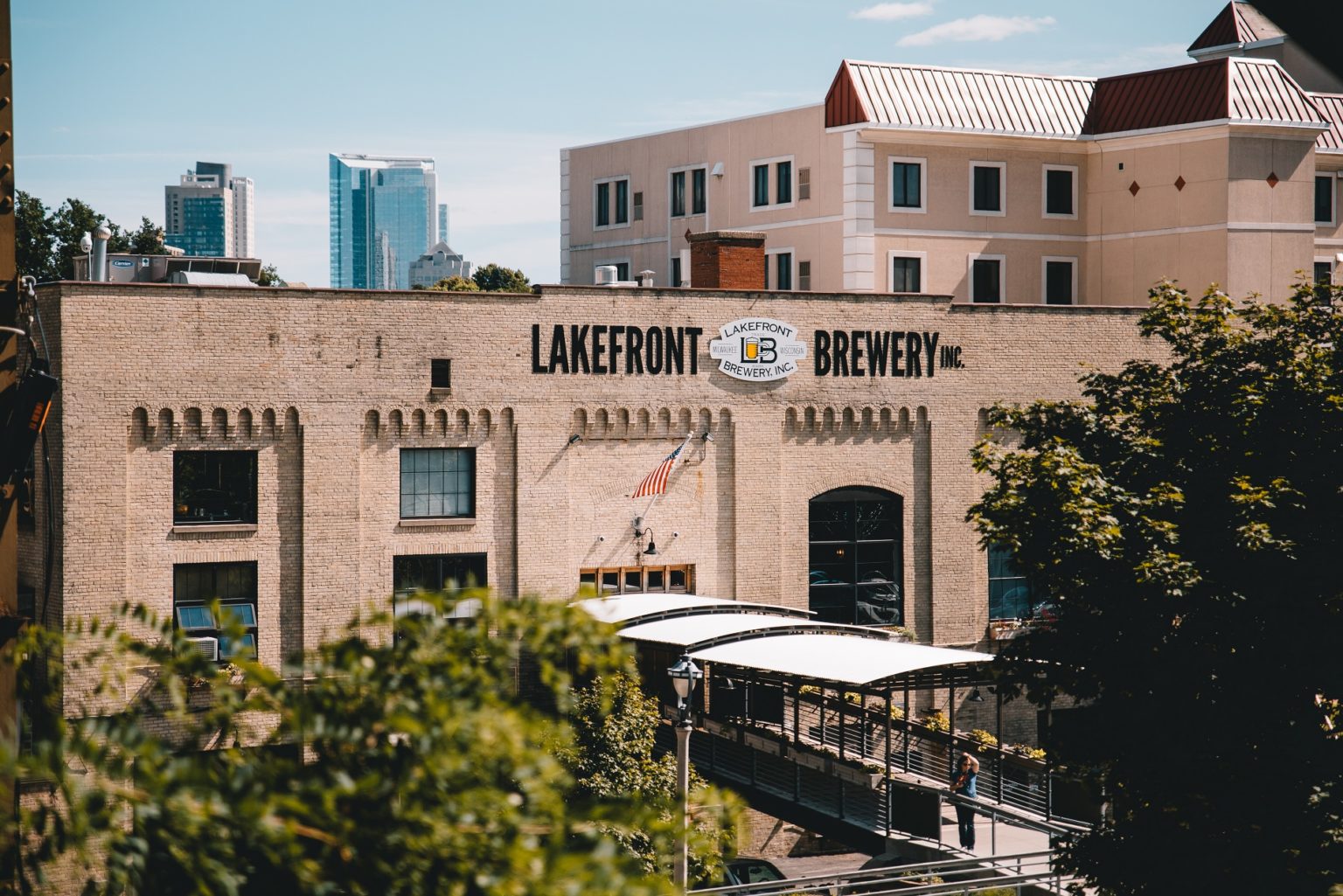
There is a particular kind of person drawn to the craft brewing world — someone fueled by equal parts passion and stubbornness, who finds deep satisfaction in the slow, methodical alchemy of turning grain and water into something extraordinary. Russ Klisch, president of Lakefront Brewery, is exactly that kind of person. In a candid conversation with Midwest Microbrew, Klisch pulled back the curtain on what it genuinely takes to build a brewery from the ground up — the financial pressures that can sink even the best ideas, the partnerships that test friendship to its limits, and the steadfast belief in quality that must underpin every single pour.
Klisch’s perspective carries real weight. Lakefront Brewery has grown into one of the most celebrated craft breweries in the Midwest, earning a loyal following not just for the quality of its beer, but for the bold, personality-driven spirit behind it. But none of that happened without navigating the same brutal early-stage challenges that claim so many would-be breweries before their first keg ever leaves the building. Klisch doesn’t sugarcoat any of it.
IF YOU MISSED OUR FIRST INTERVIEW WITH RUSS, CHECK IT OUT HERE: Sibling Rivalry to Beer Icon: Russ & Lakefront Brewery
The Money Problem Nobody Talks About Enough
Cash Is King — Even Before the First Batch
Ask any seasoned brewery owner what the single biggest obstacle to getting started is, and the answer comes back with near-unanimity. “I think with anybody it’s probably money, just trying to get it,” Klisch says, with the matter-of-fact candor of someone who has watched this story play out time and again. “Sometimes people are more wealthy than others, but typically I find that a lot of them are probably somewhat cash strapped.”
The dream of opening a brewery often collides hard with the reality of what the venture actually costs. Between commercial brewing equipment, lease deposits on appropriate industrial spaces, licensing fees, raw materials, and the inevitable delays that accompany any build-out, the capital requirements are substantial — and they arrive before a single dollar of revenue flows back in. Aspiring brewers frequently underestimate the gap between the funds they can raise and what the business will actually need to reach its first profitable quarter.
Surviving the Ramp-Up Period
Even for breweries that secure enough startup capital, the challenge doesn’t end at opening day. The path from launch to financial sustainability is a long and treacherous one, and the businesses that fail to account for this ramp-up period — the months or even years before a brewery achieves stable, positive cash flow — are the ones that tend to close quietly and prematurely.
“Once you get it going, you have to have a positive cash flow,” Klisch says, “and that’s always hard to get up and over.” This is perhaps the most underappreciated truth in the industry. Many early-stage breweries are producing great beer long before they are producing profit. Equipment must be paid for, staff must be kept on, and the operational costs of running a production facility do not pause while a brand slowly builds its audience. The breweries that survive this period — and many don’t — are the ones with disciplined financial management and realistic projections built into their business plans from day one.
Choosing Your Partners Wisely
The People Problem Is Just as Dangerous as the Money Problem
If cash flow is the thing that most often kills a brewery, the dynamics of the founding team run a close second. Klisch is direct on this point, and his advice reflects the hard-won wisdom of someone who has seen co-founder friction derail genuinely promising ventures. “Most breweries start with several people,” he explains, “and as you go along, you find out that maybe one or two of them didn’t work out as much as you hoped.”
This is a reality that prospective brewery owners rarely want to confront during the excitement of the planning phase. Shared enthusiasm for beer and a mutual dream of building something together can obscure the harder conversations about roles, expectations, financial contributions, and — critically — what happens when one partner wants out. A founding team that pours its energy into perfecting recipes but neglects to formalize the operating agreement governing their partnership is building on an unstable foundation.
Build an Exit Strategy Before You Need One
Klisch’s advice on this front is both practical and counterintuitive: think about how people leave before you think about how the business grows. “That’s something you should definitely think about when you start,” he says, describing the need for a clear, agreed-upon mechanism for how a founding partner can step away from the business without leaving the remaining team in legal or financial chaos.
This kind of proactive planning feels unnecessary during the honeymoon phase of a new venture. Partners who are aligned in vision and energized by the work ahead find it difficult to imagine a future where someone wants out. But the truth is that people’s circumstances change — financial pressures mount, creative differences emerge, life takes unexpected turns — and the businesses that navigate these transitions most gracefully are the ones that had the uncomfortable conversations early. Formalize the structure. Put the exit provisions in writing. It is far easier to build the lifeboat before you need it than to scramble for one in the middle of a storm.
Quality Is Not Optional
The Non-Negotiable Foundation
In a conversation filled with hard-nosed pragmatism about money and partnerships, Klisch’s comments on quality carry a different kind of weight — they are the closest thing to a philosophical statement he offers. “Anybody who doesn’t believe in quality really shouldn’t be in brewing,” he says plainly. “Quality lets you brew.”
It is a deceptively simple statement, but its meaning is layered. Quality is not merely a marketing attribute or a competitive differentiator in the craft brewing world — it is the prerequisite for everything else. Without consistently excellent beer, no amount of smart financial management or clever marketing can sustain a brewery over the long term. Customers are discerning, the craft beer market is crowded, and word travels fast in the communities that small breweries depend on. A bad batch, repeated or poorly handled, can undo months of carefully cultivated reputation.
Why Good Beer Alone Isn’t Enough
And yet, here is where Klisch delivers one of his most important insights. “When you find that people don’t make it in the business, it’s not because of quality,” he says. “A lot of people understand that. It’s because they don’t have the good cash flow.” This distinction matters enormously, because it reframes the nature of the risk. The craft beer community is, by and large, full of talented brewers who care deeply about their product. The failure point is almost never the beer — it is the business around the beer.
Quality is the necessary condition, but it is not a sufficient one. A brewery can brew some of the finest beer in its region and still close its doors because the operational economics never came together. Understanding this duality — that quality and financial discipline must coexist and must be given equal attention — is perhaps the most mature insight a prospective brewery owner can carry into the venture.
Marketing, Personality, and the Art of Selling What You Love
Your Greatest Asset May Be Yourself
When it comes to getting people in the door and building a following, Klisch points to something that no marketing budget can fully replicate: the authentic personality of the people behind the brewery. “A lot of people are their own best billboard,” he says. “They kind of go out and use their own personality out there, and that works for a lot of people.”
This is a uniquely human dimension of the craft brewing business, and it is one of the things that distinguishes it from virtually every other consumer product category. The people who build craft breweries tend to be genuine characters — opinionated, enthusiastic, deeply connected to their communities — and that energy is contagious. A founder who shows up at local events, talks openly about their brewing philosophy, and builds real relationships with customers is doing marketing that no agency can manufacture. “Most of the people in the industry are a bunch of characters,” Klisch observes with evident affection, “and usually their personality will get going — if they have good beer, it’ll keep on going.”
Knowing When Personality Isn’t Enough
That said, Klisch is careful to draw a distinction between the power of personality at a certain scale and the demands of more aggressive growth. If a brewery’s ambition extends beyond a loyal local following — if the goal is rapid regional expansion, national distribution, or building a significant brand presence — then personal charm alone will not carry the load. Structured marketing strategy, investment in brand identity, and professional distribution networks become essential tools. The founder who wants to stay small and beloved can lean heavily on their own character. The founder who wants to build something bigger will eventually need to invest in infrastructure that scales beyond what any single personality can sustain.
The Long Game — Three Steps Forward, Two Steps Back
The Labor of Love No One Warned You About
Perhaps the most resonant thing Klisch says — and the thing that will stay with anyone who has ever started something difficult and beloved — is this: “It’s a labor of love when you first start out, and you have to keep that going along the way.” He adds: “You always feel like you’re taking three steps forward and two steps back, but you just gotta keep on going forward.”
This is the unglamorous truth beneath the romantic image of the craft brewer. The early years of any brewery are defined not by triumph but by persistence — by the willingness to show up every day for a project that demands everything and pays back slowly. Equipment breaks down at the worst possible moments. A promising wholesale account falls through. A batch doesn’t meet standard and has to be dumped. The cash projections from the business plan get revised downward, and then revised again.
Keeping the Love Alive
What separates the breweries that endure from the ones that don’t is not, in the end, access to better capital or superior recipes — though both matter. It is the capacity to stay connected to the original love of the craft when the business is grinding you down. That love is what got the founder into the room in the first place. It is what makes the 6 a.m. brewing session worthwhile, what makes the difficult conversations with partners navigable, what makes the next batch feel worth making even when the last one didn’t sell as fast as hoped.
Russ Klisch built Lakefront Brewery on exactly this kind of stubborn, joyful commitment. His advice for those who want to follow a similar path is not complicated: understand your numbers, choose your partners carefully, never compromise on quality, be yourself unapologetically, and when the road gets hard — and it will — just keep moving forward.
This article is part of Midwest Microbrew’s ongoing series on the craft brewing industry. Russ Klisch is the president of Lakefront Brewery.