Midwest Craft Beer Blog | Year-Round Beer Guide
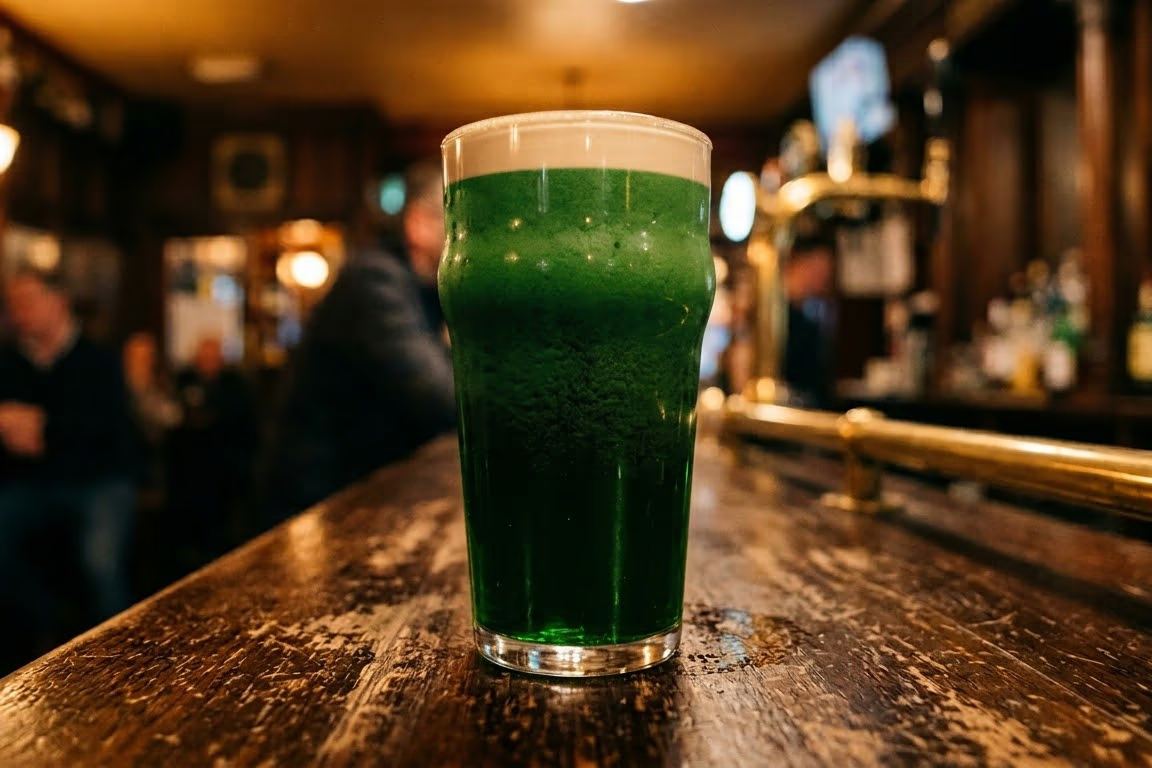
Let’s be honest — green beer is a lousy way to celebrate Ireland. It’s just food coloring in a lager, and it has nothing to do with Irish brewing. If you want the real craft beer alternative to green beer on St. Patrick’s Day, order an Irish dry stout. It’s dark, roasty, and easy to drink, and it has a story that actually earns its place on March 17th.
The Beer Judge Certification Program classifies Irish stout as Style 15B — a black ale with a roasted flavor close to coffee, running just 4.0–4.5% ABV. That’s less alcohol than most IPAs, but more flavor than most people expect. This stout beer drinks clean and dry, with an espresso-like finish that makes it one of the most crushable pints in the world. Yet most people still think Irish beer begins and ends with one brand. This beer guide is here to fix that.
- The History of Irish Stout: From London Porter to Dublin Brewing Tradition
- How Irish Dry Stouts Are Brewed: Traditional Ingredients and the Brewing Process
- What Makes a Stout Beer Dry? The Science Behind Irish Dry Stout
- Best Irish Dry Stouts for Craft Beer Lovers: Recommendations Beyond Guinness
- Irish Stout vs Porter: Differences Between Dry Stout and Other Beer Styles
- Irish Dry Stout Food Pairing Guide: Best Matches and Serving Tips
- Irish Dry Stout FAQ
- Skip the Green Beer: The Best Craft Beer Alternative for St. Patrick's Day
The History of Irish Stout: From London Porter to Dublin Brewing Tradition
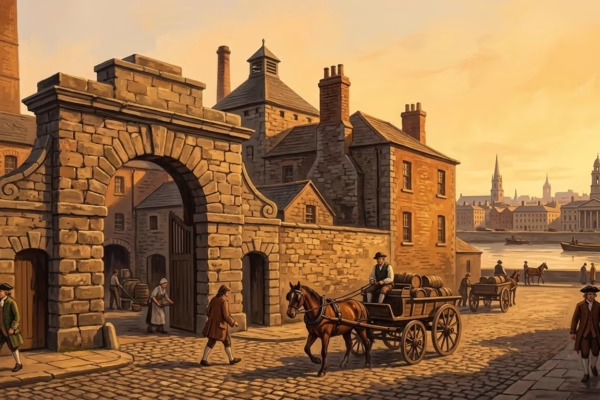
The history of Irish stout brewing tradition doesn’t start in Dublin — it starts in London, where porter took off in the early 1720s as the world’s first industrial beer style. Arthur Guinness signed a 9,000-year lease on St. James’s Gate Brewery in 1759 for £45 a year, and by 1799 he’d dropped ales entirely to brew dark Irish beer full time.
Two things locked in the style for good. In 1817, Daniel Wheeler invented a drum roaster that made black patent malt — charred grain with intense color and coffee-like bitterness, no smoke. Dublin brewers jumped on it quickly. Then came the Free Mash Tun Act of 1880, which shifted taxation from ingredients to wort gravity and made unmalted roasted barley legal in the grist. It was cheaper than malted grain and far drier in flavor, and it became the soul of Irish dry stout. Guinness locked it into their recipe around 1929–1930.
Cork had its own take. Beamish & Crawford (est. 1792) and Murphy’s Brewery (est. 1856) built their names on softer, less bitter stouts — more chocolate, less edge. Then in 1959, mathematician Michael Ash solved Guinness’s “Draught Problem” with nitrogen dispense, and the surge-and-settle cascade that defines a perfect pour was born.
How Irish Dry Stouts Are Brewed: Traditional Ingredients and the Brewing Process
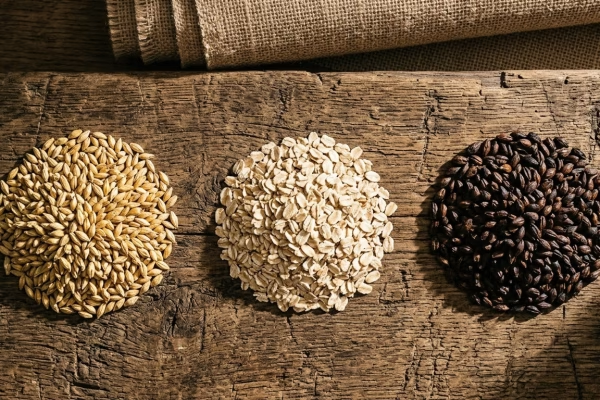
If you want to know how Irish dry stouts are brewed, start with the grain bill. Traditional Irish stout ingredients and the brewing process come down to three things, known as the 70-20-10 grist:
- British pale malt (Maris Otter, ~70%): The base. It feeds the yeast with fermentable sugars and gives the beer a gentle, bready background.
- Flaked barley (~20%): Unmalted rolled barley that builds the thick, lasting head and silky feel the style is known for.
- Roasted barley (~10%): This drives the roasted barley flavor in Irish stouts. Roasted unmalted at up to 446°F, it delivers dry, espresso-like bitterness and a light tan head. It’s not black patent malt — that’s malted before roasting and comes out sweeter. Roasted barley skips that step, and that’s what keeps the finish so clean.
Brewers mash at 148–152°F to get a highly fermentable wort and avoid residual sweetness. Since roasted barley is acidic, many add it only in the last 10–15 minutes — a technique called “mash capping” — to keep pH in the ideal 5.3–5.5 range.
Nitrogen vs CO2 in Irish Stout Beers: How Nitro Changes the Pour
The nitrogen vs CO2 debate in Irish stout beers is really about feel. Nitrogen dissolves about 80 times less readily in liquid than CO2, so when you push it through a restrictor plate at 30–40 PSI, it forms tiny, uniform bubbles that build a dense, long-lasting head and a creamy mouthfeel. CO2-only versions drink crisper and sharper — both are valid, but nitro is the traditional call. For the full recipe breakdown, check BeerSmith’s homebrew blog and Craft Beer & Brewing.
What Makes a Stout Beer Dry? The Science Behind Irish Dry Stout
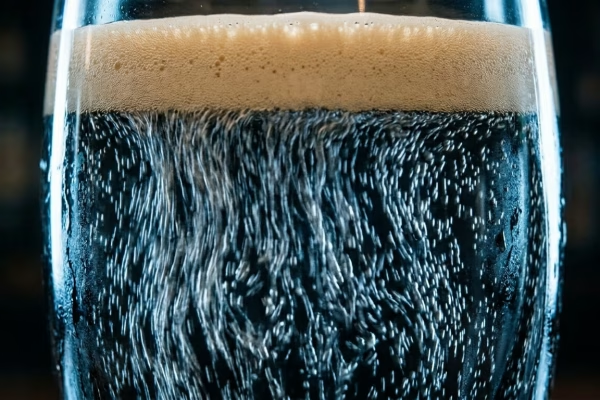
What makes a stout beer dry comes down to three things: no crystal or caramel malts, a low mash temperature that pushes fermentability up, and unmalted roasted barley that adds bitterness and color without any of the sweetness that malted dark grains would bring.
“Unmalted barley doesn’t contribute much, if any, sugar and body to the beer, meaning it has a dryer, less sweet taste.” — Guinness Brewmaster Stephen Kilcullen, Imbibe Magazine
The dry stout finishes at FG 1.007–1.011, which means almost no sugar is left in the glass. That clean, snappy finish is why this beer drinks so well at just 4.0–4.5% ABV.
Best Irish Dry Stouts for Craft Beer Lovers: Recommendations Beyond Guinness
The best stouts beyond Guinness for beer lovers are easier to find than most people think. Here are the Irish dry stout beer recommendations worth seeking out:
- Murphy’s Irish Stout (4.0% ABV): The gentlest of the classic three — smooth and soft, with toffee and coffee notes and barely any bitterness. A great place to start.
- Beamish Irish Stout (4.1% ABV): Richer and more chocolatey than Guinness, with an 86 on BeerAdvocate.
- O’Hara’s Irish Stout (4.3% ABV): The craft stout to beat. Carlow Brewing uses five Irish malts and Fuggles hops for a full-bodied, espresso-driven pint. It won Double Gold at the 2000 International Brewing Industry Awards, took the 2021 World Beer Awards Country title for Ireland, and sits at 87 on BeerAdvocate — the highest score for any Irish dry stout on the platform.
Where to Find Irish Dry Stouts at Midwest Craft Breweries
Where to find Irish dry stouts at Midwest craft breweries is a lot easier than it was a decade ago. These are the spots worth your time:
| Brewery | Beer | Location | ABV | Notes |
|---|---|---|---|---|
| Metazoa Brewing (2022 WBC Bronze) | Irish Setter | Indianapolis, IN | 4.2% | Coffee, toasted bread, dry finish |
| Padraigs Brewing | Dullahan’s Dark / Nitro Dry Stout | Minneapolis, MN | 4.5% | Irish malts, UK hops; nitro cans regionally |
| Great Lakes Brewing | Conway’s Irish Stout | Cleveland, OH | 4.8% | Seasonal (Jan–Mar); roasty and traditional |
| Confluence Brewing | Thumbwise | Des Moines, IA | 4.4% | Smooth, creamy, classic draught-style |
Metazoa’s 2022 World Beer Cup Bronze proved that Midwest craft breweries making Irish stouts can go toe-to-toe with the world’s best.
Irish Stout vs Porter: Differences Between Dry Stout and Other Beer Styles
| Style | ABV | IBU | FG | Character |
|---|---|---|---|---|
| Irish Dry Stout (15B) | 4.0–4.5% | 25–45 | 1.007–1.011 | Dry, roasty, coffee |
| Sweet/Milk Stout (16A) | 4–6% | 20–40 | 1.012–1.024 | Sweet, lactose, chocolate |
| Oatmeal Stout (16B) | 4.2–5.9% | 25–40 | 1.010–1.018 | Silky, nutty, moderate |
| American Stout (20B) | 5–7% | 35–75 | 1.010–1.022 | Bold, hoppy, intense |
| Imperial Stout (20C) | 8–12% | 50–90 | 1.018–1.030 | Vinous, complex, aged |
Irish stout vs porter — what’s the difference? Both came from London’s porter scene, but Irish stout uses unmalted roasted barley for a drier, coffee-driven profile, while porter leans on malted dark grains like chocolate malt and brown malt, which bring toffee and biscuit sweetness. Irish dry stout vs American stout differences are even bigger — American stouts pile on citrusy or piney hops and push ABV to 5–7%, far from the restrained Irish model. And the difference between dry stout and sweet stout is simple: lactose. Sweet stout adds it to land at FG 1.012–1.024. Dry stout stops at 1.007–1.011, and you’ll taste that gap right away.
Irish Dry Stout Food Pairing Guide: Best Matches and Serving Tips
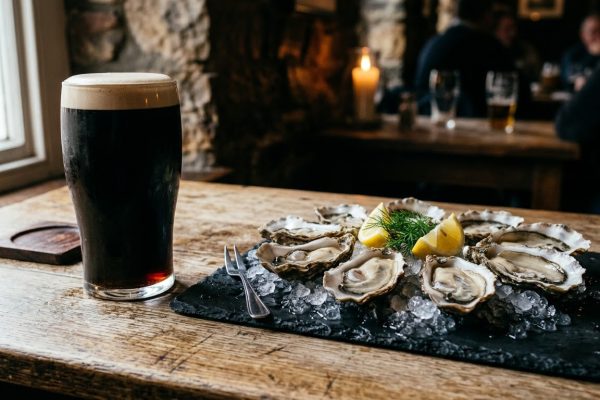
The Irish dry stout food pairing guide starts with one idea: roasted bitterness works like a grill char on food. Master Cicerone Rich Higgins says stout pairs with anything you’d cook in red-eye gravy. Guinness Ambassador Ryan Wagner keeps it short with the Three C’s — complement, cut, and contrast.
Oysters are the classic match, paired with dark beer since 18th-century London. The brine cuts the bitterness, and the beer’s creaminess mirrors the oyster’s texture. Aged Irish cheddar, Irish stew, and dark chocolate truffles all work well too.
For serving, aim for 50–55°F for bottles and cans. On draft, follow the Diageo Bar Academy’s 119.5-second pour method — glass at 45 degrees, fill three-quarters, let it settle for 92.5 seconds, then top off to a domed head of 12–18mm. Use a nonic pint glass and skip the frosted mug.
Irish Dry Stout FAQ
Your most common questions about Irish stout, answered straight.
An Irish dry stout is a 4.0–4.5% ABV black ale made with unmalted roasted barley, which gives it a dry, coffee-like finish and a characteristic light tan head. The BJCP classifies it as Style 15B and it’s almost always served on nitrogen for that signature creamy cascade. Despite its dark, imposing look, it’s one of the most sessionable and food-friendly beers in the world.
Start with the 70-20-10 grain bill: pale malt (Maris Otter), flaked barley, and roasted barley. Mash at 148–152°F for a highly fermentable wort, add a single charge of English hops (East Kent Goldings or Fuggles), and ferment with Irish ale yeast around 64–66°F.
For homebrew targets: OG 1.040 / FG 1.009 / ABV 4.1% / IBU 35. Carbonate to just 1.0–1.5 volumes CO₂. Full recipe breakdowns at BeerSmith and Craft Beer & Brewing.
Three things work together. First, no crystal or caramel malts — those add unfermentable sugars that linger sweetly on the palate. Second, a low mash temperature (148–152°F) pushes fermentability up so yeast converts almost all available sugar. Third, unmalted roasted barley adds bitter, coffee-like intensity without the sweetness that malted dark grains carry.
The result is a beer that finishes at FG 1.007–1.011 — barely any residual sugar left in the glass.
One ingredient: lactose. Sweet stout (BJCP 16A) adds it — a milk sugar that yeast can’t ferment — which pushes the final gravity to 1.012–1.024 and makes the beer noticeably sweeter and fuller in body. Dry stout stops at 1.007–1.011.
The flavor shift is dramatic. Dry stout tastes like espresso. Sweet stout leans toward chocolate milk. You’ll know the difference in the first sip.
Nitrogen dissolves about 80 times less readily in liquid than CO₂. Pushed through a restrictor plate at 30–40 PSI, it forms thousands of tiny, uniform bubbles that build the dense, long-lasting head and that velvety, creamy mouthfeel the style is famous for.
Nitrogen also softens perceived bitterness and enhances roast flavors by bypassing the acid taste receptors that CO₂ typically activates. The result is a smoother, rounder pint — even though the beer itself is still technically dry.
Yes — since 2018. Until then, many Irish breweries used isinglass (a fining agent made from fish bladder protein) to clarify their beer. Guinness confirmed publicly that they switched to modern centrifugal and membrane filtration, making their draught and canned stout suitable for vegans. Most craft stouts followed suit around the same time.
Any dry stout beats green beer without trying. For an Irish-made pint, go for O’Hara’s Irish Stout (the highest-rated Irish dry stout on BeerAdvocate at 87), Murphy’s for a softer entry point, or Beamish for richer chocolate character.
For something brewed locally, check out Metazoa Brewing’s Irish Setter (Indianapolis, 2022 World Beer Cup Bronze), Great Lakes Conway’s Irish Stout (Cleveland), or Confluence Brewing’s Thumbwise (Des Moines).
Skip the Green Beer: The Best Craft Beer Alternative for St. Patrick’s Day
Green beer dates to 1914 — a Bronx coroner stirred laundry powder into lager for a party, and the gimmick somehow stuck. Irish stout goes back to 1759. Irish pubs even closed on St. Patrick’s Day from 1927 through the 1970s to keep the day’s meaning intact, which tells you something about how seriously Ireland takes its drinking culture.
This year, choose the pint that earned its place. Find an O’Hara’s or a Beamish. Hit a Midwest craft brewery and ask for the dry stout on nitro. Or brew one yourself — three grains, one hop addition, ready to drink in two weeks. Come back to this beer guide every March.