In Cleveland’s Ohio City neighborhood, just across the Cuyahoga River from downtown, sits a brewery that has become synonymous with the city itself. Great Lakes Brewing Company, founded in 1988, isn’t just Cleveland’s original craft brewery—it’s a testament to how tradition and innovation can coexist, creating something that resonates across generations. For Michael Williams, who has spent 13 years with the company as brand development manager, Great Lakes represents more than just a workplace. It’s a living piece of Cleveland history that continues to write new chapters.
A Response to a City Without Beer
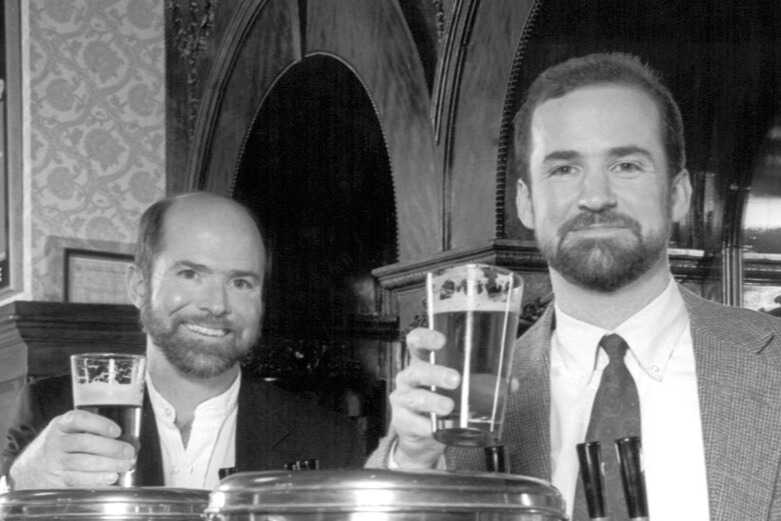
The story of Great Lakes Brewing begins with a void. In 1984, the last operating brewery in Cleveland closed its doors, leaving the city without locally-produced beer. This gap in the market might have seemed like a crisis, but for brothers Pat and Dan Conway, it represented an opportunity. Their inspiration came not from business school case studies, but from travels through Europe, where they encountered the kind of fresh, full-flavored beers that simply weren’t available in the United States at the time.
What made the Conway brothers different from many of their coastal contemporaries in the craft beer revolution was their approach. Unlike brewers on the West Coast who came to the industry with technical brewing backgrounds, Pat and Dan were beer appreciators first. They had the vision but needed the expertise, so they recruited Thane Johnson as their first brewmaster and his friend Charlie Price as the engineer. Johnson brought recipes that would become foundational to Great Lakes’ identity: the Dortmunder Gold Lager and Elliot Ness Amber Lager, both of which remain core offerings today. Price, meanwhile, assembled the brewery’s first brewhouse—equipment that, remarkably, still operates in the brewpub more than three decades later.
Williams emphasizes how this origin story shaped the brewery’s philosophy: “Certainly founded on traditional European styles with a slight American twist. I would just say we lean a little bit more towards the traditional side compared to like West Coast brewers doing hop forward stuff. Like you see a lot of lager and like dark malt beers in our classic portfolio.”
Brewing in a Piece of History
One of Great Lakes’ most distinctive features is its location. The production facility operates out of what was once a distribution center for the Leonard Schlather Brewing Company, a major brewer in late 1800s Cleveland. This isn’t just a matter of local color—the building itself tells a story about Cleveland’s brewing heritage that predates craft beer by nearly a century.
The brewery tour, which Williams clearly holds dear from his days as a tour guide, takes visitors through these historic spaces. Starting in what the team calls the Beer Symposium, guests move through the 19th-century architecture to see the 75-barrel brewhouse where all distributed beer is brewed before moving to one of 36 fermenters. The tour includes four samples totaling nearly two pints of beer, an exclusive pint glass, and something less tangible but perhaps more valuable: a connection to Cleveland’s brewing past.
Operating a modern brewery in a 19th-century building presents challenges, Williams admits. But those challenges come with character. The building encompasses an entire small city block in downtown Cleveland, a space that seemed impossibly large when the Conway brothers founded the brewery in 1988. Now, it houses not just the production facility but also the brewpub, gift shop, and that unique piece of infrastructure that sets Great Lakes apart: underground piping that carries finished beer directly from the bright tanks in the production facility across West 26th Street to serving tanks in the brewpub.
This direct-to-tap system means “you’re drinking beer that hasn’t touched a transfer from tank to keg,” Williams explains. For hop-forward beers like the Midwest IPA, this translates to a freshness that’s difficult to replicate elsewhere.
Balancing Old and New
The Core Lineup
Williams describes Great Lakes’ beer portfolio as a carefully maintained balance between tradition and innovation. The foundation consists of those original recipes from Thane Johnson: Dortmunder Gold and Elliot Ness, along with Edmund Fitzgerald Porter, which has become the most awarded porter at the Great American Beer Festival. These beers represent what Williams calls “the OGs that have been around for 30 plus years.”
But alongside these classics sits the Midwest IPA family, representing what Williams calls the new school—beers designed for contemporary craft beer drinkers while maintaining that approachable, friendly character the brewery associates with Midwestern hospitality. The Midwest IPA delivers the citrus and fruit-forward hop expression that today’s drinkers expect, but with lower bitterness that makes it more accessible. There’s also a hazy version and Cold Rush, a premium light lager that represents craft beer’s reconciliation with a style it once rebelled against.
When asked what beer he’d recommend to someone new to craft beer, Williams doesn’t hesitate: “I really would say the Midwest IPA is the one to go for somebody new. This beer was designed to deliver on the hop flavor that craft beer drinkers today are looking for, which is that more citrus, fruit forward expression. And keeping it easy drinking and approachable by it being low on the IBU side.”
The Christmas Ale Phenomenon
If you know anything about Great Lakes Brewing, you know about Christmas Ale. What makes this beer remarkable isn’t just its taste—a perfectly balanced blend of honey, cinnamon, and ginger in a 7.5% amber ale base that evokes grandma’s holiday baking—but its market dominance. Despite being sold for only ten weeks from mid-October through the end of the year, Christmas Ale is Great Lakes’ highest volume beer. Let that sink in: a seasonal product available for less than a quarter of the year outsells everything else in the portfolio.
The first pour of Christmas Ale has become an event unto itself. People begin lining up at 6 a.m. on that Thursday in mid-October, forming a queue that wraps around the block by the time the brewery opens at 11 a.m. Winners of a VIP contest get to take a special tour before receiving the first pours. And all of this happens for a beer that will be available in grocery stores just a few days later.
The limited availability creates its own magic. Williams compares it to the McDonald’s Shamrock Shake: make it available year-round and it loses its luster. The seasonal nature keeps Christmas Ale special, keeps people waiting for it, keeps it culturally relevant in a way that constant availability never could.
A Gathering Place for Generations
The Great Lakes brewpub, with its long tiger mahogany bar dating back to the late 1800s, has become a Cleveland institution. Williams loves to drop by the pub, particularly the two prized corner seats at the end of the bar where the regulars gather. Some of these regulars have been coming since day one in 1988. If you were in your early twenties when the brewery opened, you’re now retired with even more time to spend at Great Lakes.
But it’s not just about the beer, Williams emphasizes. “People wouldn’t be coming back if it weren’t for that, right? But then you’ve got the atmosphere. I think one of the biggest things is the people in the pub.” Bartenders like Steve and Peggy have been serving for more than 33 years each. Imagine being a regular since 1991 and having Steve still pour your Commodore Perry IPA in 2026. That continuity creates something rare in modern hospitality: genuine, decades-long relationships between staff and customers.
The brewpub was intentionally designed to be family-friendly, a differentiator when it opened. Pat and Dan Conway, two of nine siblings, understood family dynamics and wanted to create a space where you could enjoy finely crafted beer alongside a meal with your kids. While Great Lakes doesn’t have wide-open spaces for children to run around—the historic buildings simply don’t allow for it—it welcomes families and offers a kids menu, high chairs, and during patio season, activities like giant tic-tac-toe.
Regular programming has evolved to serve different demographics. Thursday trivia packs the upstairs room. The brewery hosts brew master stash events where pub brewer experiments with infusions and special releases. There are kids-eat-free Tuesdays and half-off wine Wednesdays. Pop-up bars have become major attractions, from the elaborate Christmas-themed Secret Cellar during the holidays to the recent Harry Potter experience that packed the place. The cellar pub, cozy any time of year, transforms during the holidays into an almost overwhelming display of Christmas lights and decorations that complements the Christmas Ale season perfectly.
The Cleveland Craft Beer Family
Williams speaks with genuine affection about the Cleveland craft beer community. While craft beer generally prides itself on collaboration and camaraderie, Williams believes Cleveland’s scene might be particularly tight-knit. Part of this comes from lineage: many brewers in Cleveland have connections back to Great Lakes. Matt Cole at Fat Head’s Brewery used to work at Great Lakes; Sean Usaki at Noble Beast worked for Matt. This creates a family tree of sorts, connecting the city’s brewers through shared history and mentorship.
Williams counts brewers at competing breweries as true friends, not just industry acquaintances. Sales reps from different breweries are friendly with each other. They drink each other’s beers. When Fat Head’s won Brewery of the Year at the 2025 Great American Beer Festival, Williams celebrated: “That a brewery of the year is in town. As long as we sell more beer than them, we’re you know, it’s all good.”
For visitors doing a Cleveland brewery tour, Williams recommends starting at Great Lakes in Ohio City, then heading downtown to Noble Beast and Masthead, which are a five-minute walk from each other. Noble Beast has earned a reputation for putting unexpected styles on tap and having people trust the quality enough to try them, along with top-notch food. Masthead excels across all craft styles with solid lagers, strong hop programs, and an impressive barrel-aging program. Fat Head’s, with two locations ten minutes from the airport, makes an easy stop for travelers.
The Road Ahead
Despite producing 100,000 barrels of beer annually and distributing across 17 or 18 states, Great Lakes remains independent and family-owned. Williams wants people to understand this: “It’s very easy for people to think that we are this massive brewery that dominates the market and we have these giant budgets and stuff like that. We’re pretty much just like the 9,000 other craft brewers in the United States. We’re a small business. We got to grind every day to make the high quality beer that we make with relatively limited resources.”
Recent expansion into Florida responds to decades of requests from snowbirds and transplants who wanted their Christmas Ale and Elliot Ness in their new home state. The brewery is also innovating with seasonal variety packs—12-can mixed packs featuring the base seasonal beer plus limited-time offerings. The Irish Party Pack, featuring Conway’s Irish Ale, Irish Stout, and Irish Lager, has been flying off shelves in Cleveland, with similar packs planned for summer, fall, and the holidays.
Great Lakes is also exploring alternative beverages, including THC drinks, acknowledging the shifting landscape where some consumers are replacing one or two beers with non-alcoholic or THC options. Williams frames this not as a crisis but as continuation of craft beer’s tradition of creativity. Just as hazy IPAs were once viewed with suspicion by traditionalists and now have become staples, these new products represent adaptation rather than abandonment of principles.
The Heart of Cleveland Brewing
What emerges from Williams’ passionate description of Great Lakes is a portrait of a brewery that has mastered the difficult art of honoring tradition while embracing innovation. The brewery still uses equipment from 1988. It still brews recipes from that first year. Bartenders who started in the early 1990s still pour pints for customers who visited on opening day. The building itself connects current operations to Cleveland’s 19th-century brewing heritage.
Yet Great Lakes continues to evolve. New beers launch regularly. Pop-up bars bring fresh energy to the historic space. The expansion into Florida and development of alternative beverages shows a willingness to adapt to changing markets and consumer preferences. This isn’t a brewery resting on its laurels or stuck in the past. It’s a brewery that understands that honoring tradition doesn’t mean refusing to change.
Perhaps that’s why Christmas Ale continues to draw lines around the block each October. Perhaps that’s why regulars return year after year, decade after decade. Perhaps that’s why Great Lakes has become not just a brewery but an institution. It represents something increasingly rare in American business: staying power built on quality, community, and a genuine connection to place. In a craft beer landscape that can sometimes feel chaotic and trend-driven, Great Lakes Brewing Company remains Cleveland’s beating heart—a reminder that the best way forward sometimes involves bringing the past along with you.