How Great Lakes Brewing Company Built a Customer Base That Lasts Generations
In 1988, two brothers from Cleveland had a vision that was, by any measure, audacious. Pat and Dan Conway opened a craft brewery in a city — and a state — that had no such thing. There was no craft brewing scene in Ohio to speak of, no roadmap to follow, and no guarantee that Cleveland beer drinkers were ready to trade their familiar lagers for something new. Thirty-eight years later, Great Lakes Brewing Company isn’t just surviving in a market crowded with nearly 9,500 breweries across the country. It’s thriving, anchored by one of the most loyal customer bases in American craft brewing.
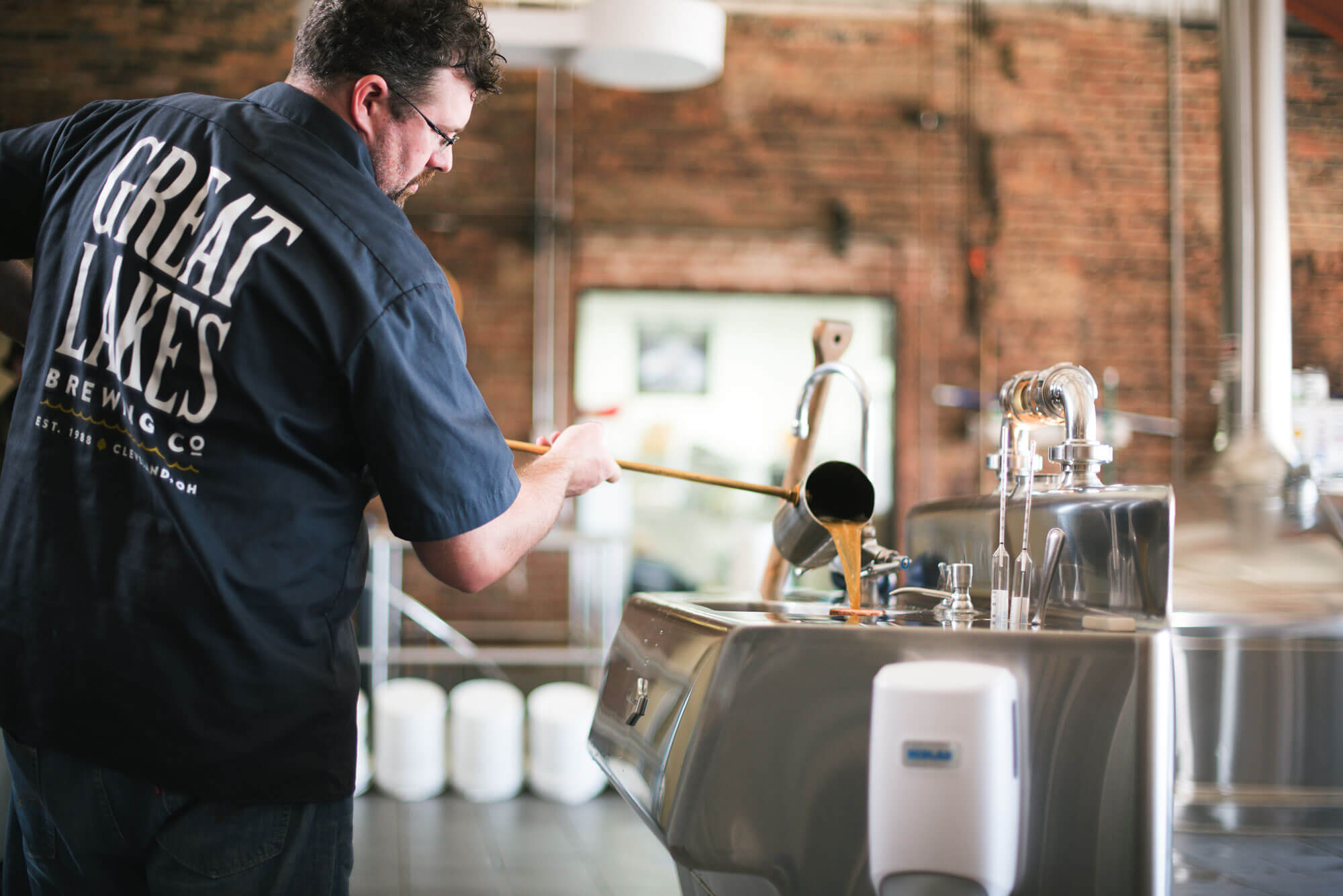
Michael Williams, the Brand Development Manager at Great Lakes Brewing, has a front-row seat to that story. He’s been with the company for 14 years, cycling through roles that have taken him from behind the bar to leading sampling teams to managing brand communications. In a wide-ranging conversation on the Midwest Microbrew podcast with host Henry Nosek, Williams laid out the philosophy that has kept Great Lakes customers coming back — not just for a season, but for decades.
A Name With a Regional Destiny
The foundation of any loyal customer base starts with identity, and Great Lakes Brewing understood that from the very beginning. When the Conway brothers were deciding what to call their brewery, they made a choice that was quietly ambitious. They could have called it Cleveland Brewing Company and been done with it. Instead, they chose a name that spoke to an entire region.
“They obviously had some sort of regional aspiration going on, since it’s called Great Lakes. The name itself indicated that they had aspirations to provide beer for the city of Cleveland, but also for the whole region.”
That regional identity has proven to be one of the brewery’s most durable assets. In a craft beer world where many brands compete on aesthetics, hype, or novelty, Great Lakes planted a flag in something more lasting: a sense of place. Williams describes the core identity today, 38 years on, as essentially unchanged. “Cleveland’s original and premier craft brewer,” he says, “and still one of the premier brewers within the Great Lakes region.” For a brand, that kind of clarity — maintained over nearly four decades — is extraordinarily rare.
Beers That Tell a City’s Story
The Power of Hyperlocal Narrative
If the brewery’s name planted the flag of regional identity, the individual beers drove it into the ground. Great Lakes was doing something that few other breweries were doing in the late 1980s: naming their beers after the stories and characters of their city, rather than simply after their styles.
The most iconic example is the Elliott Ness Amber Lager, one of the first two beers the brewery ever produced. Elliott Ness was Cleveland’s public safety director and the lawman famous for taking down Al Capone’s bootlegging operation in Chicago. He also happened to have a direct connection to the building that would become Great Lakes’ main taproom in the Ohio City neighborhood. According to Williams, Ness reportedly frequented the bar, and there’s a rumor he was shot at there. A small “bang flag” still marks the spot where the bullet supposedly struck, and visitors still come to find it — and drink some beer while they’re at it. What makes the story even more personal is that Pat and Dan Conway’s mother, Margaret, was Ness’s stenographer. She could vouch for details of his life firsthand.
“These stories are directly related to the people. Pat and Dan’s mom knew Elliot Ness. That’s another key — the stories are authentic because they actually connect to us.”
The same intimacy defines the Edmund Fitzgerald Porter, named for the cargo ship that sank in Lake Superior in 1975 with 29 crew members — many of them from Cleveland. The Gordon Lightfoot ballad made the tragedy famous, but for the Conway brothers, it was personal. They were friends with the son of the ship’s first mate. When they were developing their porter, they imagined the waves on Lake Superior on that stormy November night. Before naming the beer, they asked their friend for his blessing. His response, as Williams tells it, was simple: “I think my father would be honored.”
These aren’t marketing stunts. They are stories of genuine human connection, embedded into products that people drink and share. Williams is clear that this authenticity is a point of differentiation — one that competitors couldn’t easily replicate. “I can’t recall other breweries naming their beers in such a thought-out and consistent way,” he says. “There’s a really consistent identity amongst the beers, whereas other brewers might have just called it their amber.”
360-Degree Marketing: Getting Liquid to Lips
A Multi-Channel Approach Built for Scale
Building a loyal customer base requires more than a great story. It requires reaching people — repeatedly, in different places, and in ways that resonate with where they are in the purchasing journey. For Great Lakes, which generates a substantial portion of its revenue from packaged beer sold outside of its own taproom, that means running a genuine marketing machine.
Williams describes the approach as truly 360-degree. Social media — managed in-house by a small but dedicated team — is a daily presence on Instagram and Facebook, with carefully planned content aligned to seasonal releases and new product launches. The goal, Williams explains, is straightforward but effective: “Get those beautiful product shots out in front of people and they’re like, yeah, that looks good, I do want to drink a beer.” The team also maintains two separate Instagram accounts — one for the packaged beer brand (targeted at regional followers across multiple markets) and one for the brewpub (aimed at Clevelanders who want to know when a new cask will be tapped on a Friday night). It’s a small but meaningful example of audience segmentation done right.
Beyond social, Great Lakes also leverages traditional PR, the long-running MuchaBrew email newsletter, and more recently, what Williams cheerfully calls “the big boy stuff” — billboards around Cleveland and a full-length commercial for their Midwest IPA. For a company of Great Lakes’ scale, with beer on shelves competing alongside hundreds of other brands, that kind of above-the-line investment isn’t vanity. It’s necessity.
The Sampling Program: The Last Mile
But perhaps the most underrated component of the marketing strategy is the one Williams himself runs day-to-day: the in-store sampling program. In an era when consumers are drinking less beer overall and have more beverage options than ever before, getting a sample of cold beer into someone’s hand at the right moment can be the difference between a purchase and a pass.
“You see it on a billboard. Then it shows up in your Instagram feed. And then you’re shopping at the local grocery store and there’s a friendly rep there saying, ‘Would you like to try our new light beer?’ That’s the thing you saw — and you say, yeah, let me try it.”
It’s a classic conversion funnel, executed in the analog world of a grocery store aisle. Williams describes it as the last piece of the puzzle — the moment when awareness and curiosity finally become a transaction. In a crowded marketplace where every craft brewery has its devoted followers, it’s that final, physical encounter that can tip the scales.
The Beating Heart: What the Taproom Really Does
For many smaller craft breweries, the taproom is the business. It’s where the margins are, where the community lives, and where the brand comes to life. For Great Lakes, the relationship is more nuanced — and more powerful.
The brewpub, located in the same buildings in Cleveland’s Ohio City neighborhood where it all began in 1988, contributes meaningfully to revenue, but Williams is careful to articulate its deeper role. “It’s the beating heart of the company, 38 years in,” he says. It is simultaneously a business unit, a community gathering space, and the most potent marketing tool the company has — a place where the brand stops being a can on a shelf and becomes a living experience.
Regulars who were 21 years old when Pat and Dan Conway first opened those doors are now pushing 60. Some of them have been coming back ever since. They’ve brought their friends, their partners, their children, and now their grandchildren. They’ve carried Great Lakes beer to family gatherings and holiday tables for four decades. In doing so, they became the brewery’s most effective brand ambassadors — not because of any formal program, but because the beer and the place gave them something genuinely worth sharing.
“For locals in Cleveland, it continues to be an important gathering space. And for the out-of-towners, that’s the pilgrimage spot. You’ve had a pint of Edmund Fitzgerald in New York City, but you’ve got to try it from the brewery. It just tastes better — because you’re in the space where it all happened.”
The staff tells the same story. Williams notes that some bartenders at the brewpub have been there for nearly 35 years — almost the entire life of the company. In an industry notorious for high turnover, that kind of longevity speaks to something real about the culture and the community that has grown up around the place.
Midwest Nice: Expanding the Identity Without Losing It
As Great Lakes has grown and its distribution has stretched into new markets, the brand has had to evolve. The hyperlocal stories that resonated so deeply with Clevelanders — Elliott Ness, the Edmund Fitzgerald, the streets and bridges of Ohio City — don’t always translate to a 25-year-old in upstate New York who’s never heard of any of them.
The answer, Williams explains, wasn’t to abandon the identity, but to expand it. Enter the Midwest IPA family — a newer duo of flagship IPAs built around a broader but equally authentic sense of regional pride. The Midwest IPA was deliberately designed to occupy the middle ground between the hop-forward bitterness of a West Coast IPA and the hazy, aromatic softness of a New England-style IPA. The result is a beer that Williams describes as “approachable” and “friendly” — and those words are no accident.
“Approachable, friendly — that’s about as Midwest as it gets. The beer itself reflects our Midwest identity, and then also the way we talk about the beer. We nicknamed it the unofficial IPA of Midwest Nice.”
The Midwest identity runs deeper than a name, though. Marketing copy on the packaging talks about a “sensible amount of hops meeting a mild-mannered finish.” Suggested food pairings include kielbasa, pierogi, and corn. Even the new Cold Rush light beer carries a quiet Cleveland nod — its upside-down arrow design is a subtle reference to the Guardians of Transportation statues on the Lorain-Carnegie Bridge. For those who know, it’s a wink. For those who don’t, it’s still a clean, well-designed can of cold beer.
The evolution shows a brand that has learned how to grow without growing apart from itself. Whether the beer is sold in a Cleveland grocery store or a New York City bar, it still carries the stamp — literally the Great Lakes logo — of where it came from.
Loyalty That Goes Beyond a Points Card
Ask Williams about customer loyalty programs at Great Lakes, and he’s refreshingly candid. There is a formal points-based rewards program — customers earn points based on dollars spent, redeemable for merchandise at the gift shop. Williams is a participant himself, and cheerfully admits he cashed in his points for a comfortable hoodie last Christmas. There’s also a birthday email program through the MuchaBrew newsletter: sign up, and the month of your birthday, you’ll receive a personalized message and a custom-designed koozie that’s only available to members on the list.
These programs matter. But Williams is quick to point out that the most durable form of loyalty at Great Lakes isn’t transactional — it’s relational. It’s the bartender who knows your name before you sit down. It’s the sense, built over visits and years, that this is your place.
“We do the basics — our bartenders know regulars by name and call them by name. That little stuff goes a long way. There are monetary loyalty programs, but there’s also just the relationship.”
It’s a philosophy that’s easy to articulate and difficult to manufacture. You can’t fake a bartender who genuinely remembers that you prefer your Edmund Fitzgerald with a particular glass, or that you always come in on the first Friday after Conway’s Irish Ale taps for the season. That kind of relationship is built over time, and it reflects the culture of a company where co-founders still walk the floor, where staff stays for decades, and where the beer itself is named after people the owners actually knew.
Great Lakes Brewing Company has never been the flashiest brand in craft beer. It hasn’t chased every trend or tried to out-hype the limited-release market. As Williams notes, not every swing connects — the hard tea, the ranch water — but the philosophy has always been to swing thoughtfully, stay true to who you are, and never get called out looking at strike three.
— — —
Conclusion
After 38 years, Great Lakes Brewing Company’s most powerful marketing asset isn’t a billboard on the I-90 or a well-crafted Instagram grid. It’s the regulars who’ve been filing through the doors of that Ohio City brewpub since the year the Conway brothers first threw them open — and the culture of genuinely good people making genuinely good beer that kept bringing them back.
For craft breweries looking to build the kind of loyalty that lasts not just years but generations, Williams offers a model rooted in authenticity: know your story, tell it honestly, show up consistently across every channel, and take care of the people who walk through your door. The points programs and birthday emails help. But the relationship is the thing.
“Good people, good beer. Great Lakes.”
— — —
If you missed my first interview with Michael where we discussed the history of the brewery and the beers that people love, check it out here
Great Lakes Brewing Company is based in Cleveland, Ohio. Follow them on Instagram @glbc_cleveland (packaged beer) and @glbcbrewpub (brewpub). Sign up for the MuchaBrew newsletter and explore their full portfolio at GreatLakesBrewing.com.